
Senac Salvador Technical and Creative School
Architecture: 23 South, Wierman.studio
Team: Ana Carolina Mamede, Gabriel Manzi Frayze Pereira, Gustavo Wierman, Ivo Magaldi, João Victor Lovadino, Luis Pompeo Martins, Luiz Florence, Moreno Zaidan, Tiago Oakley
Structural Engineering: Hélio Olga
Location: Salvador, BA – Brazil
Year: 2023
Built Area: 9,500m2
Status: Awarded – Honorable Mention
Images: Ricardo Iannuzzi
Phases: Contest
Architecture: 23 South, Wierman.studio
Team: Ana Carolina Mamede, Gabriel Manzi Frayze Pereira, Gustavo Wierman, Ivo Magaldi, João Victor Lovadino, Luis Pompeo Martins, Luiz Florence, Moreno Zaidan, Tiago Oakley
Structural Engineering: Hélio Olga
Location: Salvador, BA – Brazil
Year: 2023
Built Area: 9,500m2
Status: Awarded – Honorable Mention
Images: Ricardo Iannuzzi
Phases: Contest
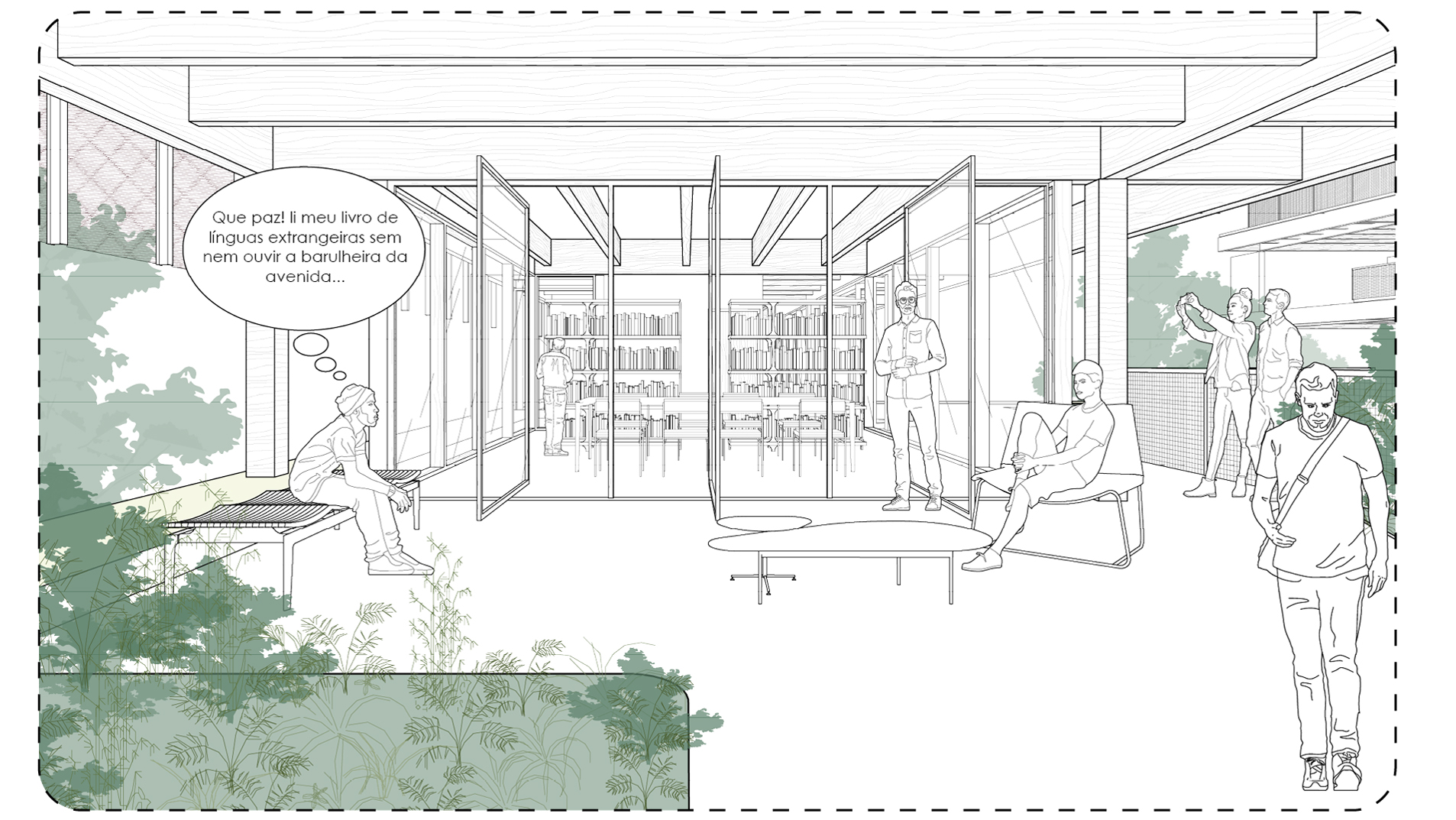
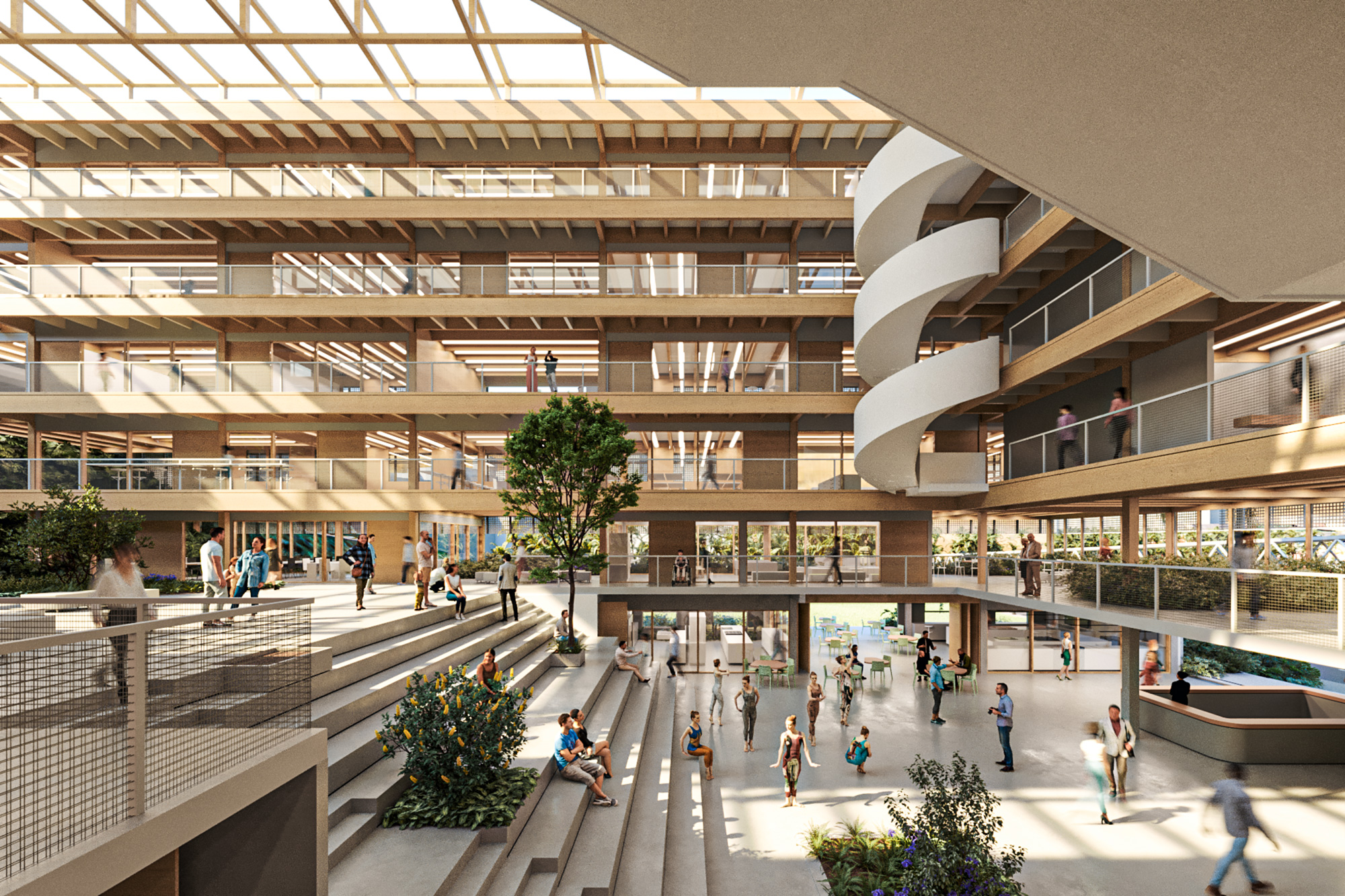
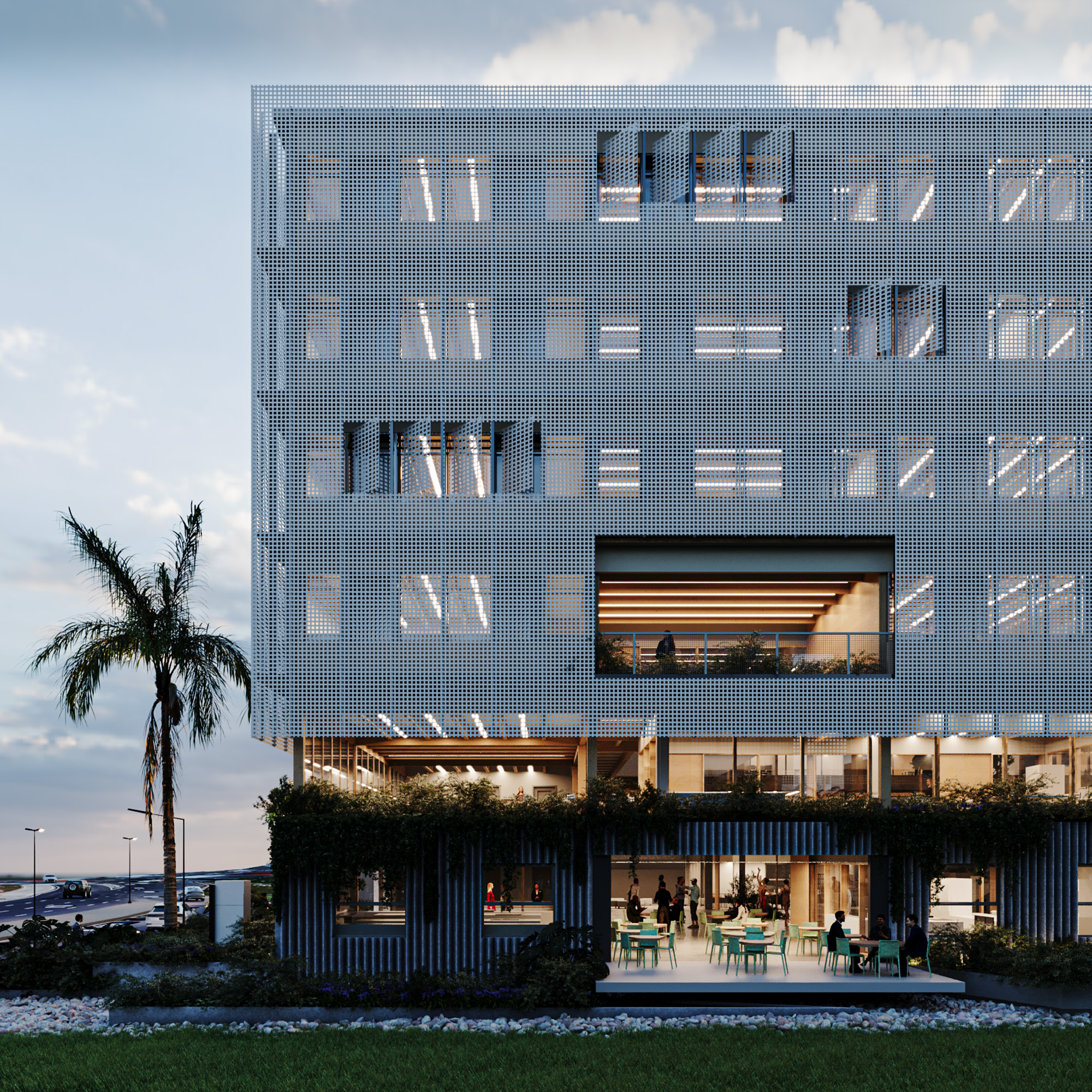
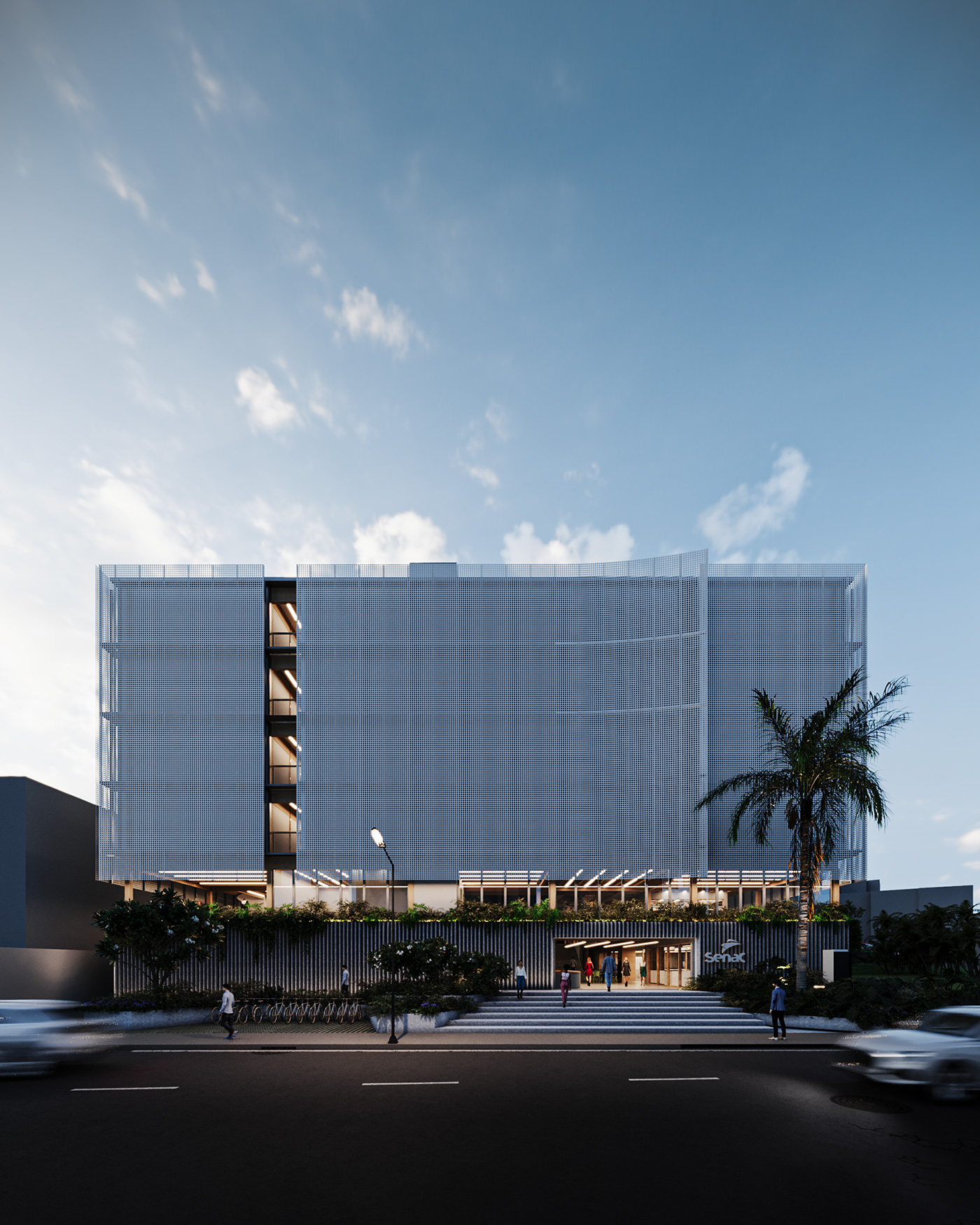
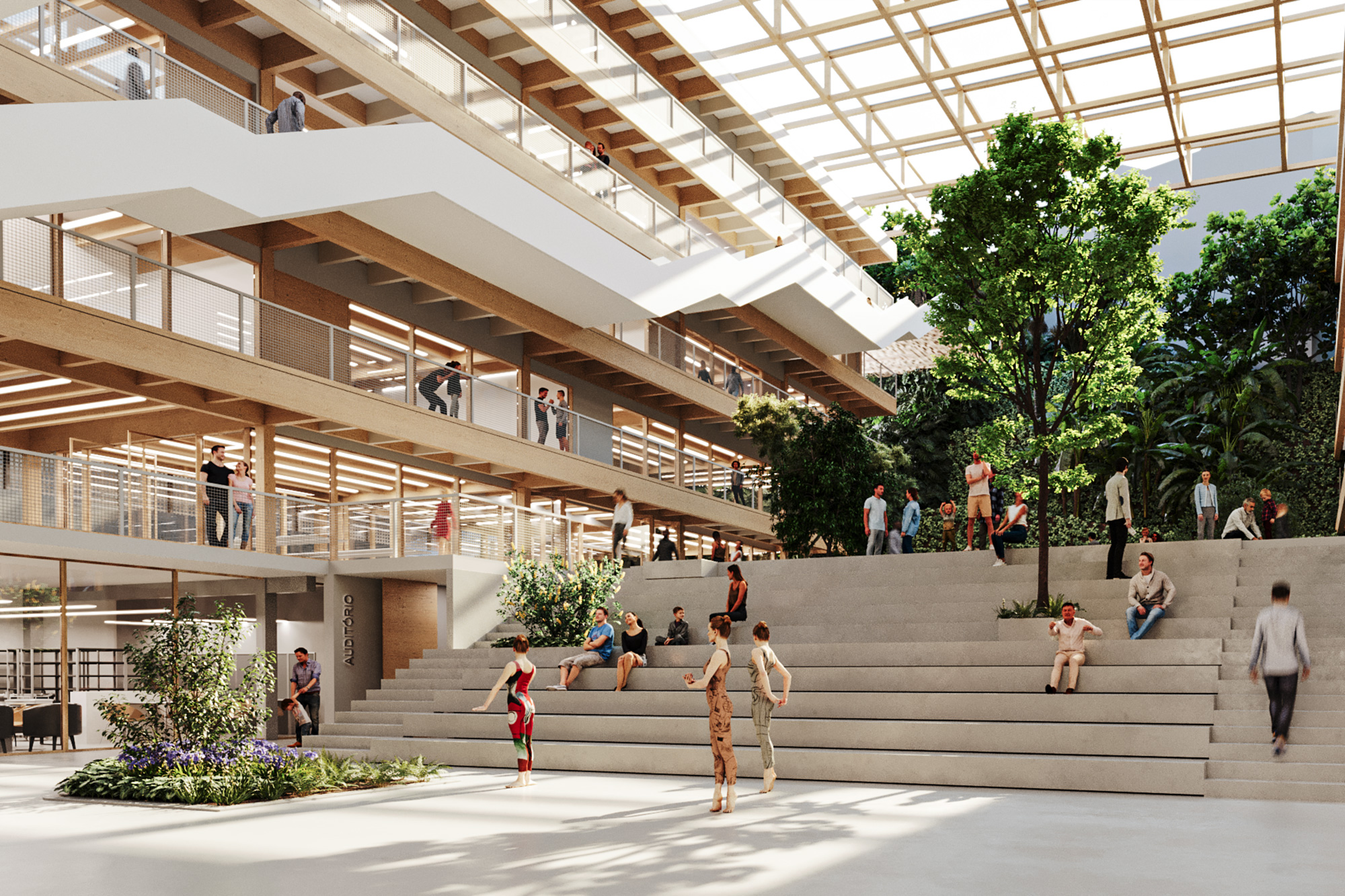
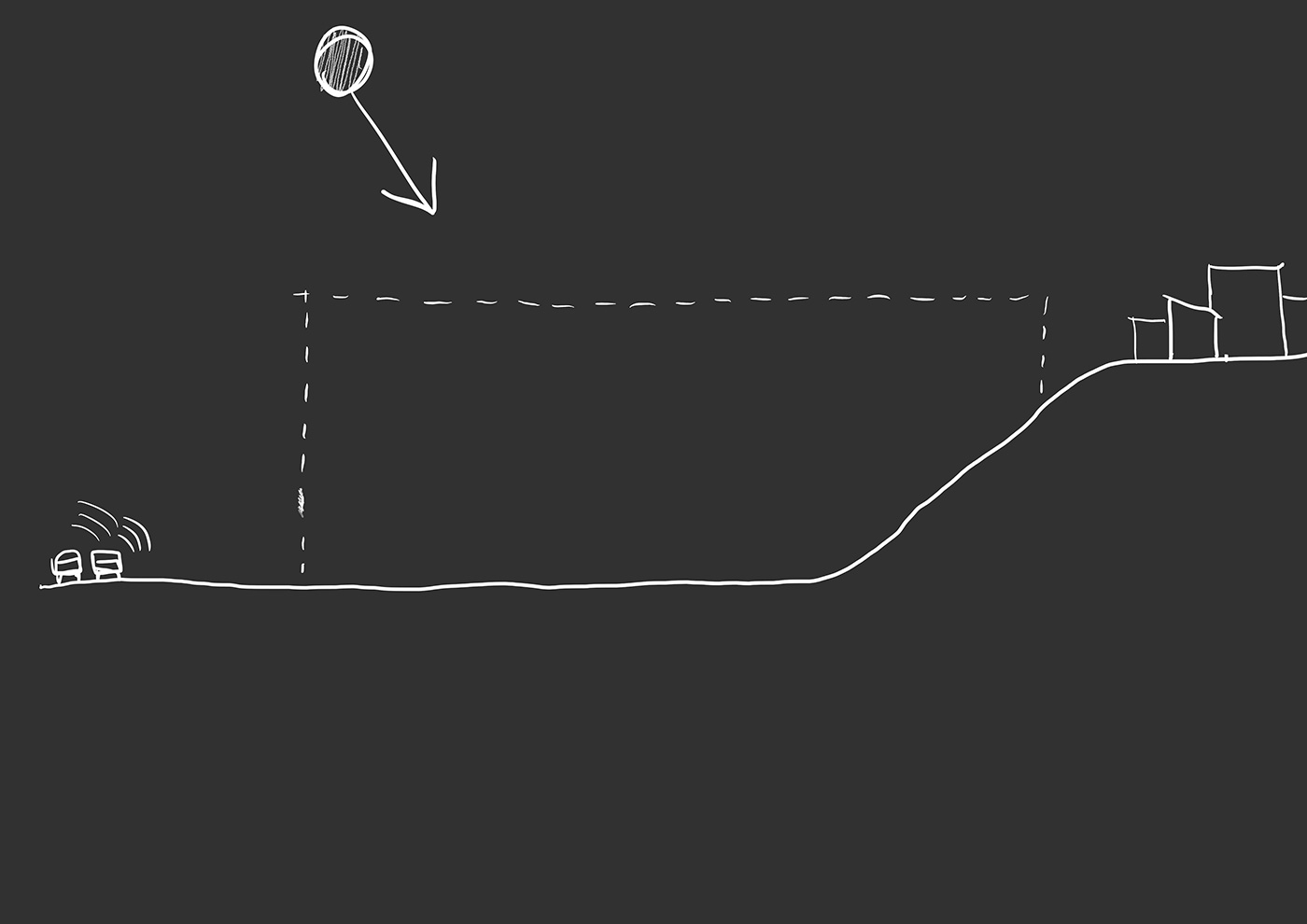
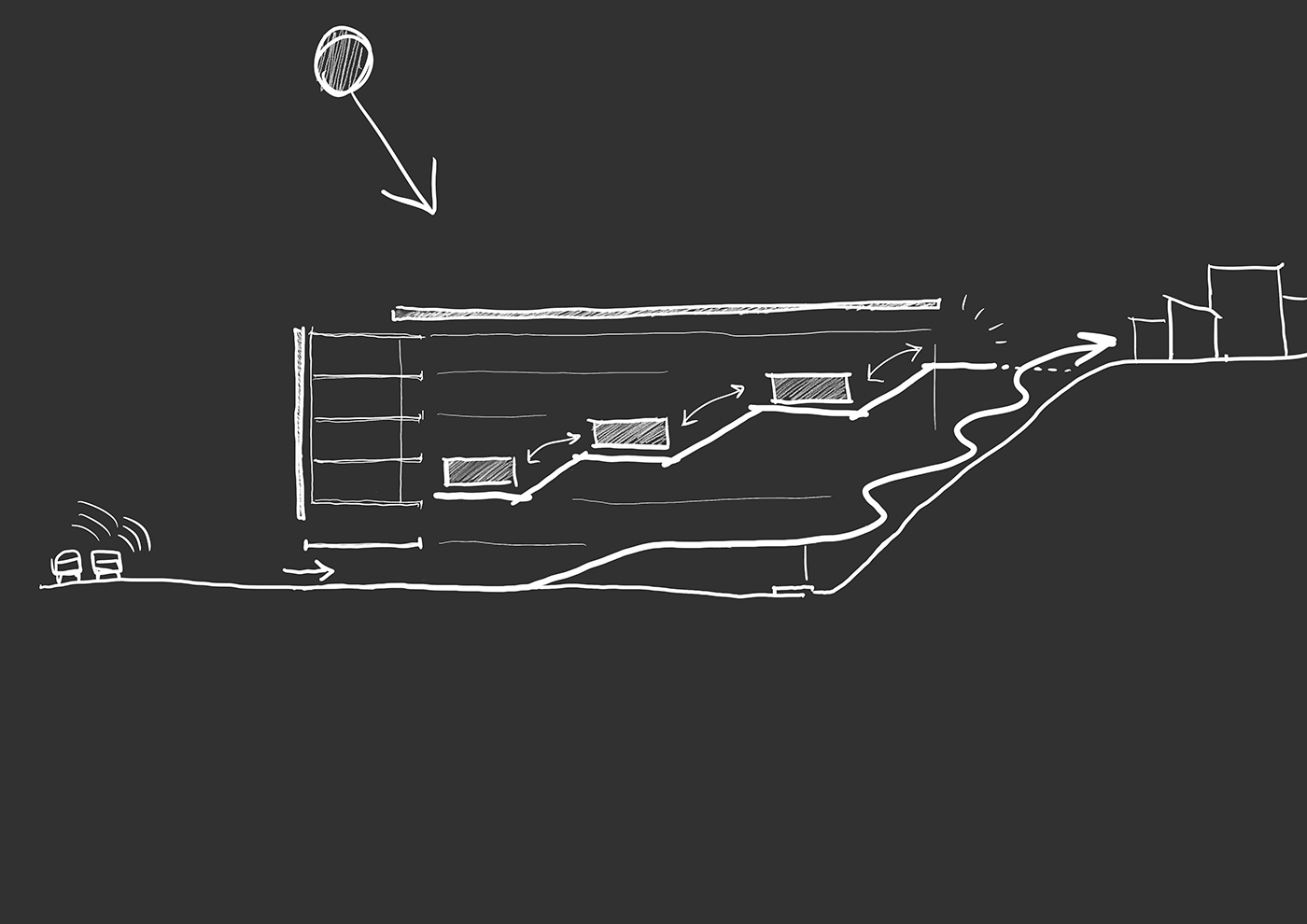
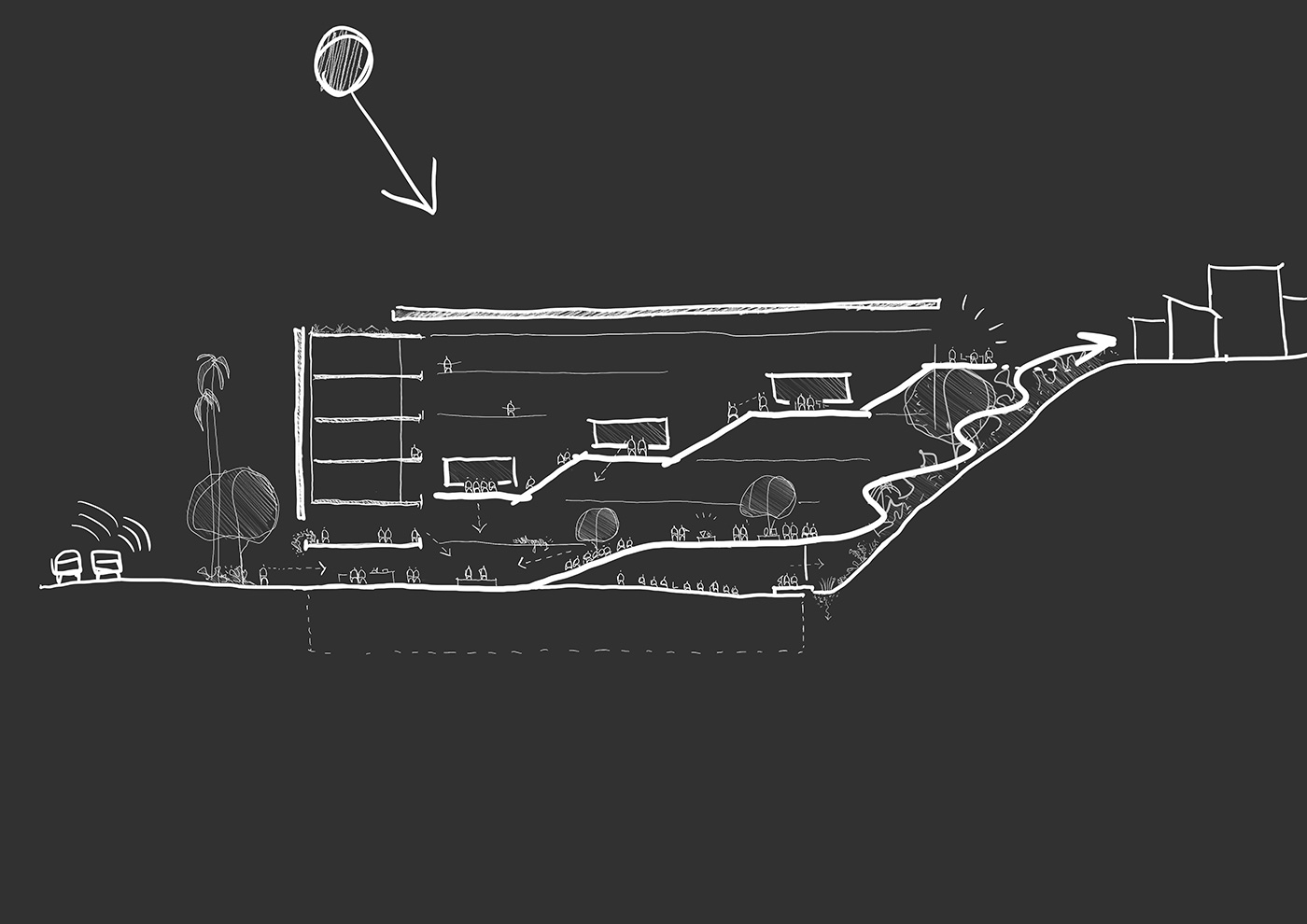
The design concept stems from the intention of creating an ecosystem protected from external constraints of the Salvador metropolitan area and the project site, to house the program of the new SENAC unit, a technical and creative school. Among the "external constraints" are: the Antônio Carlos Magalhães Valley Avenue, the high incidence of solar radiation throughout the year, the prevailing east and southeast winds, the green slope at the back of the lot, and the Alto do Saldanha community at the high elevation.
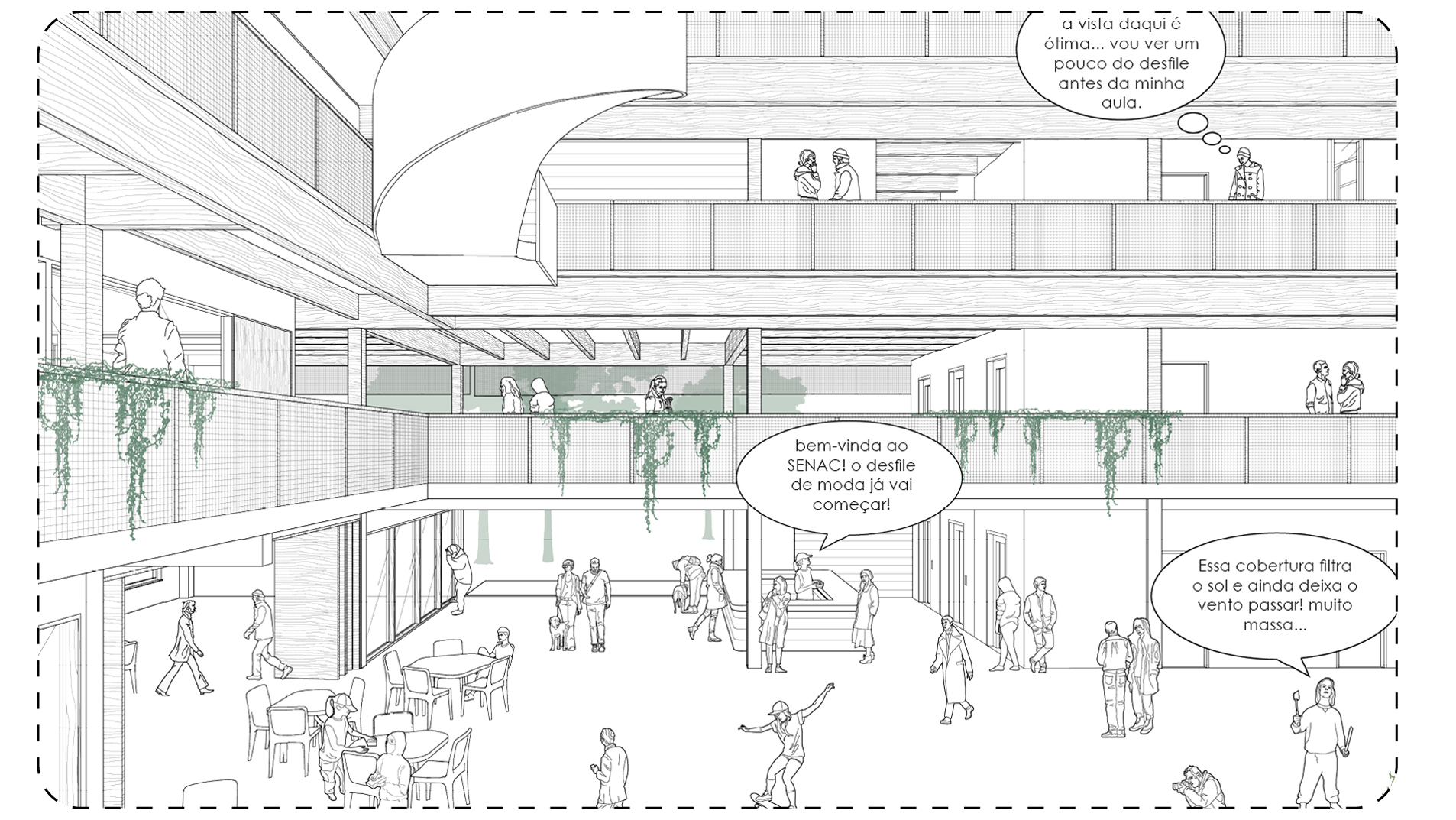
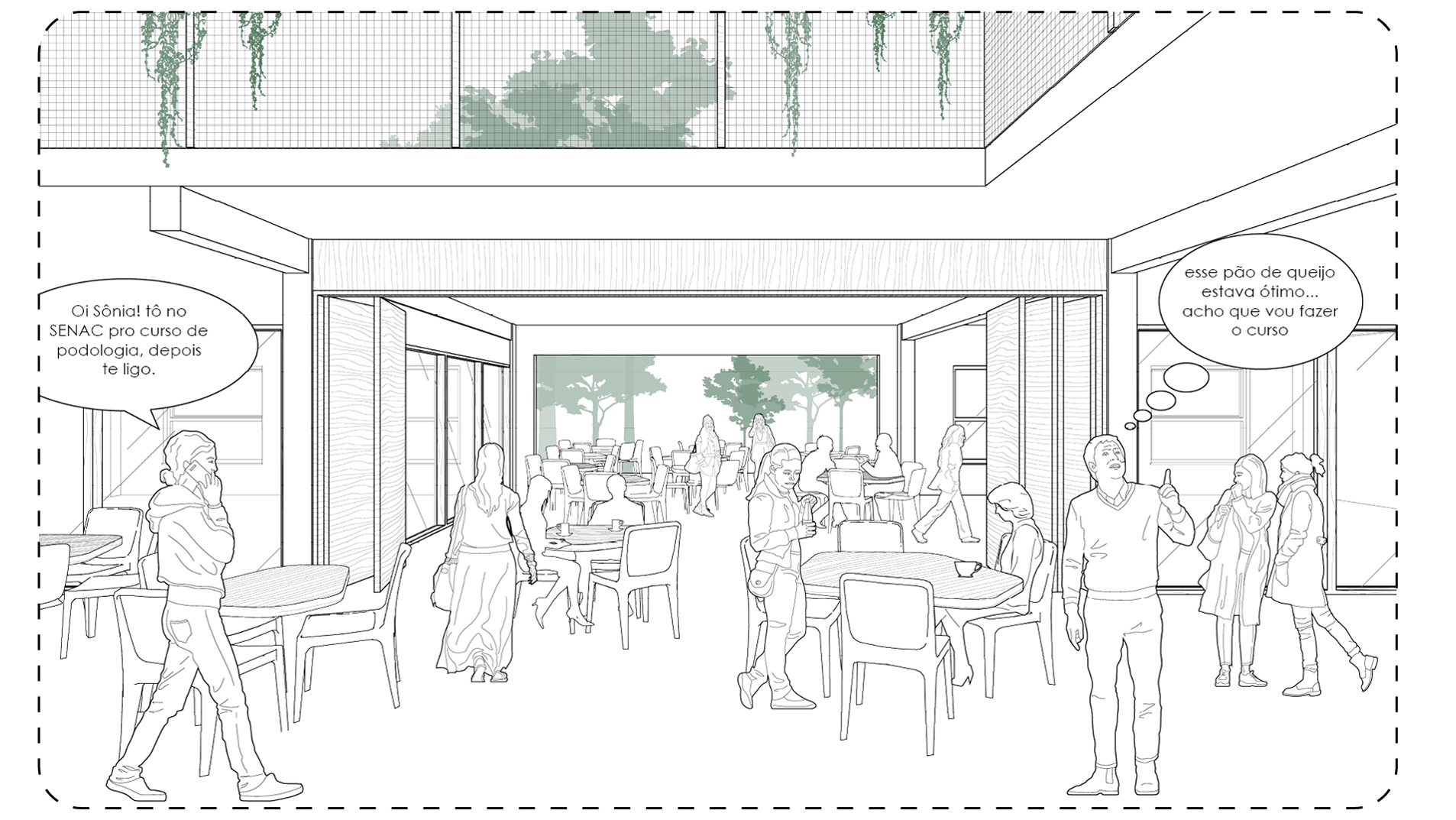
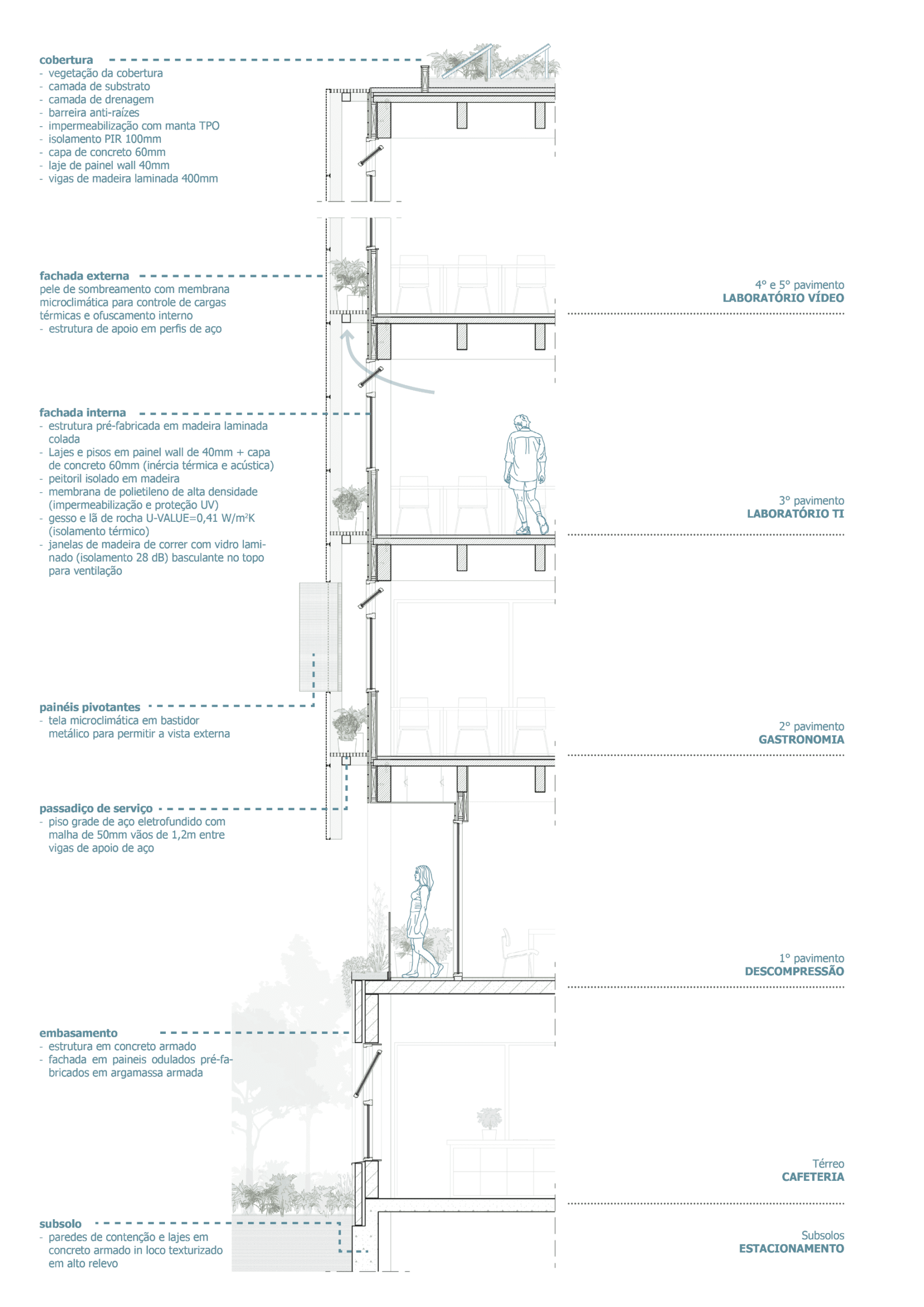
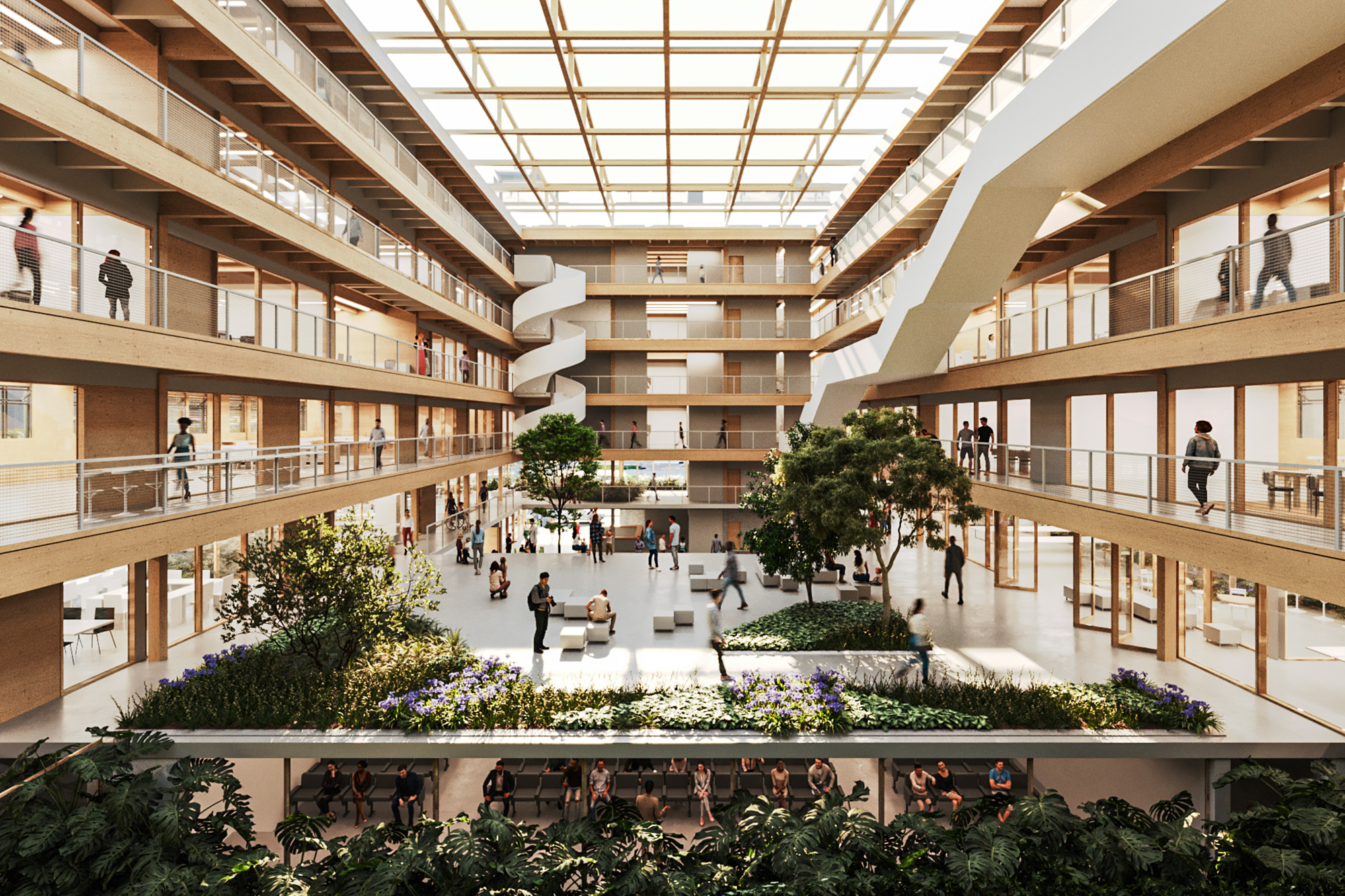
The proposal: A volume facing the avenue houses technical and service areas and serves as a sound and solar barrier. A lightweight over-roof of a wooden structure with glass and a microclimate screen, like a light and airy tent, forms the internal atrium/oasis that embraces the green slope and opens to the neighboring community.
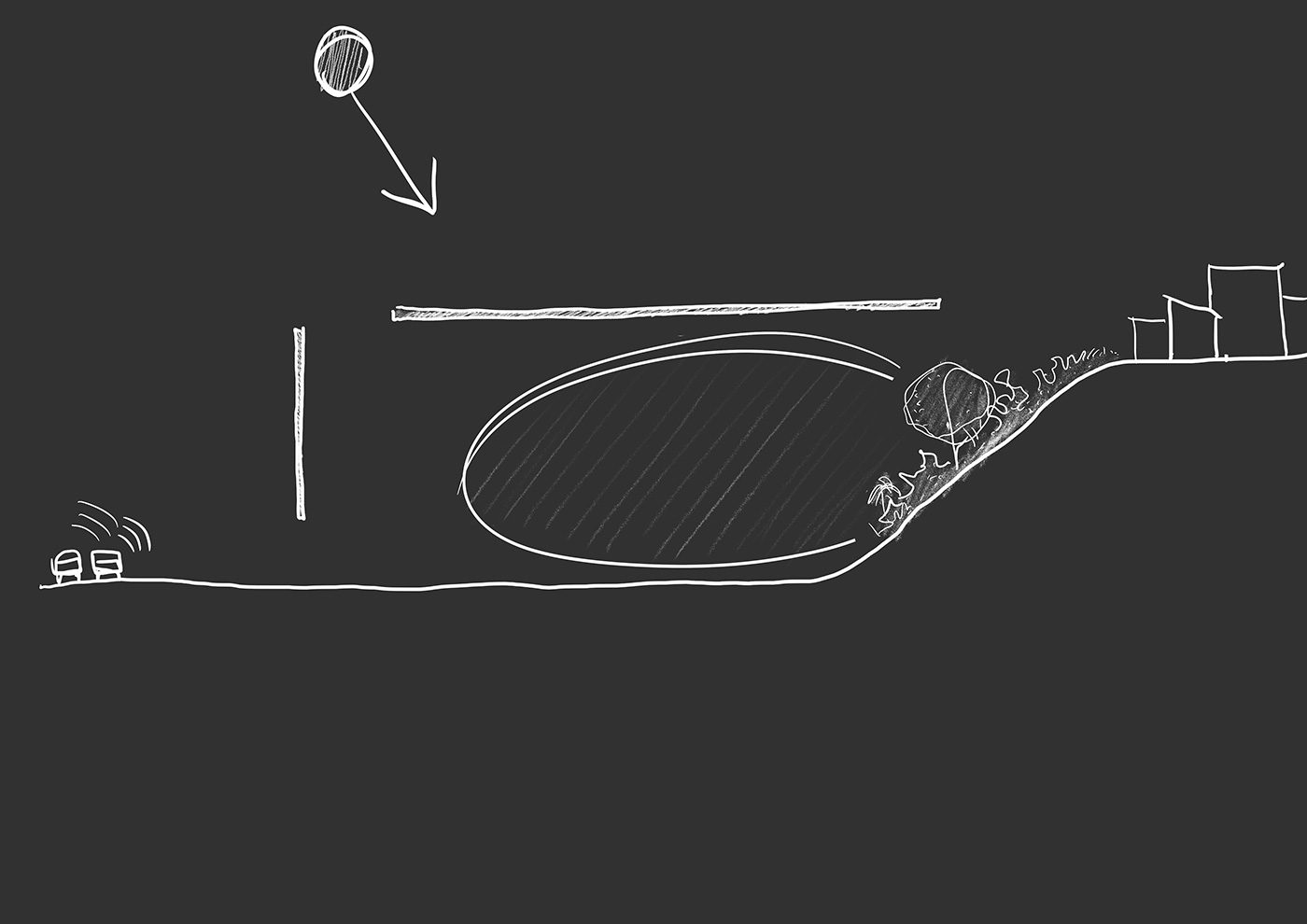
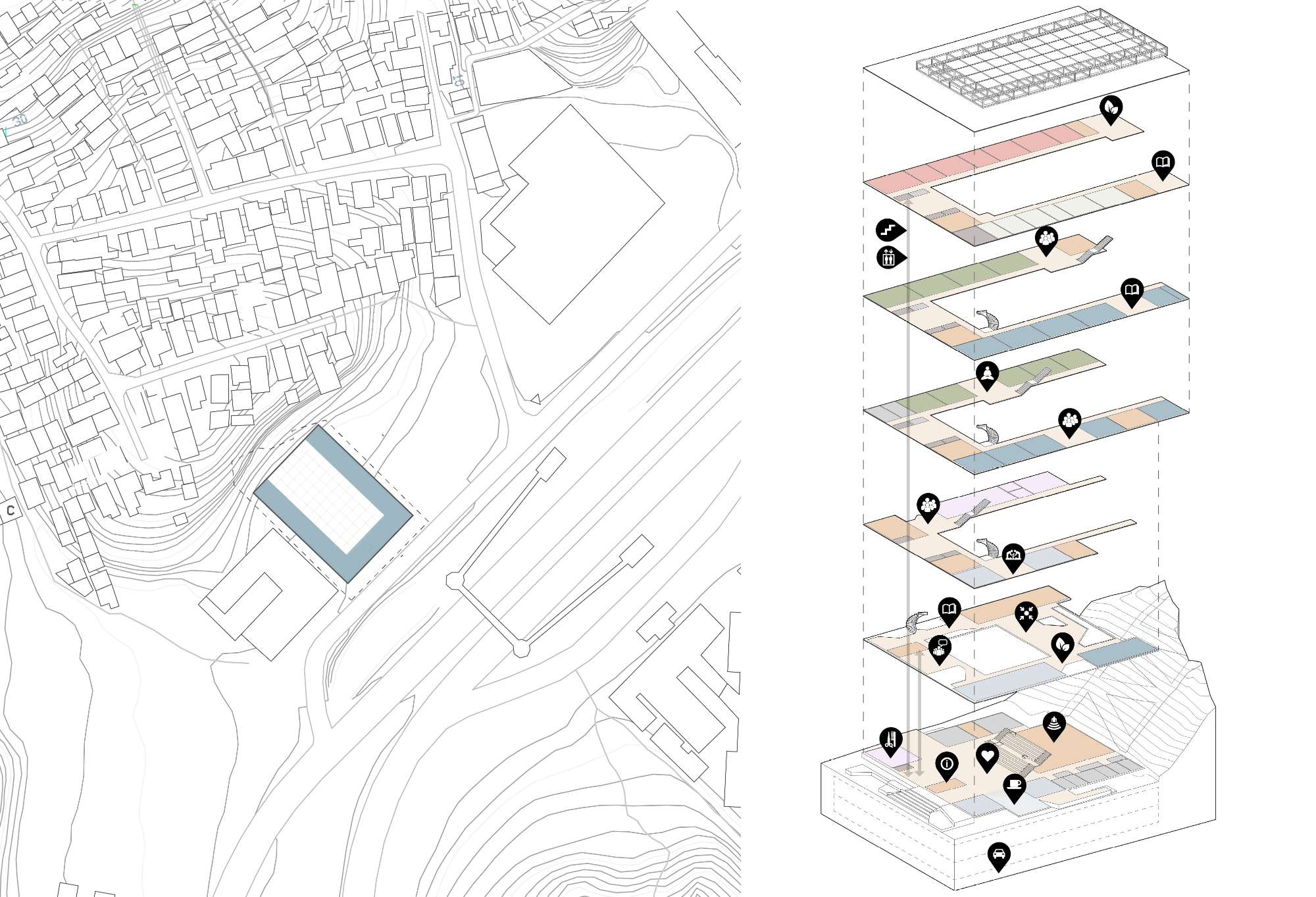
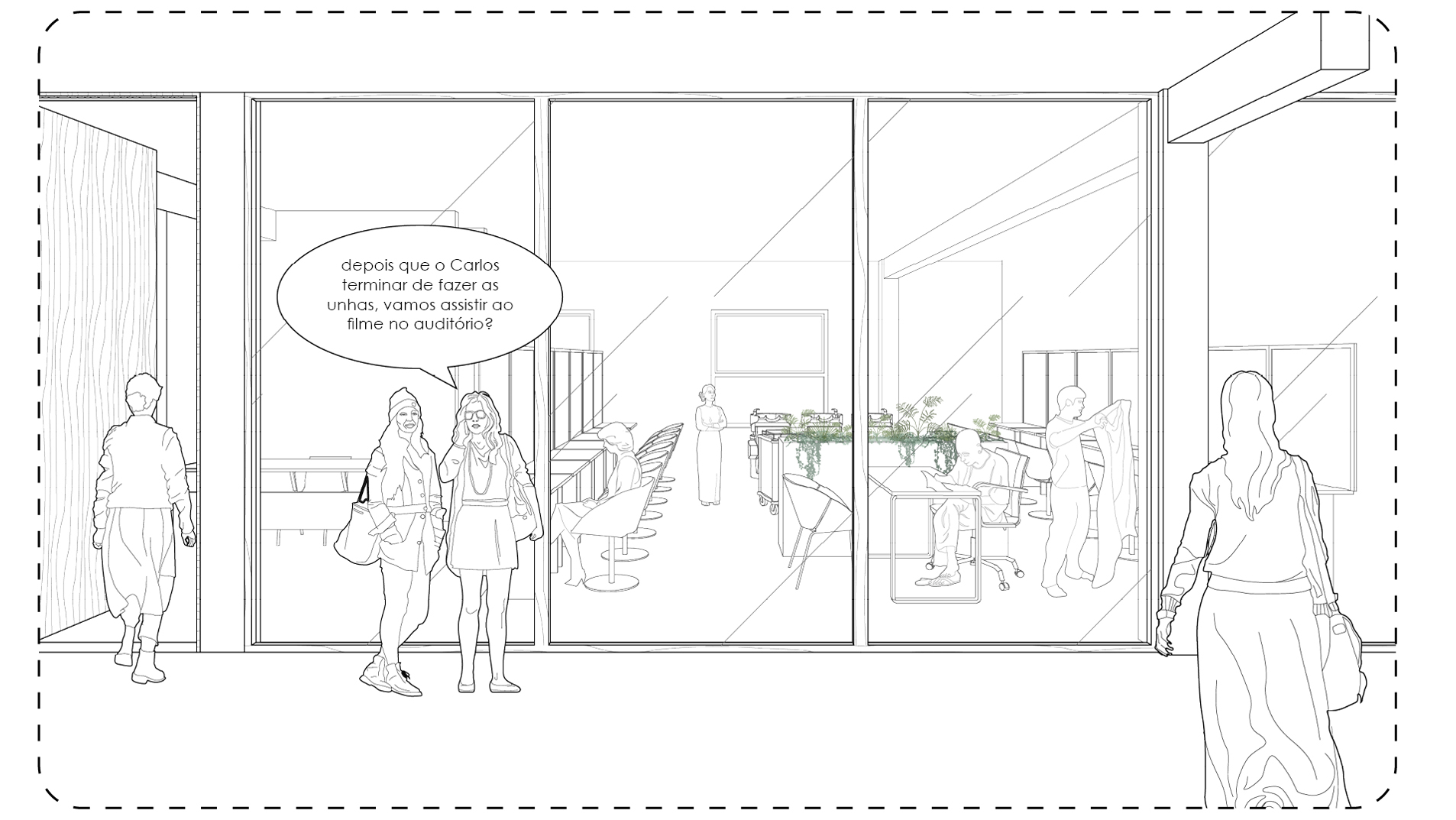
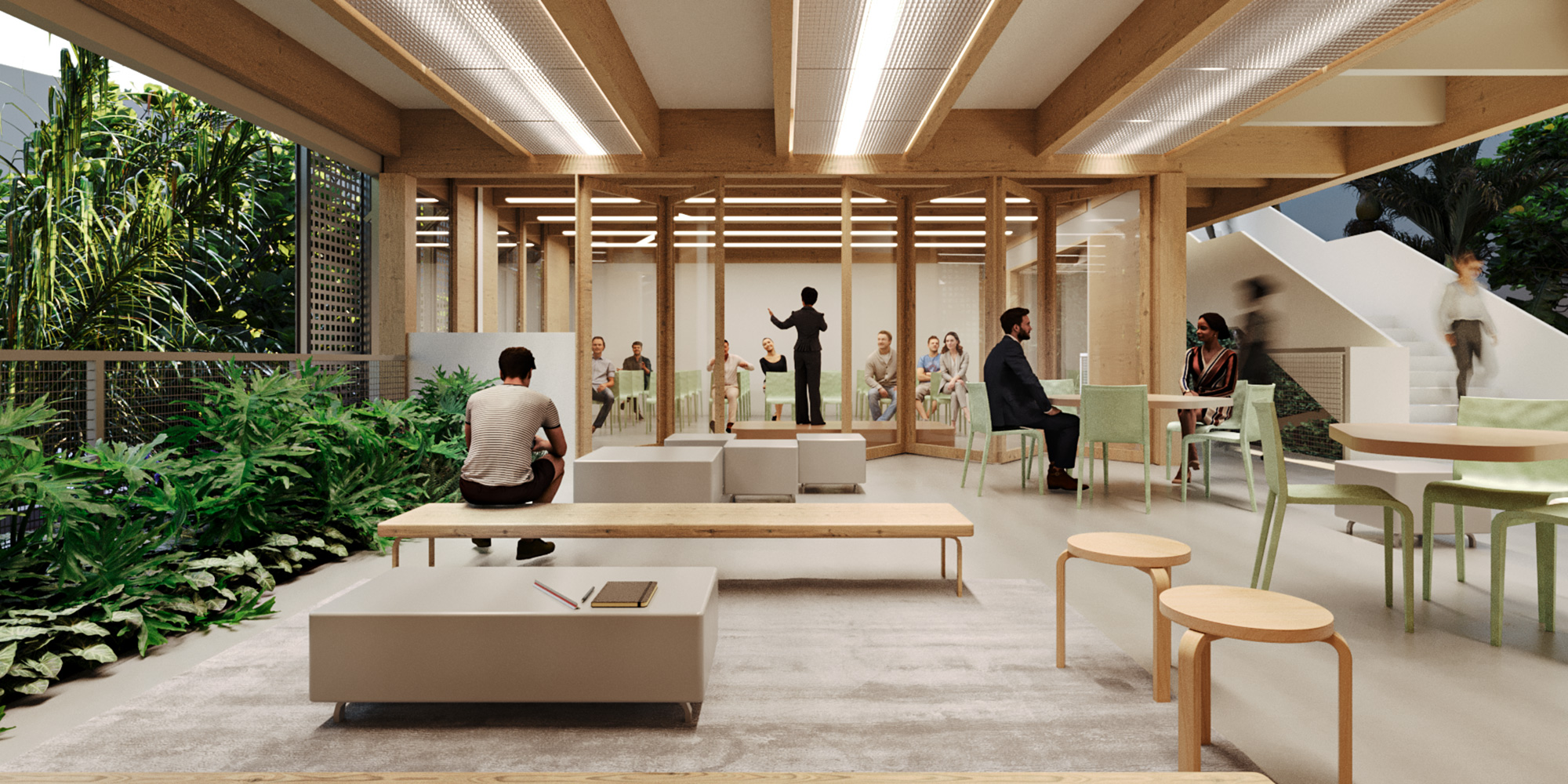
Internal demands include the creation of a creative center, connections with the neighboring community, effective coordination between public and private programs, and the creation of meeting places that foster shared experiences.
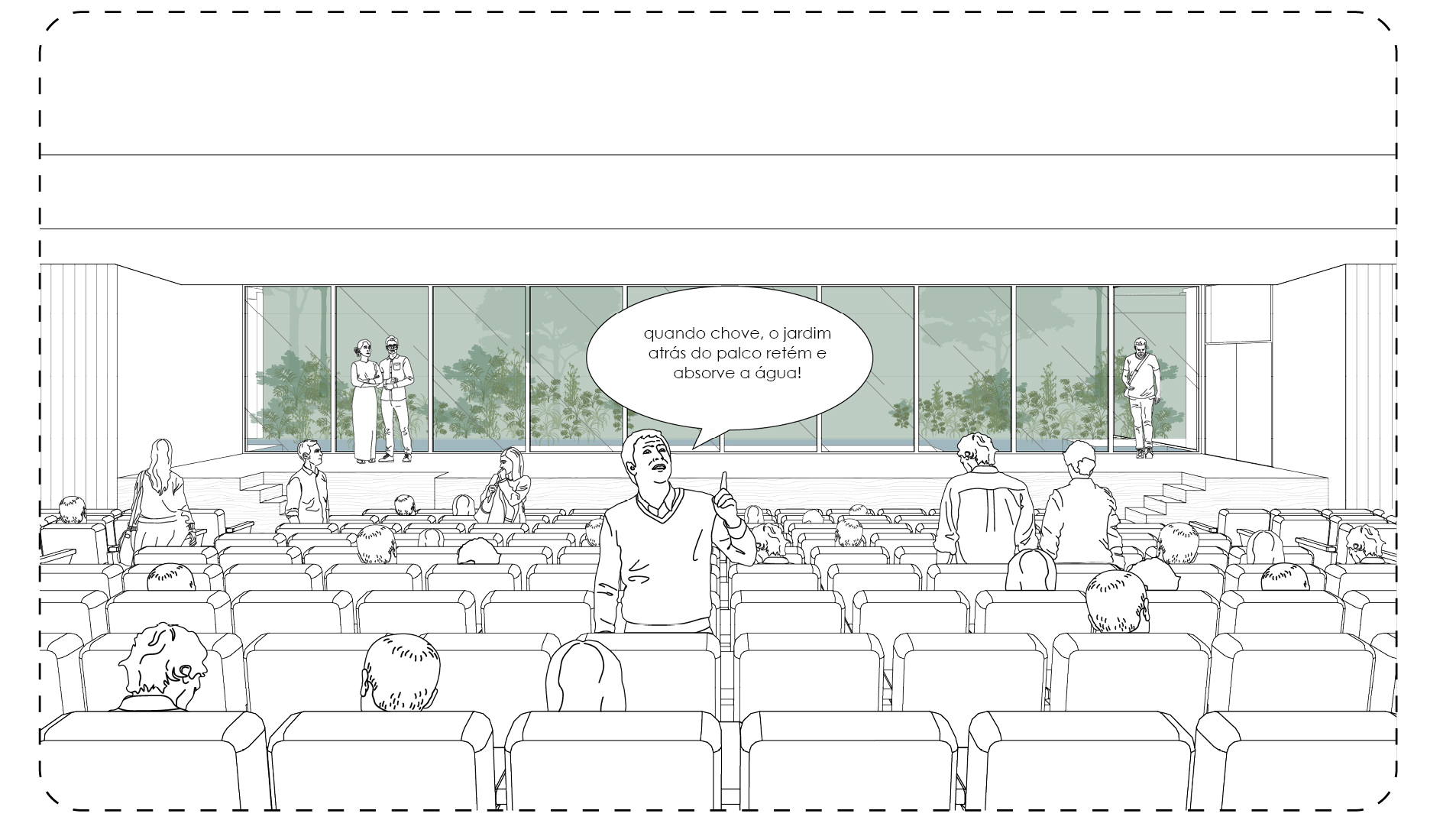
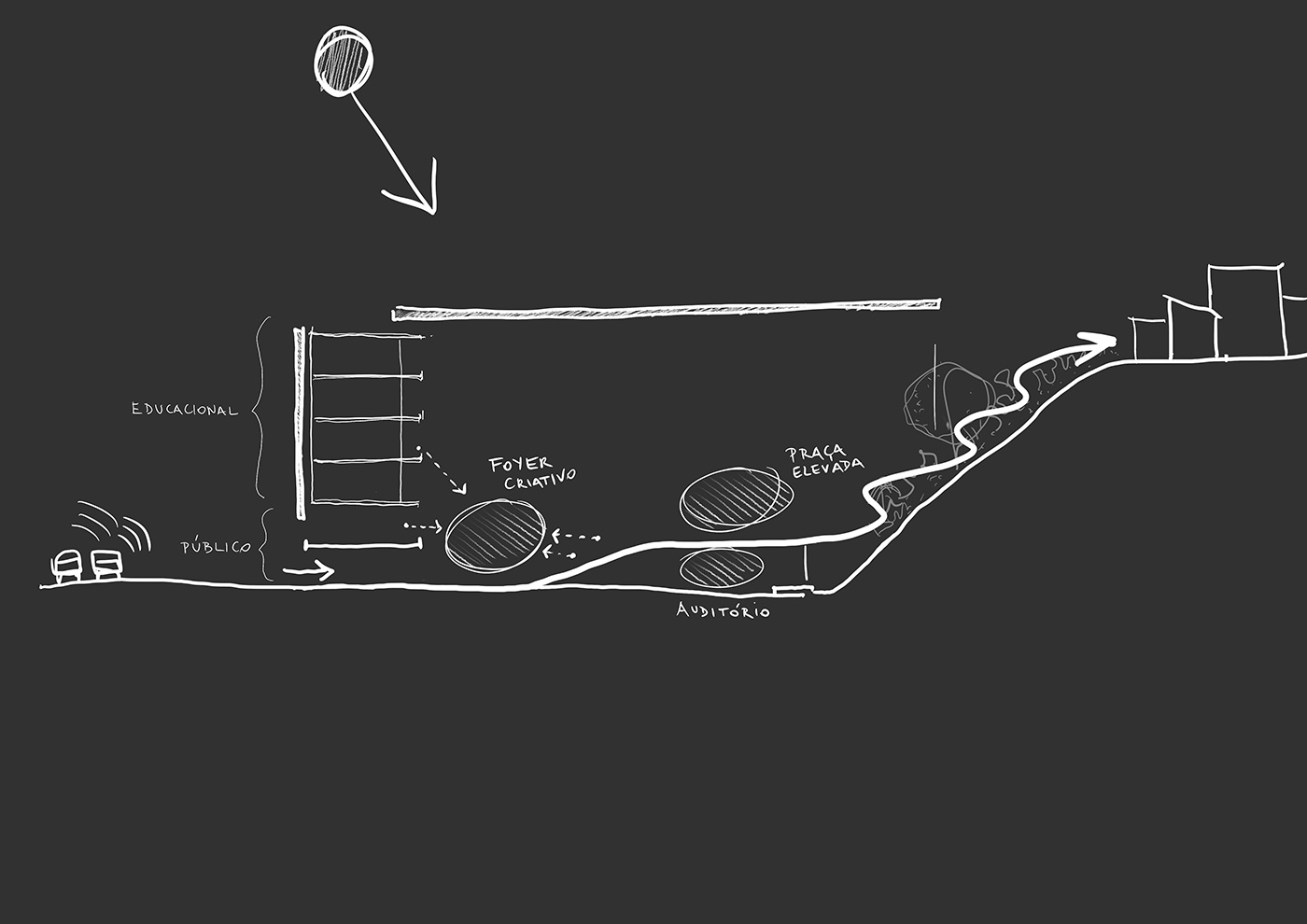
The proposal: The foundation of the complex is marked by a tribune that smoothly connects the ground floor and the first floor, the terrace, transforming the foyer into a large creative stage. The terrace, in turn, becomes an elevated public plaza, forming the auditorium space within. The elevated plaza serves as a transition space, connecting the atrium to the green slope that rises, on ramps supported by the topography, to the high elevation of the future access to the Alto do Saldanha community, and public programs to educational programs.
The ground floor and first floor house public programs, and the upper floors, with controlled access, house educational programs. The foyer and elevated plaza create a symbiotic system, forming a protected topography that is the heart of the building.
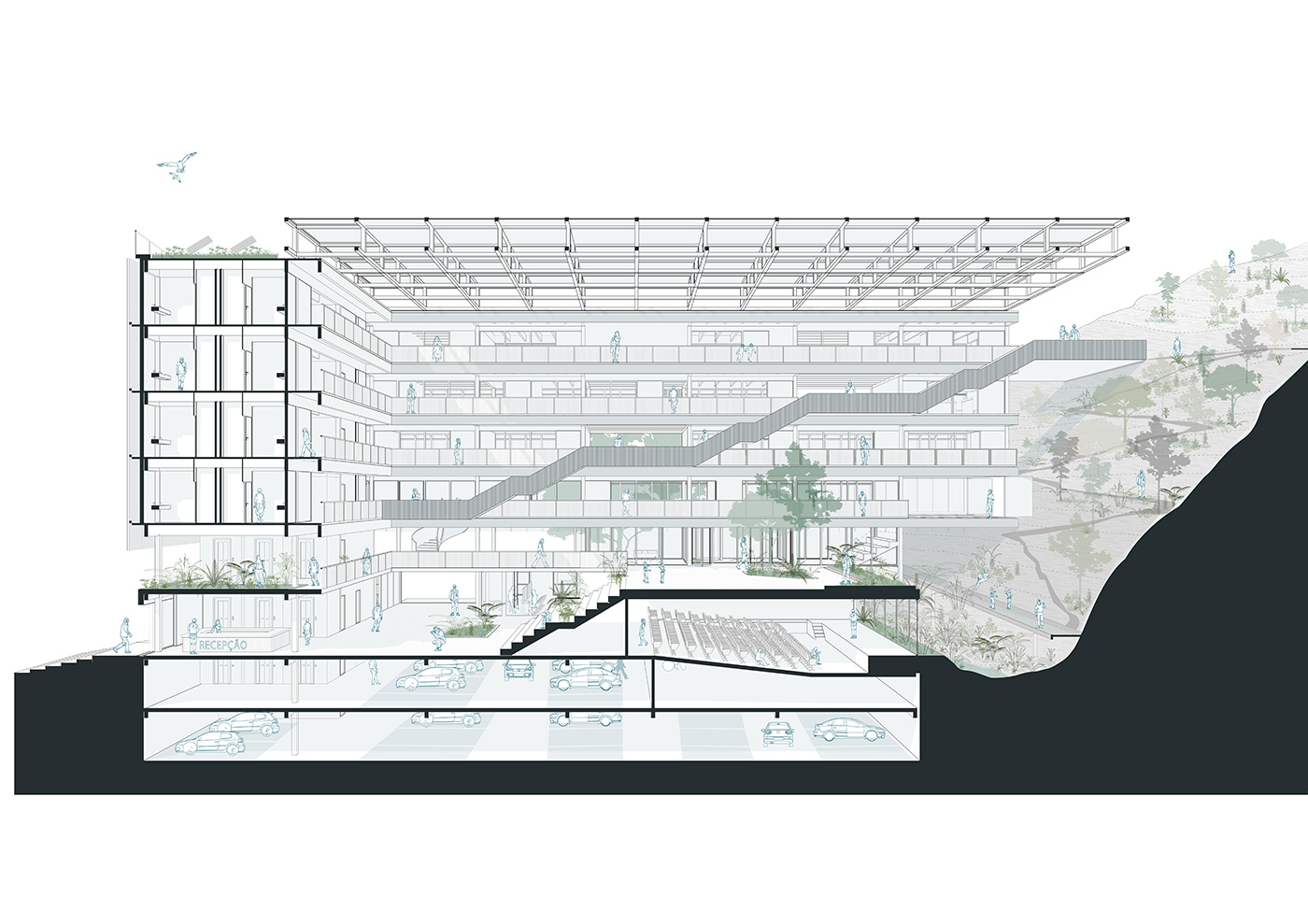
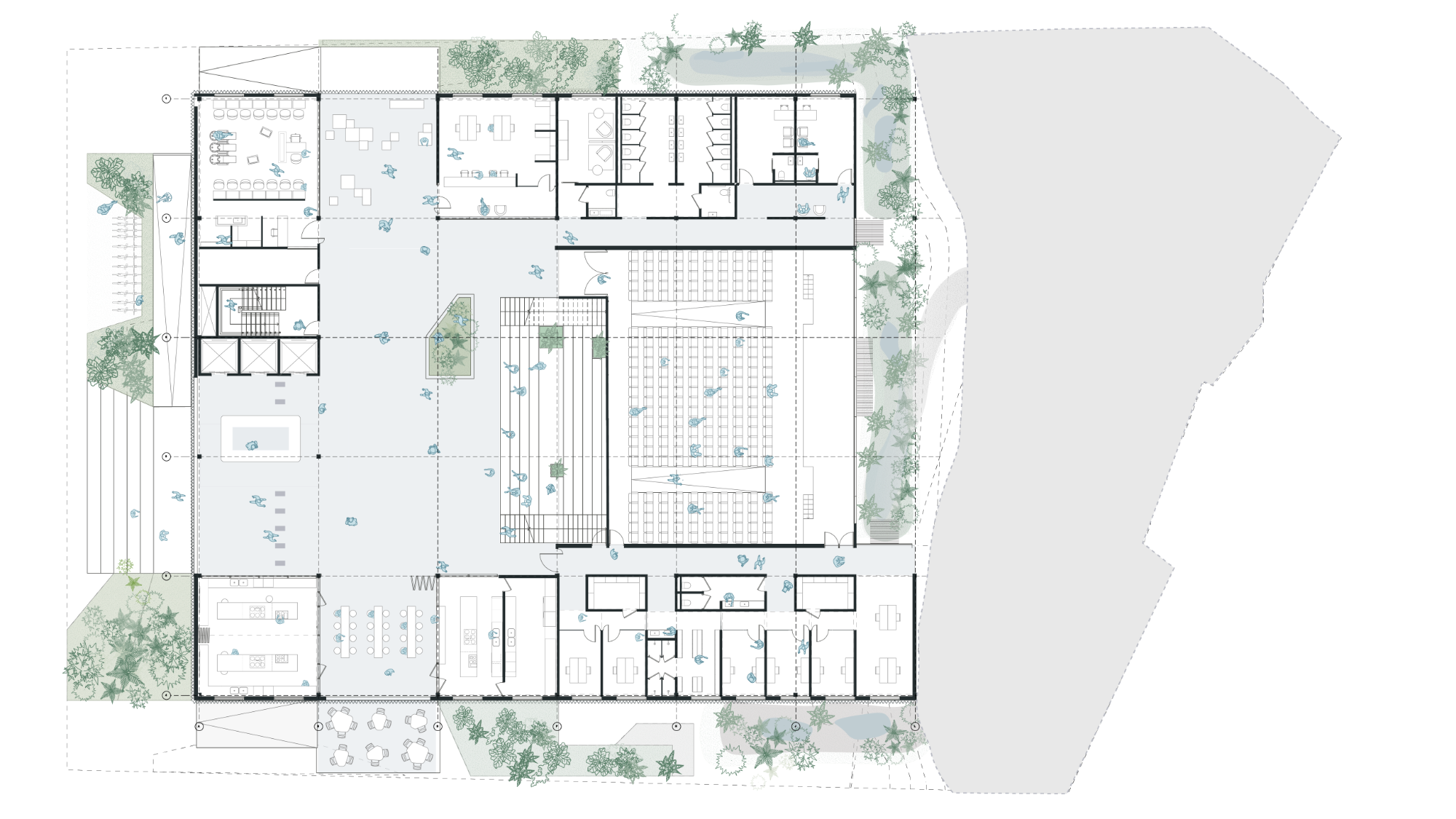
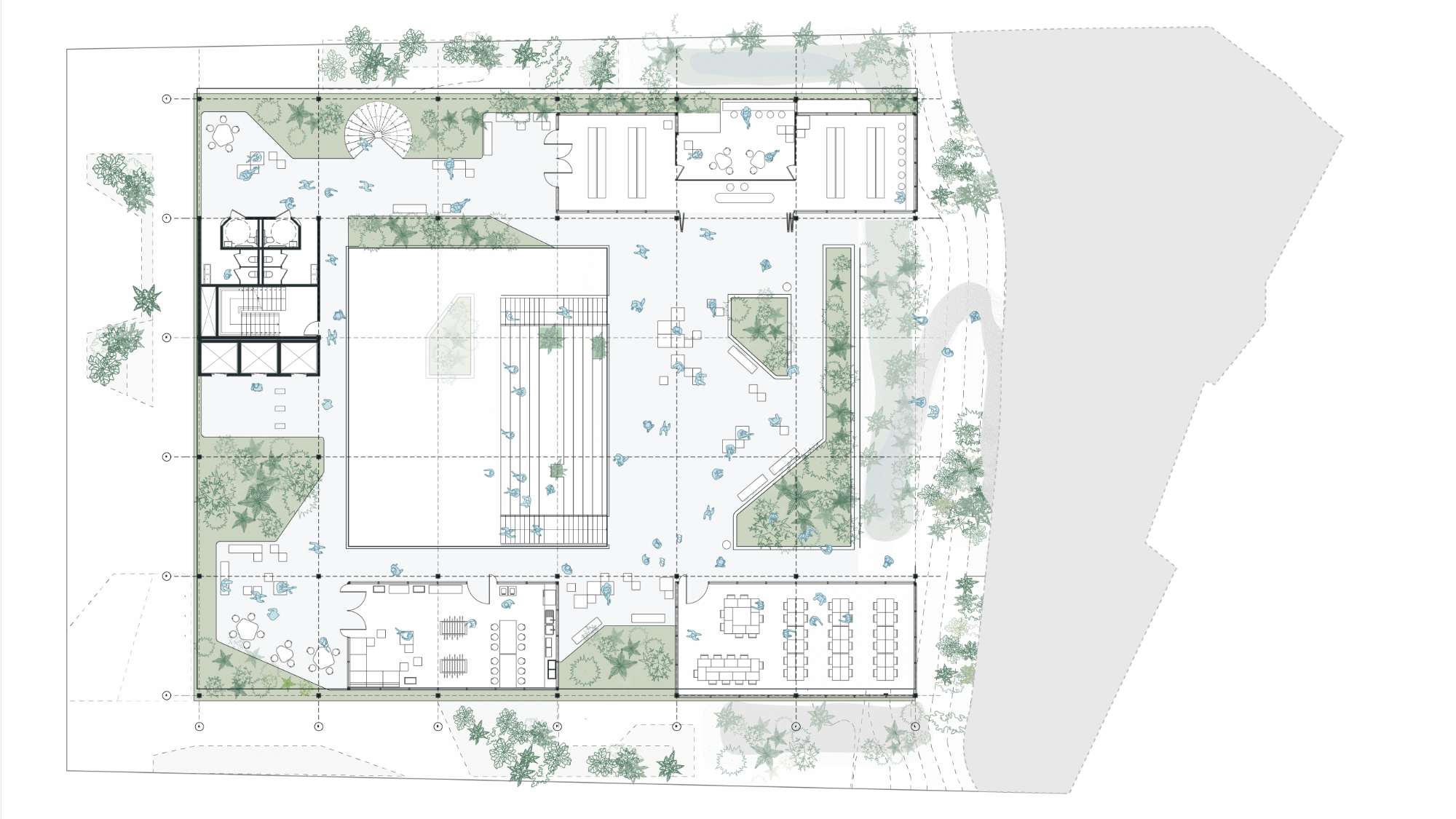
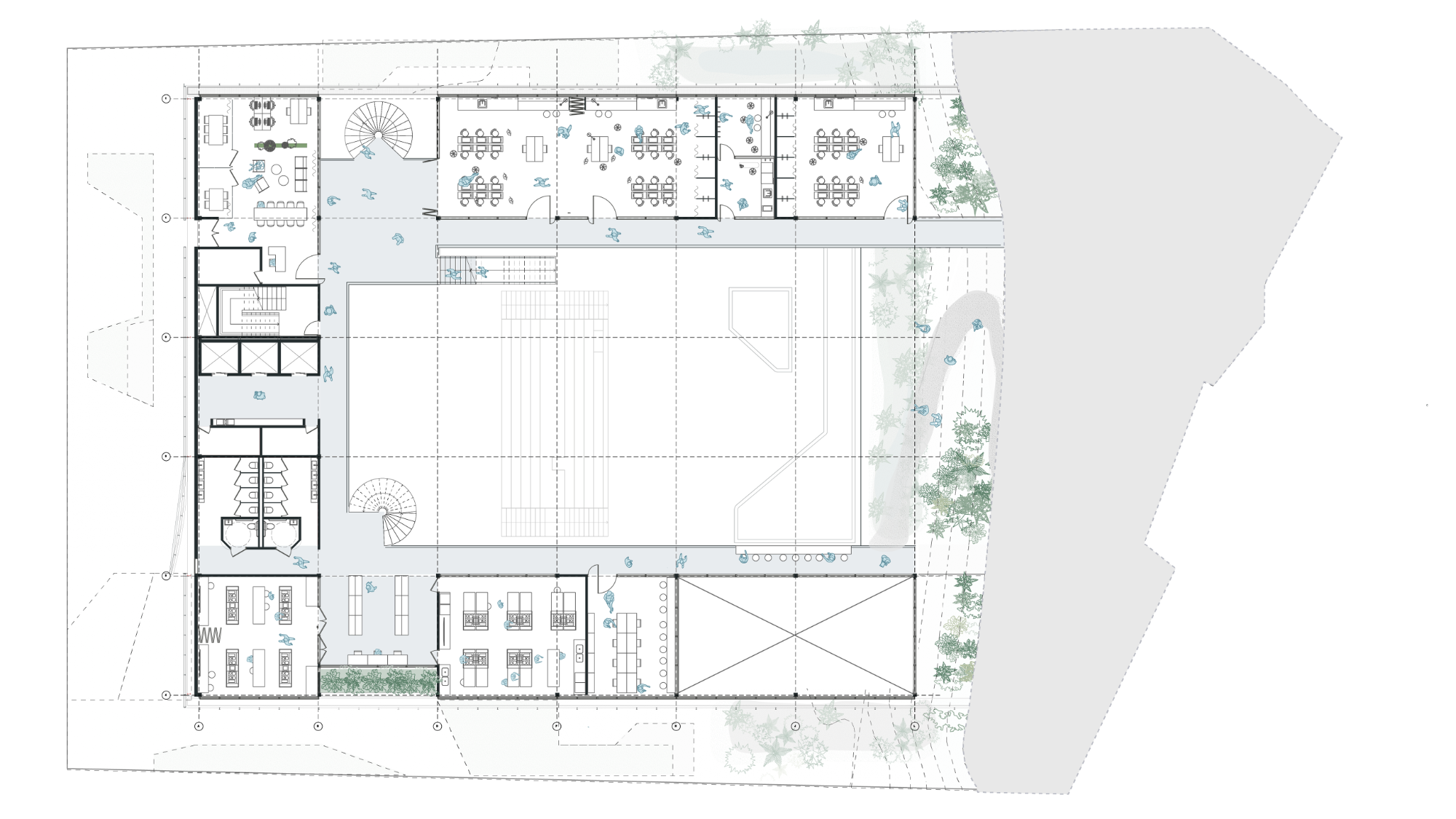
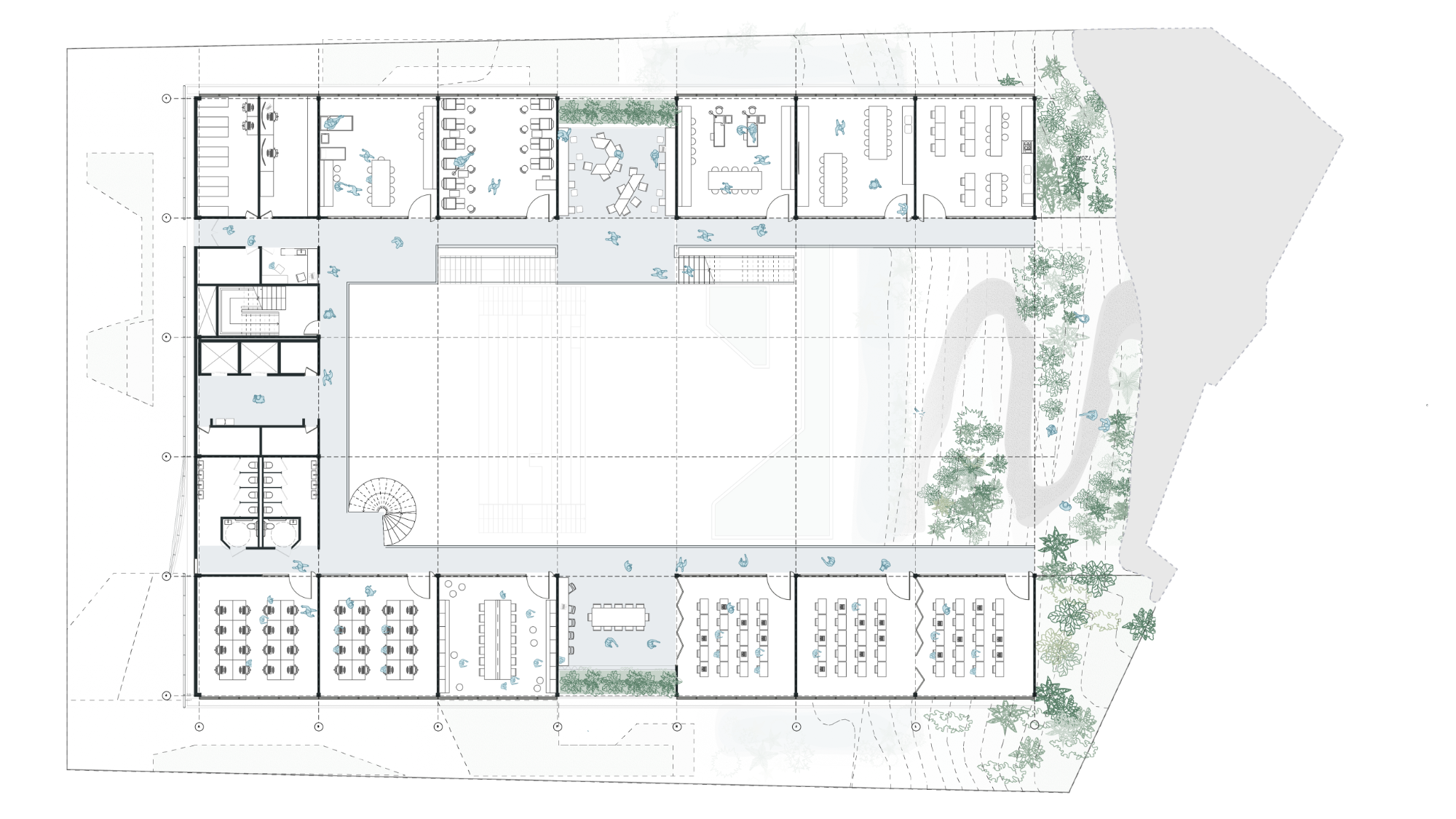
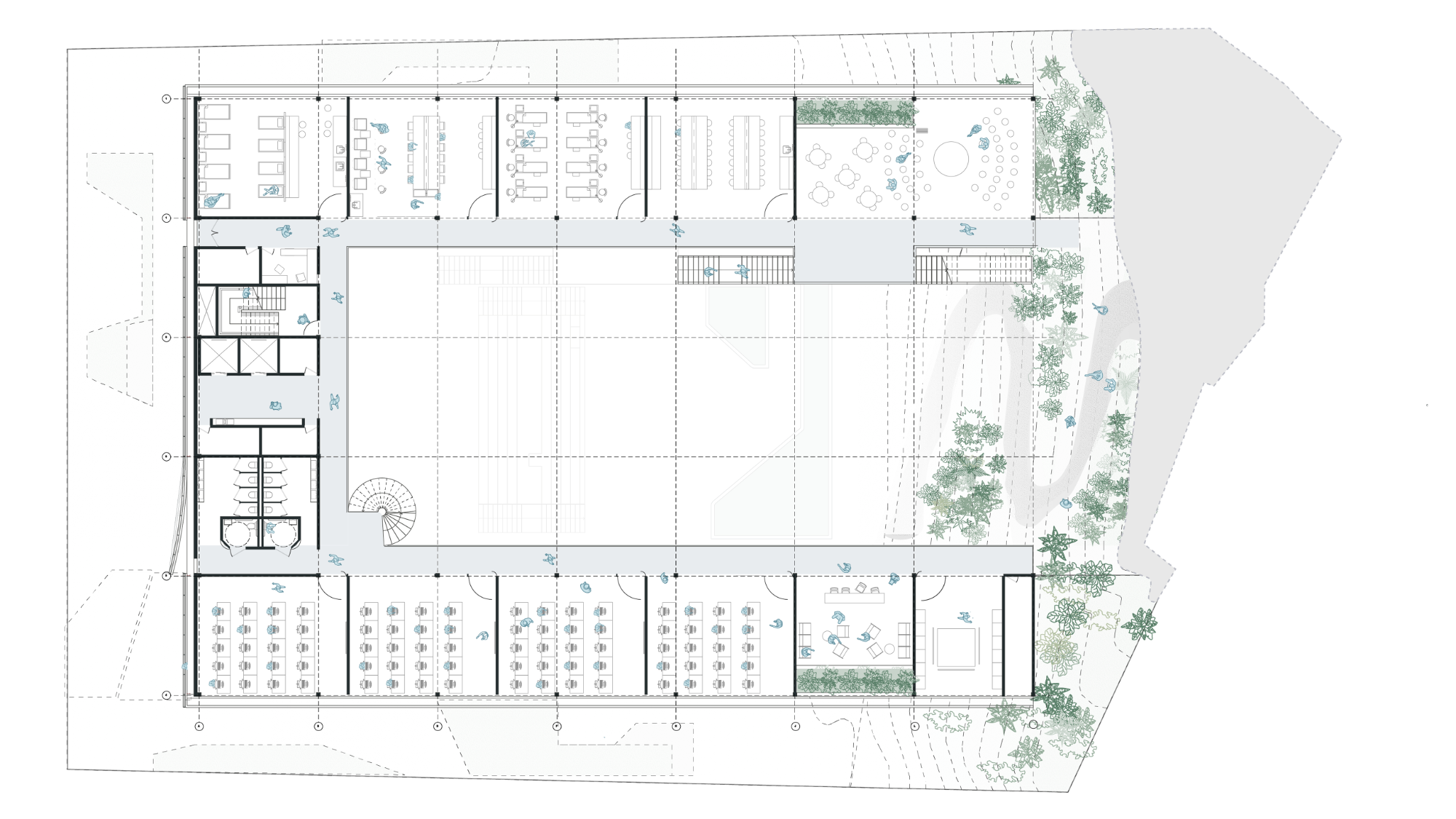
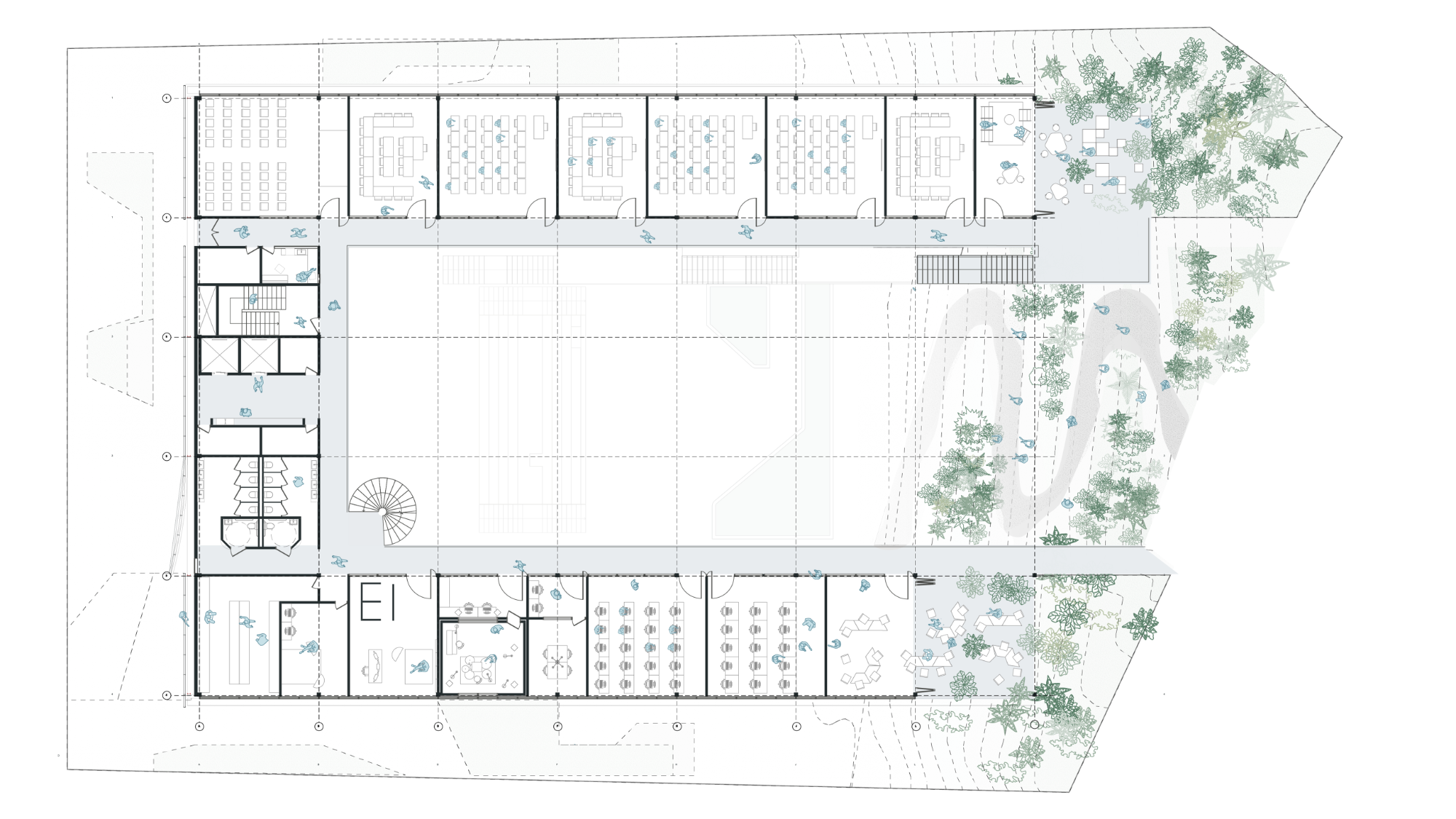
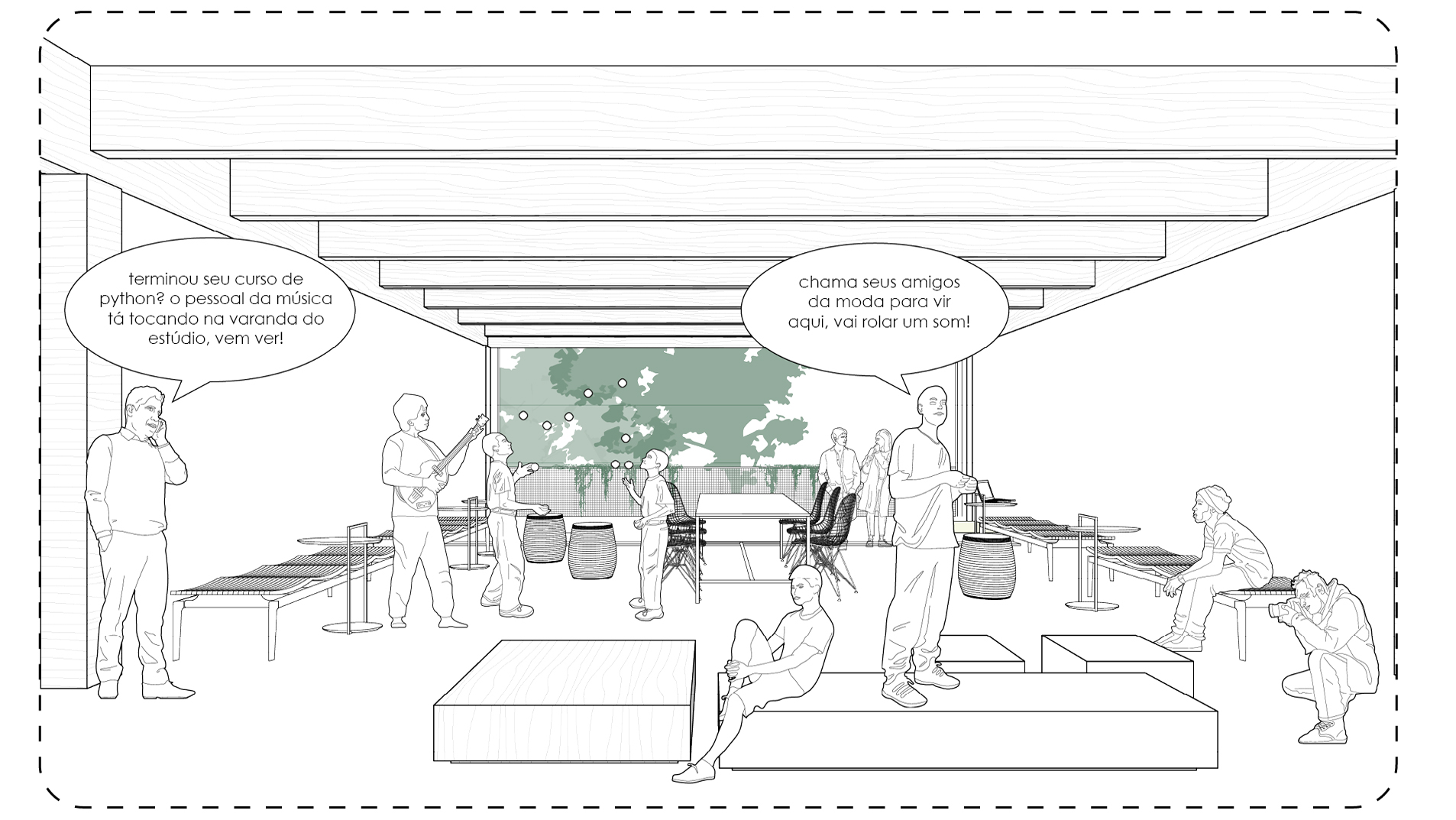
Finally, to create spaces that foster shared experiences, all circulation devices—ramps, verandas, and stairs—connect to the building's interior and exterior spaces, becoming part of an integrated urban circulation system. The series of staircases, as the main circulation system of the educational program, always abuts on airy, green terraces—the study squares—meeting spaces for all courses, fostering the creation of an academic community integrated into the local urban fabric.