
SESC Mogi das Cruzes Competition
Architecture: 23 South, Wierman.studio
Team: Álvaro Ortiz, Ana Luiza Broetto, Gabriel Manzi Frayze Pereira, Gustavo Wierman, Ivo Magaldi, João Victor Lovadino, Julia Moteoliva Serrano, Luis Pompeo Martins, Luiz Florence, Mariana Chiarello, Moreno Zaidan, Tiago Oakley
Interiors: –
Landscaping: Klara Kaiser Mori
Contributors: Eleanna Grammatopoulou
Structural Engineering: –
MEP Engineering: –
Location: Mogi das Cruzes, SP – Brazil
Year: 2025
Built Area: 20,000 m2
Status: –
Images: Ricardo Iannuzzi
Phases: Contest
Architecture: 23 South, Wierman.studio
Team: Álvaro Ortiz, Ana Luiza Broetto, Gabriel Manzi Frayze Pereira, Gustavo Wierman, Ivo Magaldi, João Victor Lovadino, Julia Moteoliva Serrano, Luis Pompeo Martins, Luiz Florence, Mariana Chiarello, Moreno Zaidan, Tiago Oakley
Interiors: –
Landscaping: Klara Kaiser Mori
Contributors: Eleanna Grammatopoulou
Structural Engineering: –
MEP Engineering: –
Location: Mogi das Cruzes, SP – Brazil
Year: 2025
Built Area: 20,000 m2
Status: –
Images: Ricardo Iannuzzi
Phases: Contest
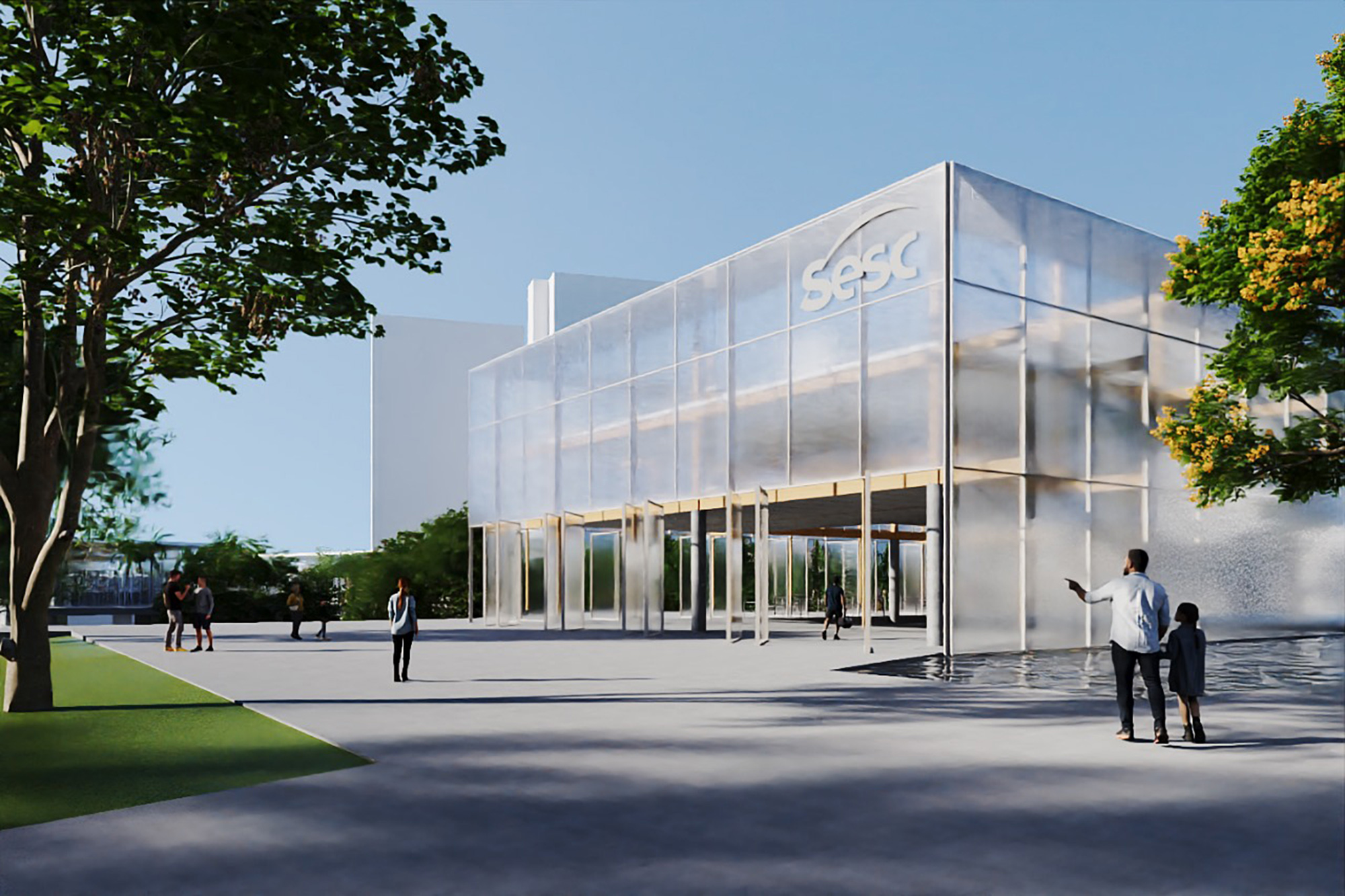
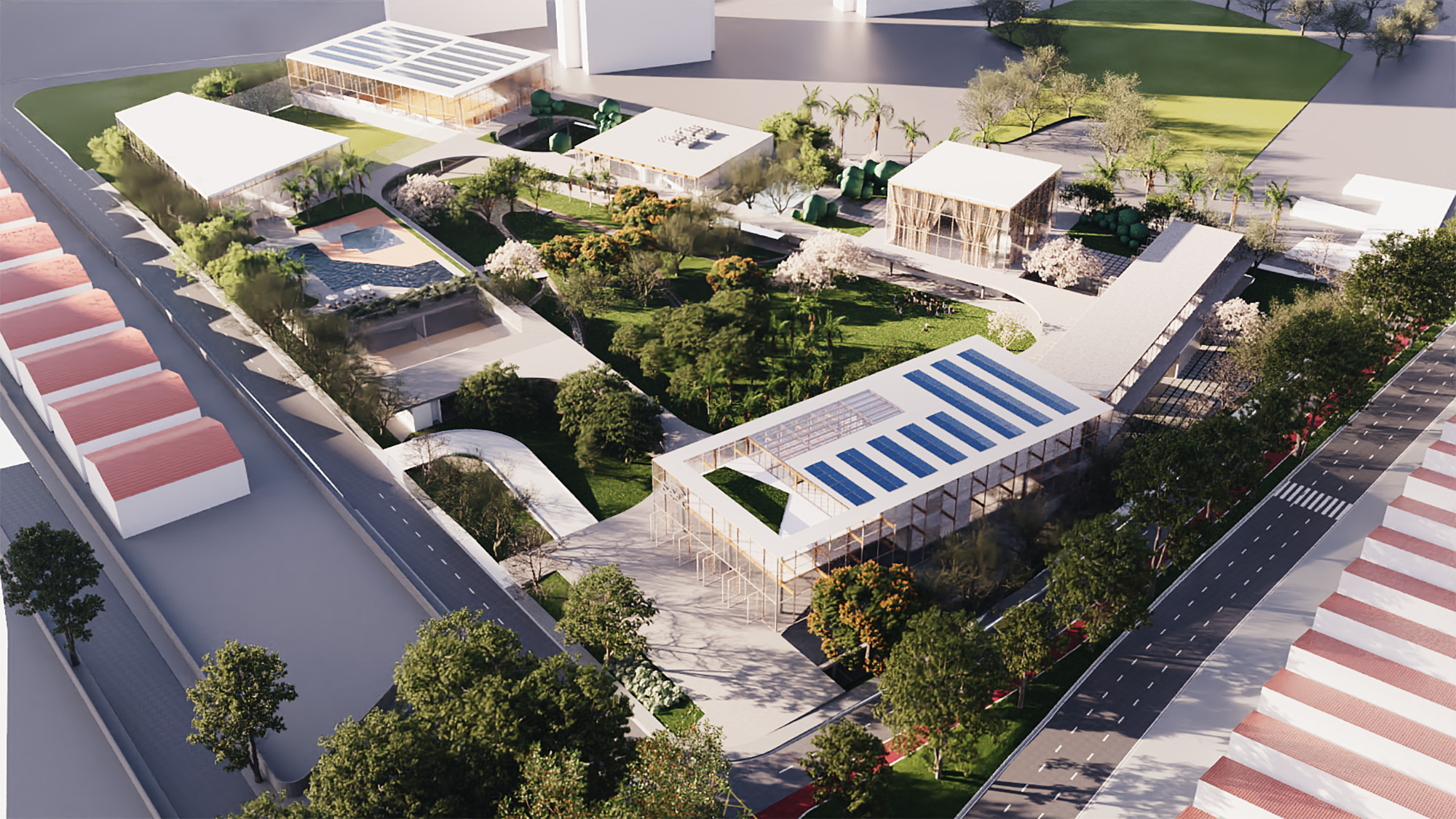
The new SESC Mogi project proposes a revision of the concept of a detached building on a lot to embrace urban landscape design, with a view to reclaiming nature as an inseparable component of cities. It involves redesigning an urban structure, combining verandahs, covered areas, and uncovered areas, connecting natural and built components. Rather than a volume visible from the city, it is an urban structure viewed through the filter of natural landscape elements.
We evoke projects that have become historical landmarks, such as Sesc Pompéia, which created humanized versions of streets and cities, reviving memories of traditional pre-car urbanization, and the Ibirapuera Park marquee, which elegantly and monumentally combines the park's cultural programs. In both cases, the contexts intertwine open spaces, vegetation at various scales, and urban axes that connect symbolic buildings, where the ensemble becomes both landscape and object.
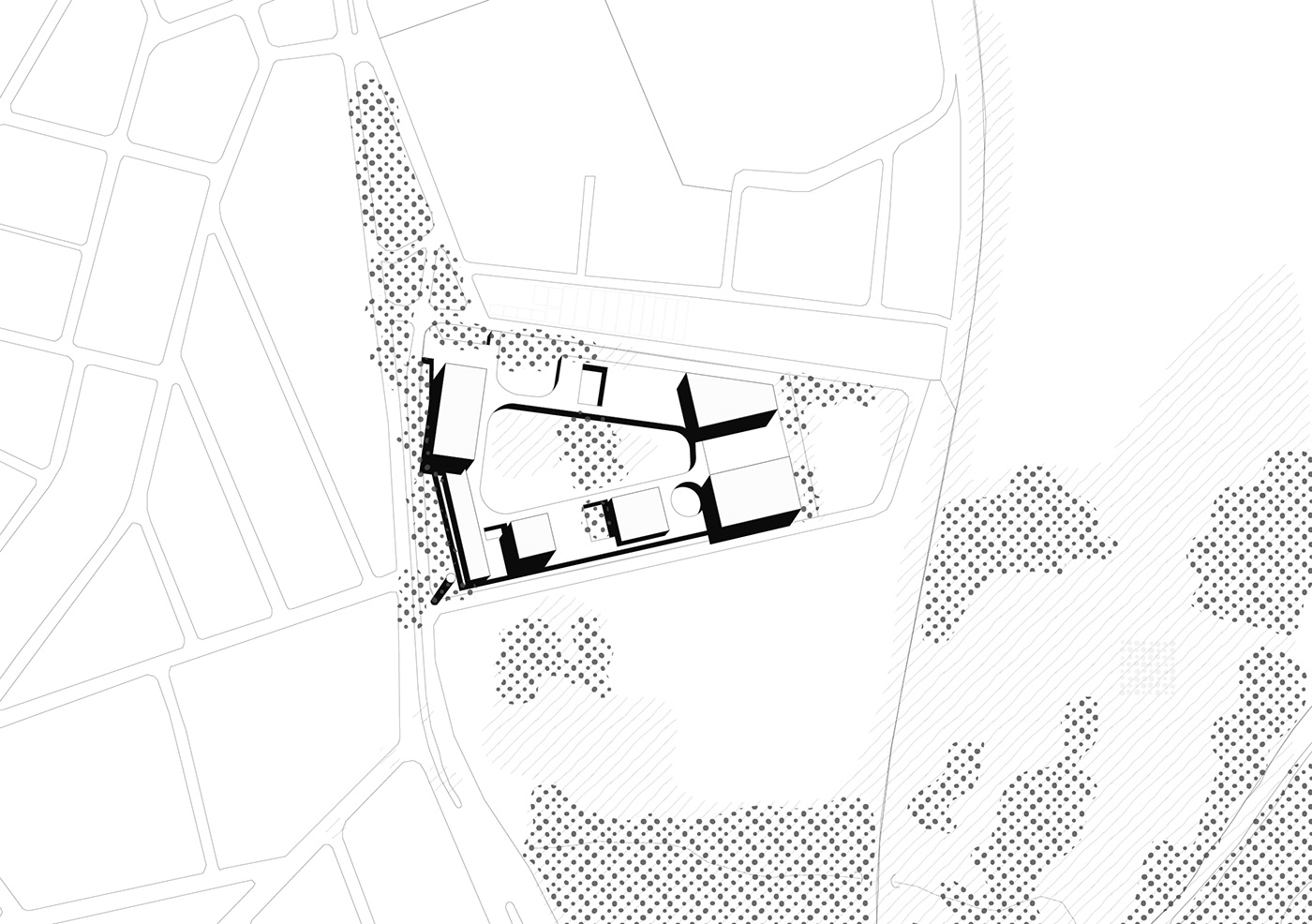
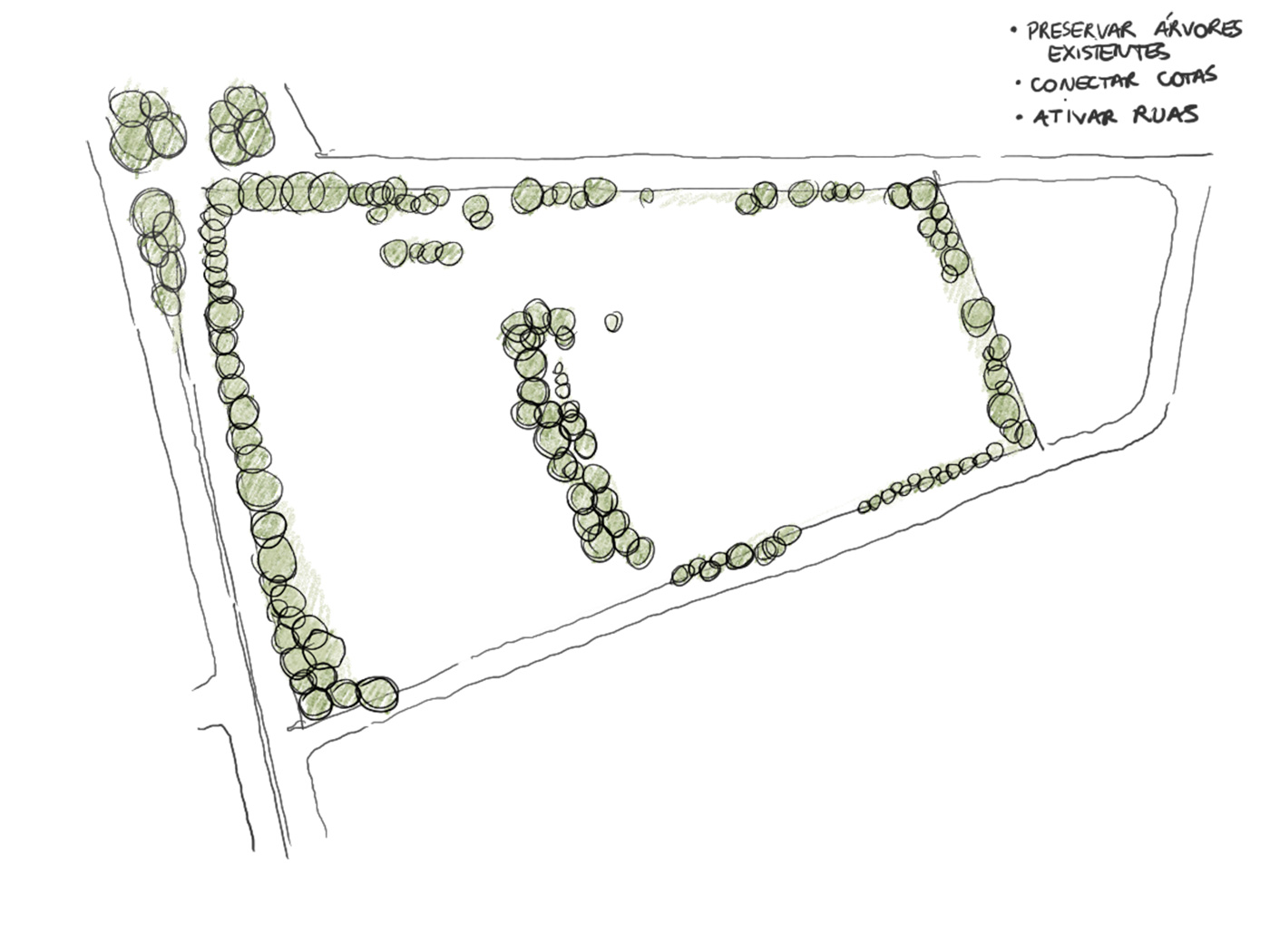
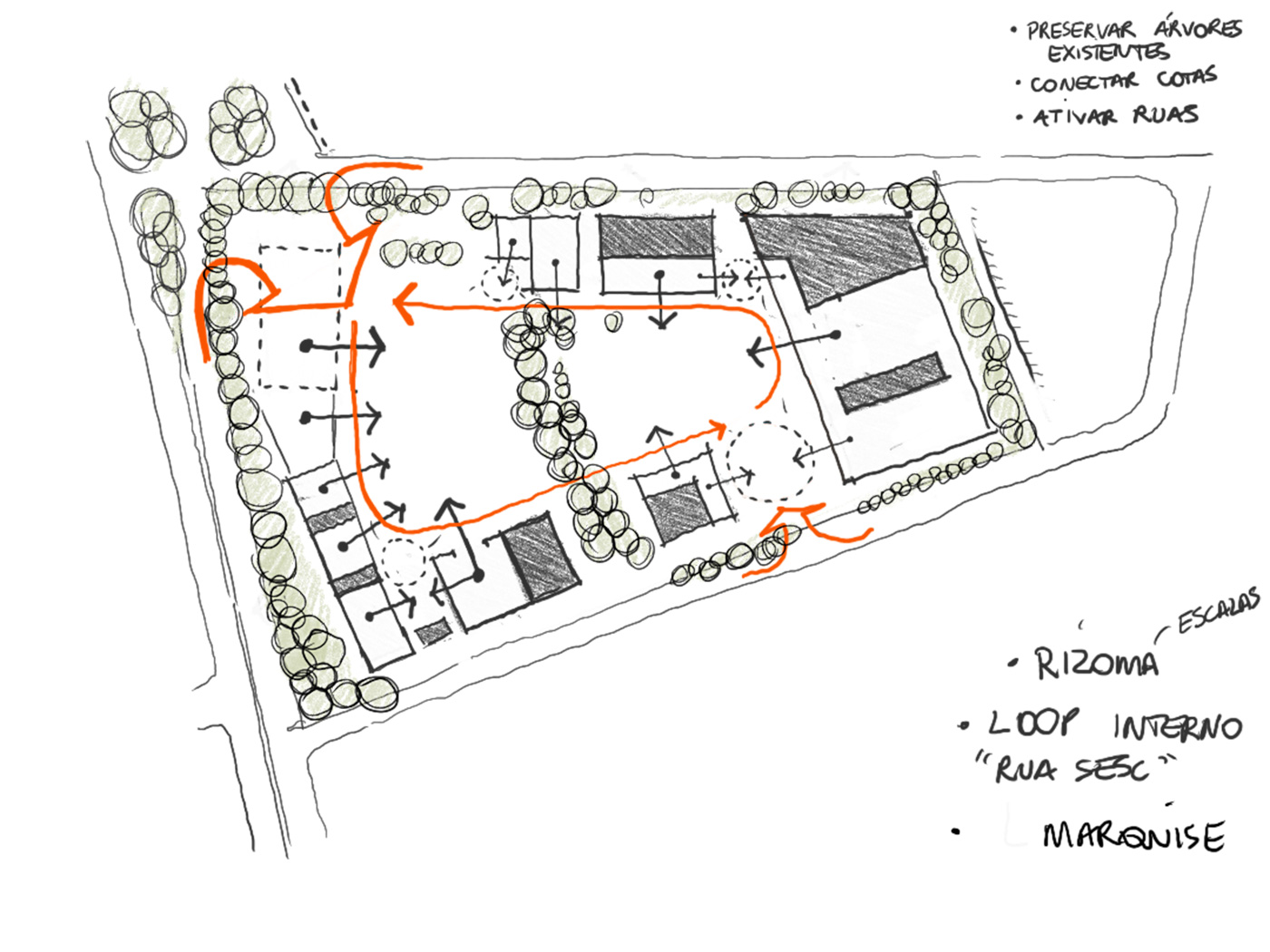
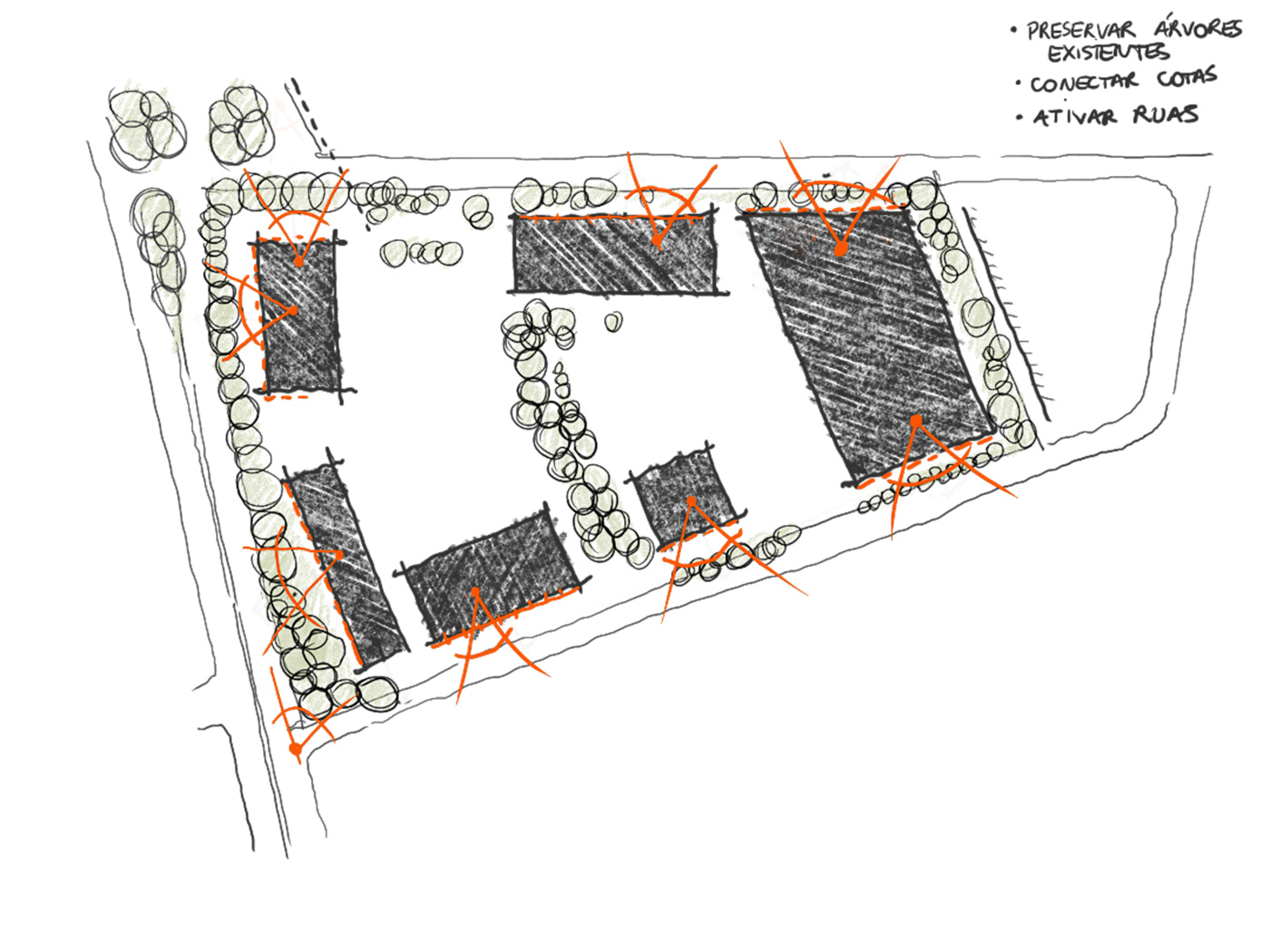
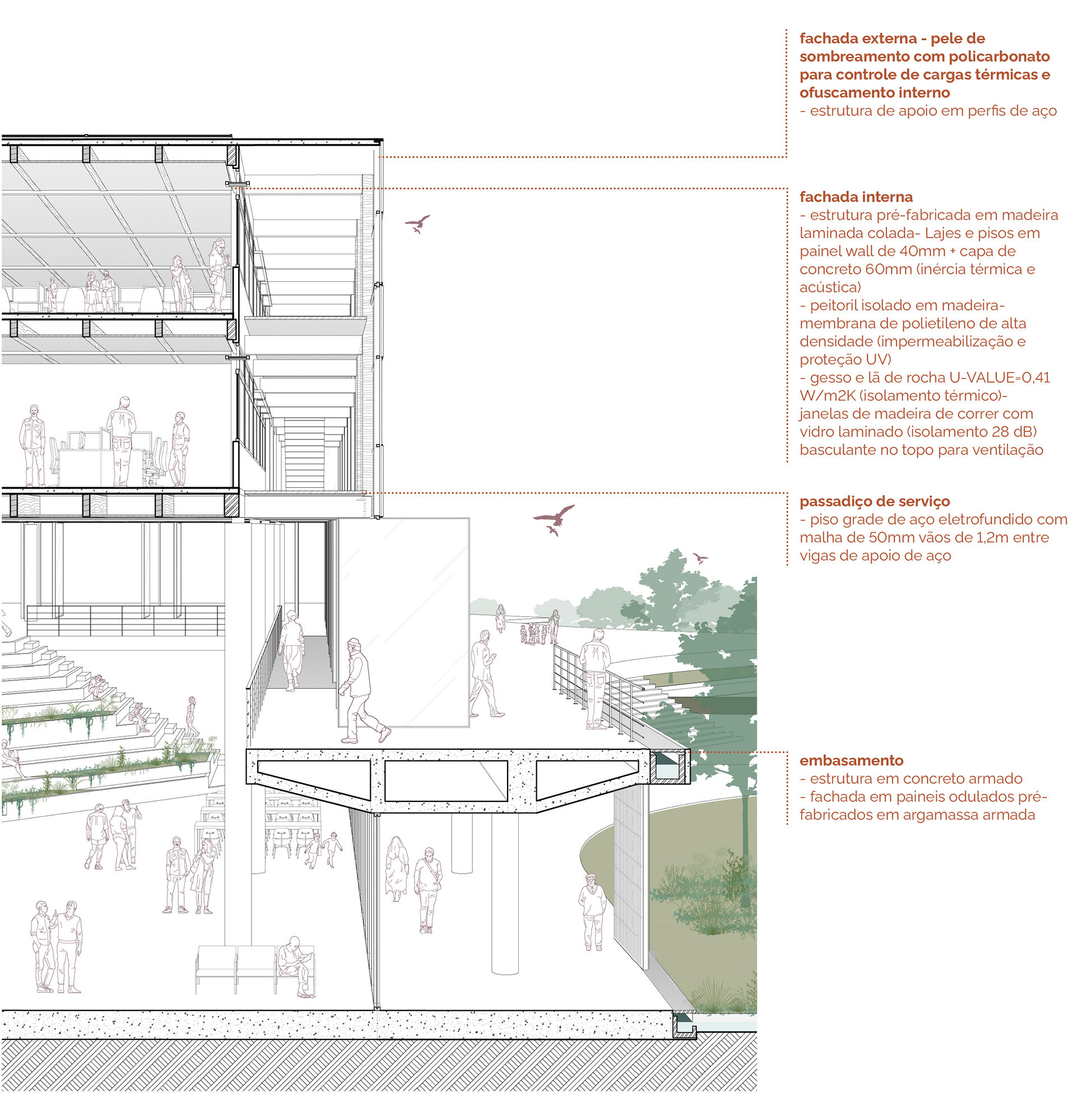
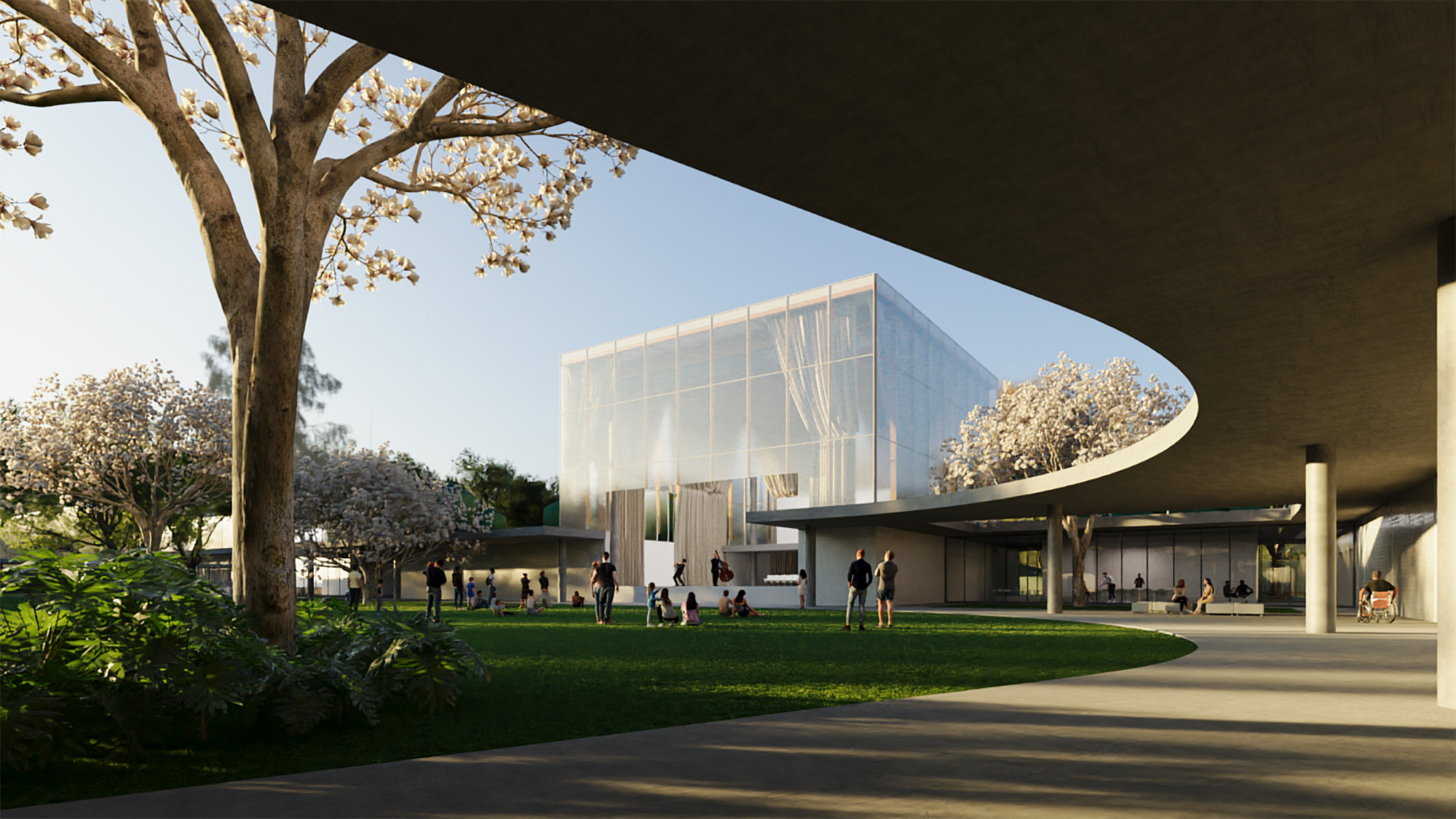
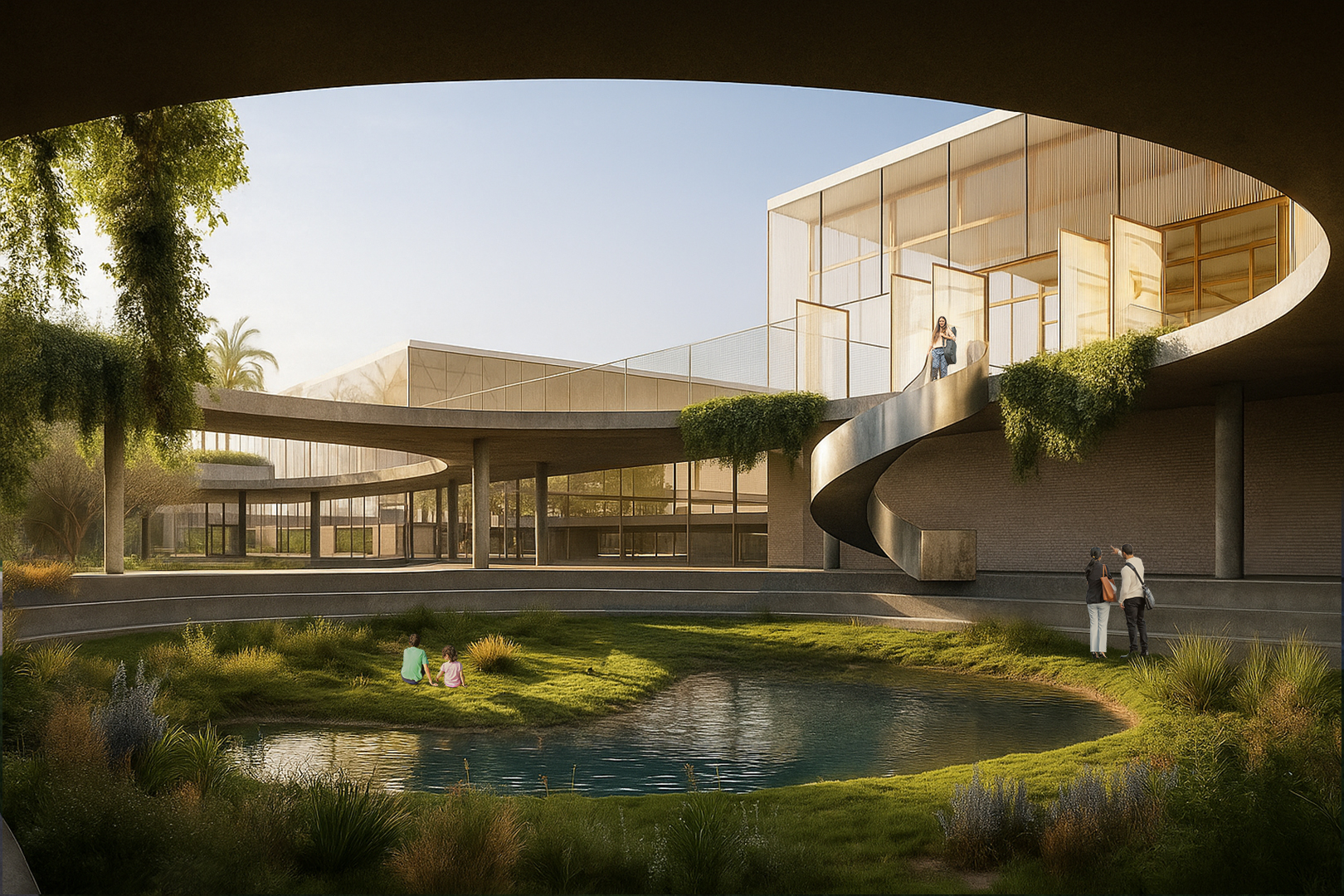
The main connecting element between the natural landscapes and the translucent built volumes is a large active mobility infrastructure: a canopy, which also operates as a large elevated slab, with the aim of creating a microclimate and shelter for visitors, organizing the design from the large central void with a series of veranda situations along the terrain.
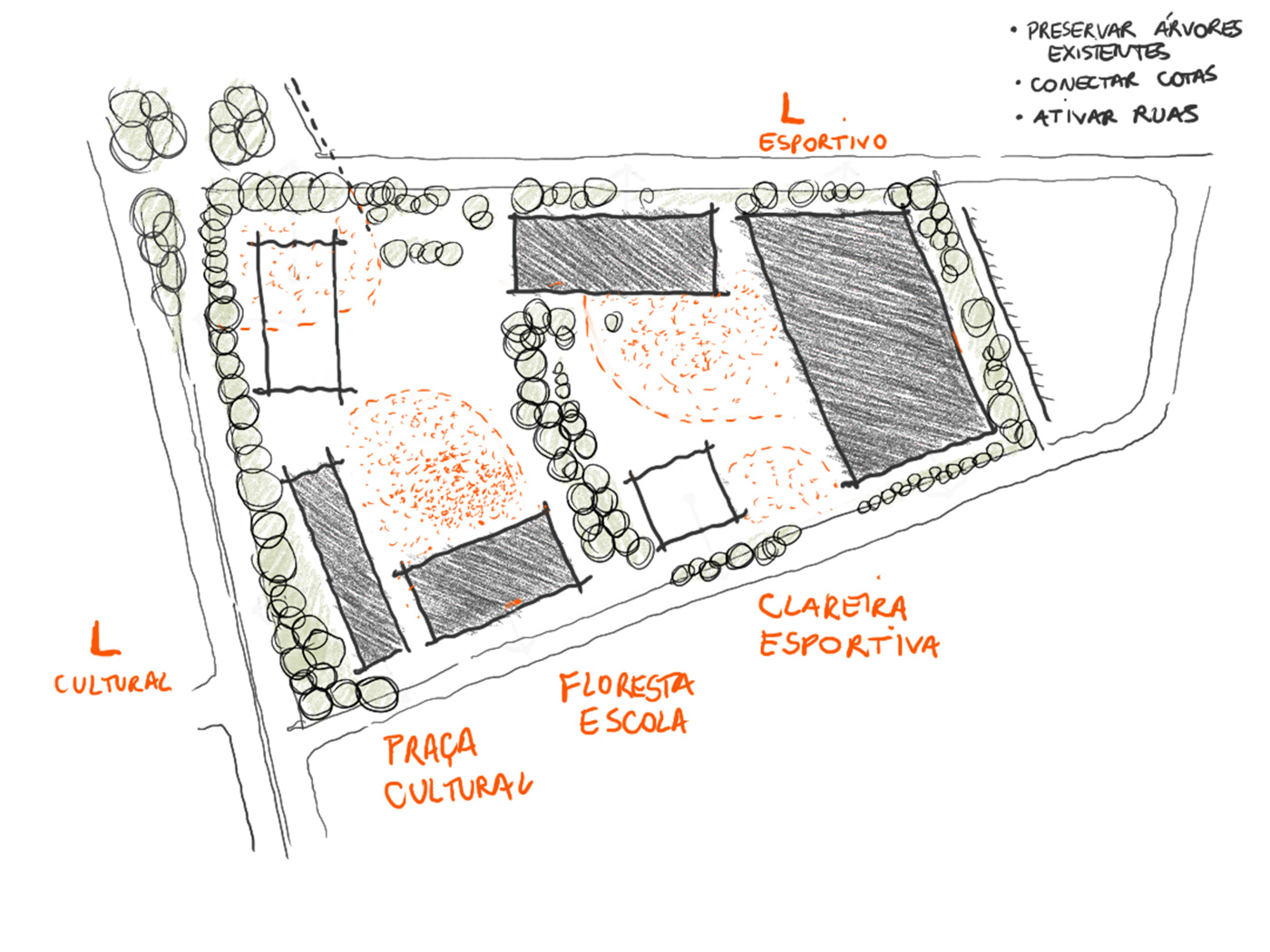
Our interpretation of a project aligned with sustainability criteria encompasses the architecture of the building, the architecture of the site, and the architecture of the program. One of the premises of the land use concept was the preservation of the site's natural heritage. The concept of bordering land use, with an appropriate distance from the perimeter, not only gave prominence to the central tree mass but also preserved almost all the trees. Furthermore, many new species were proposed for the site, expanding the original tree mass and integrating them with the existing buildings, at various scales.
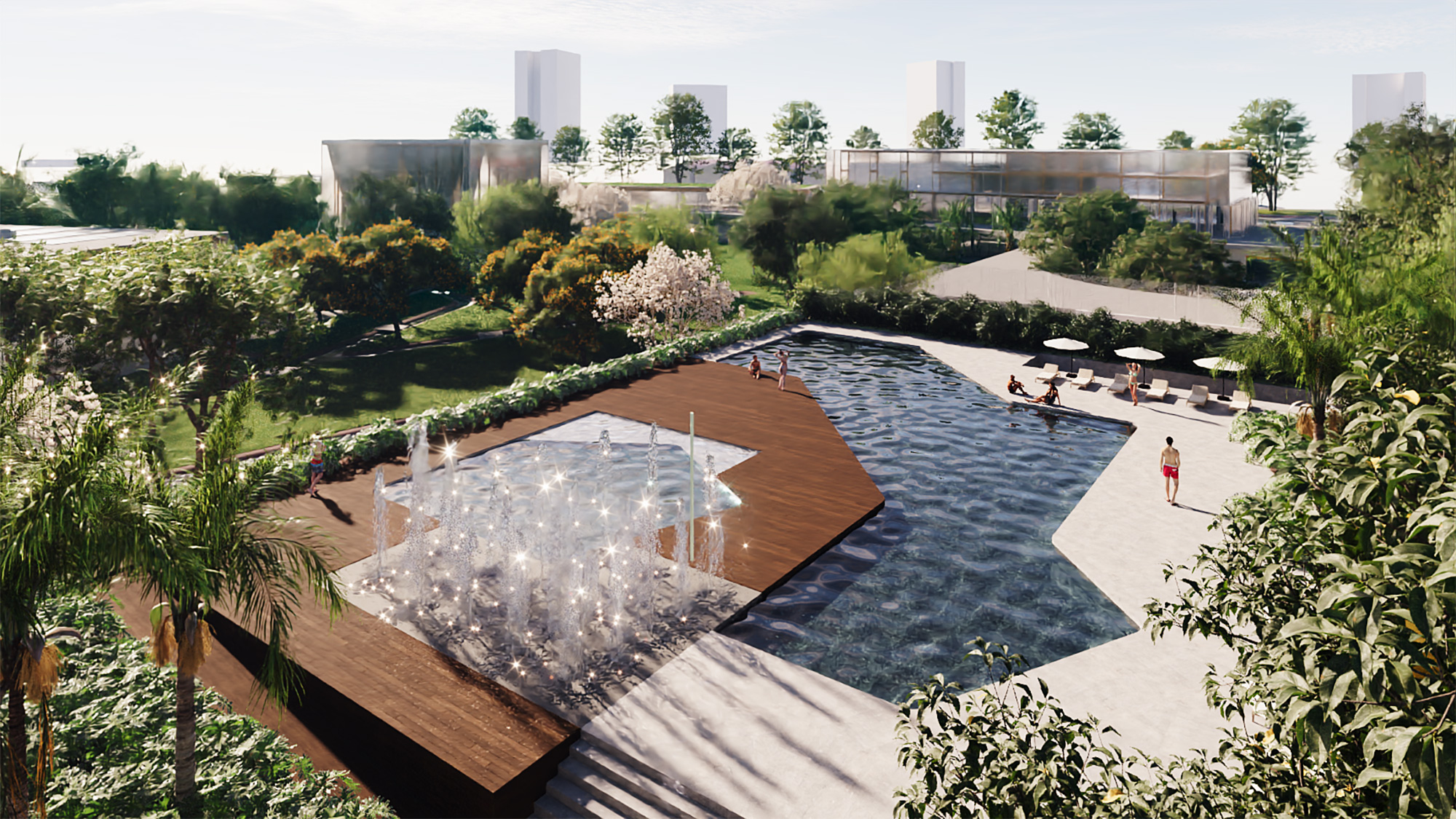
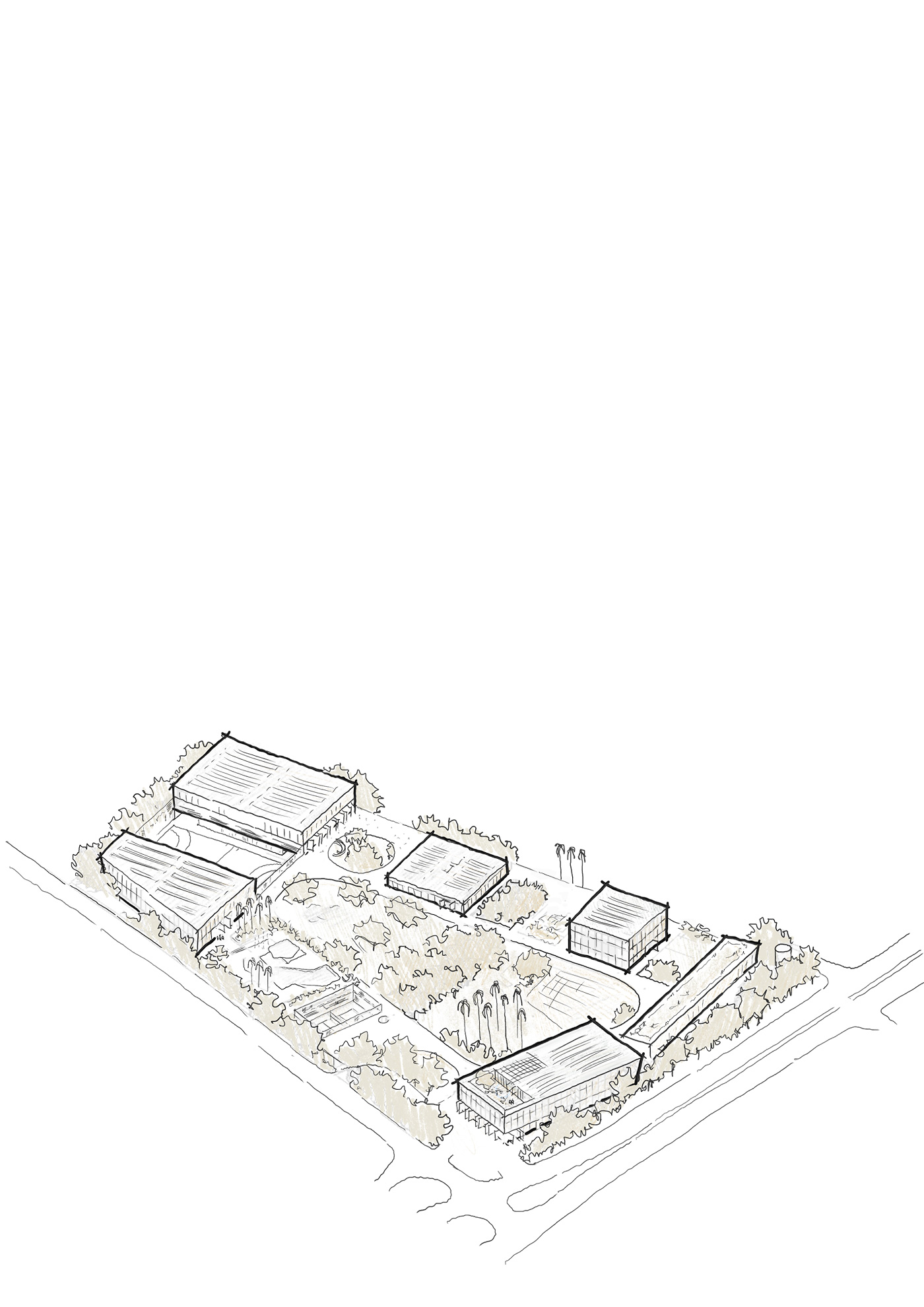
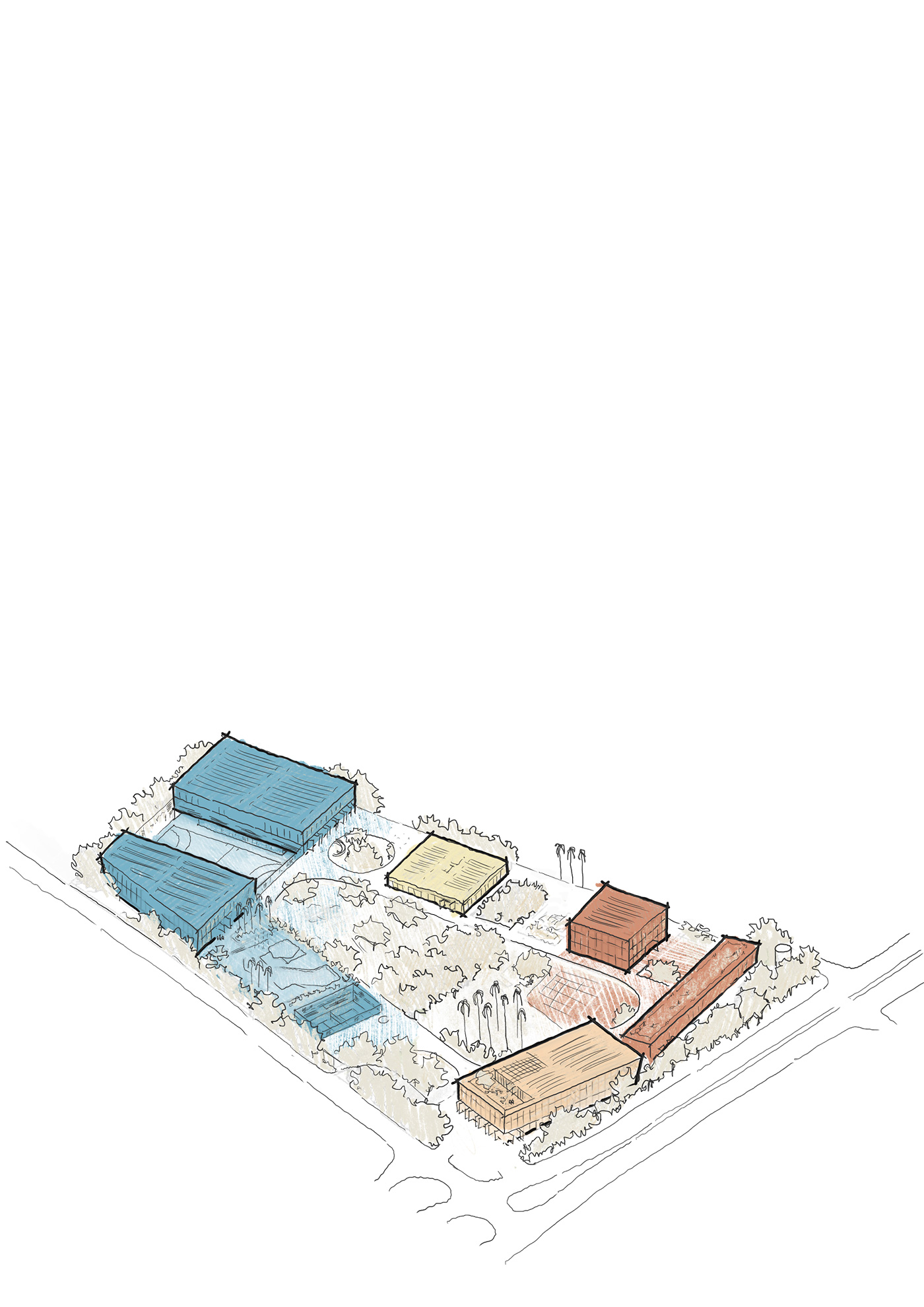
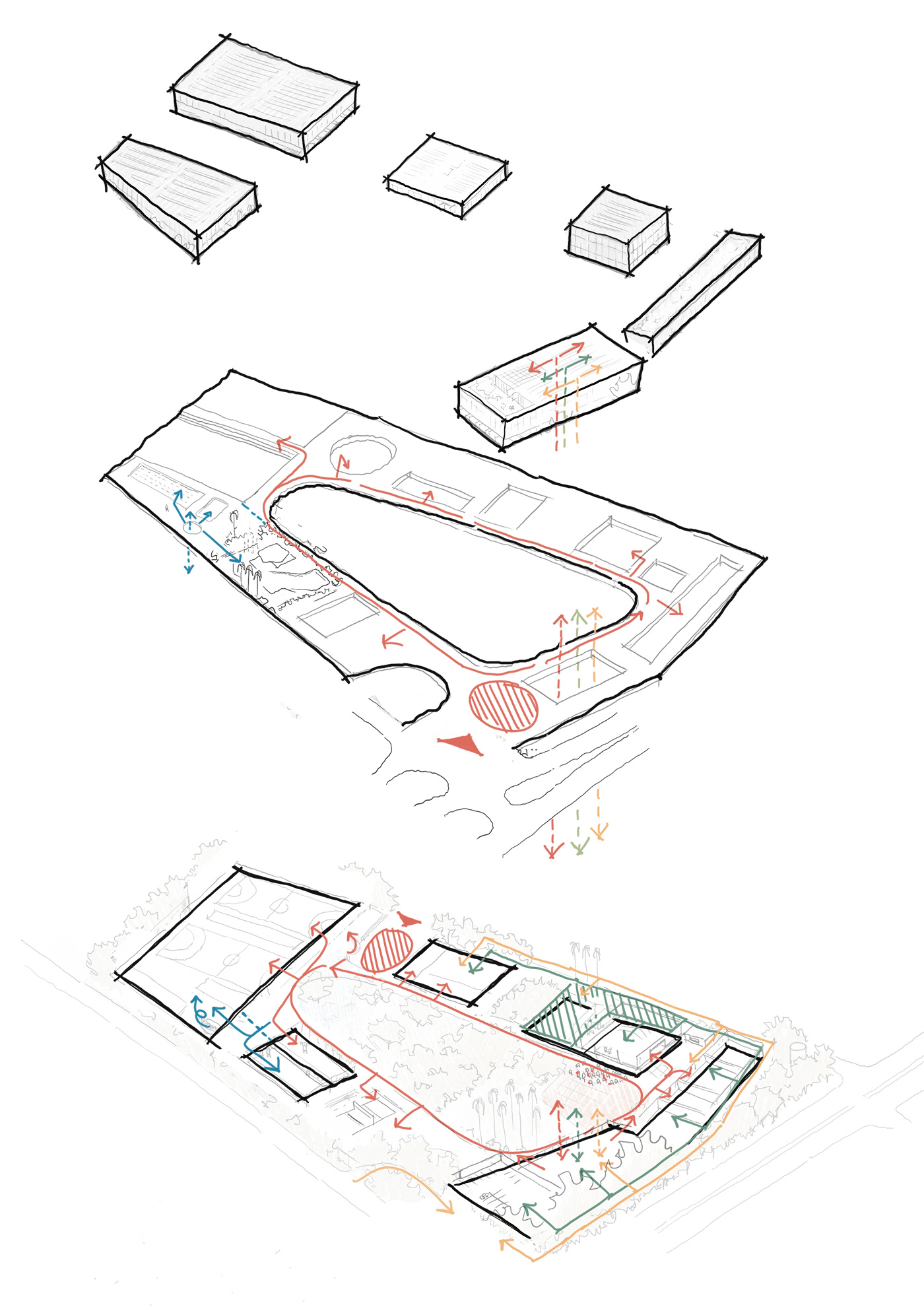
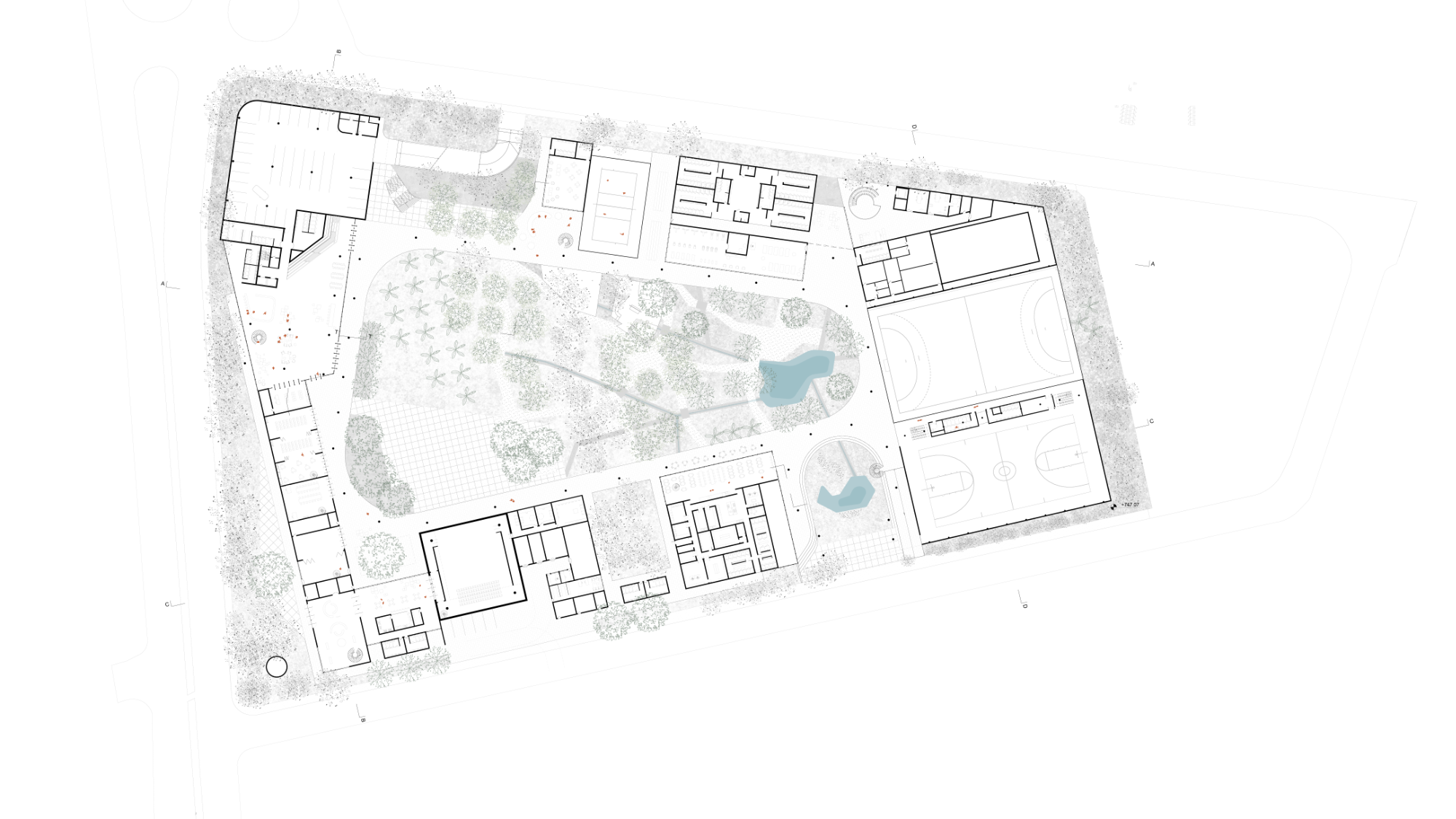
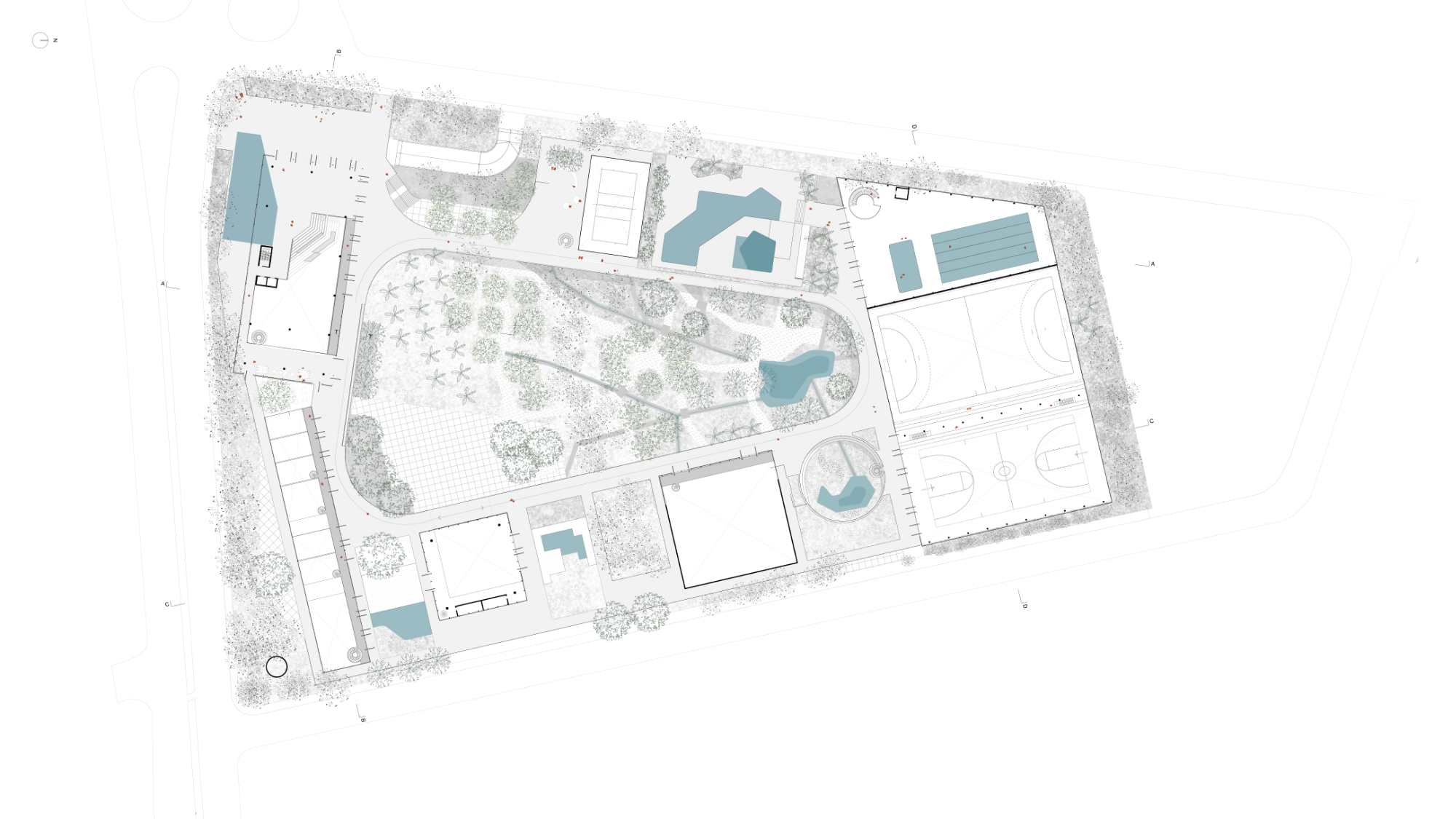
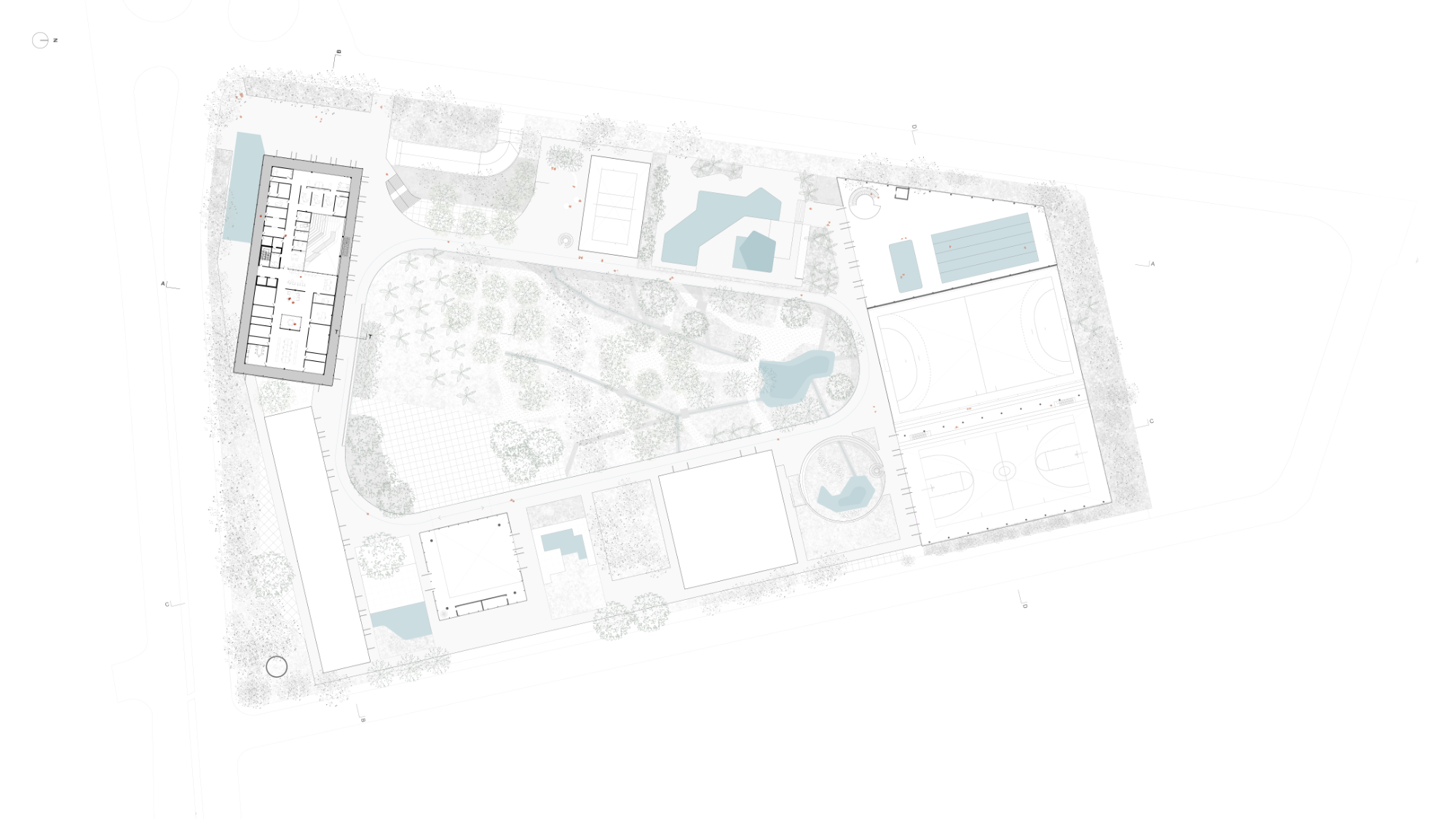
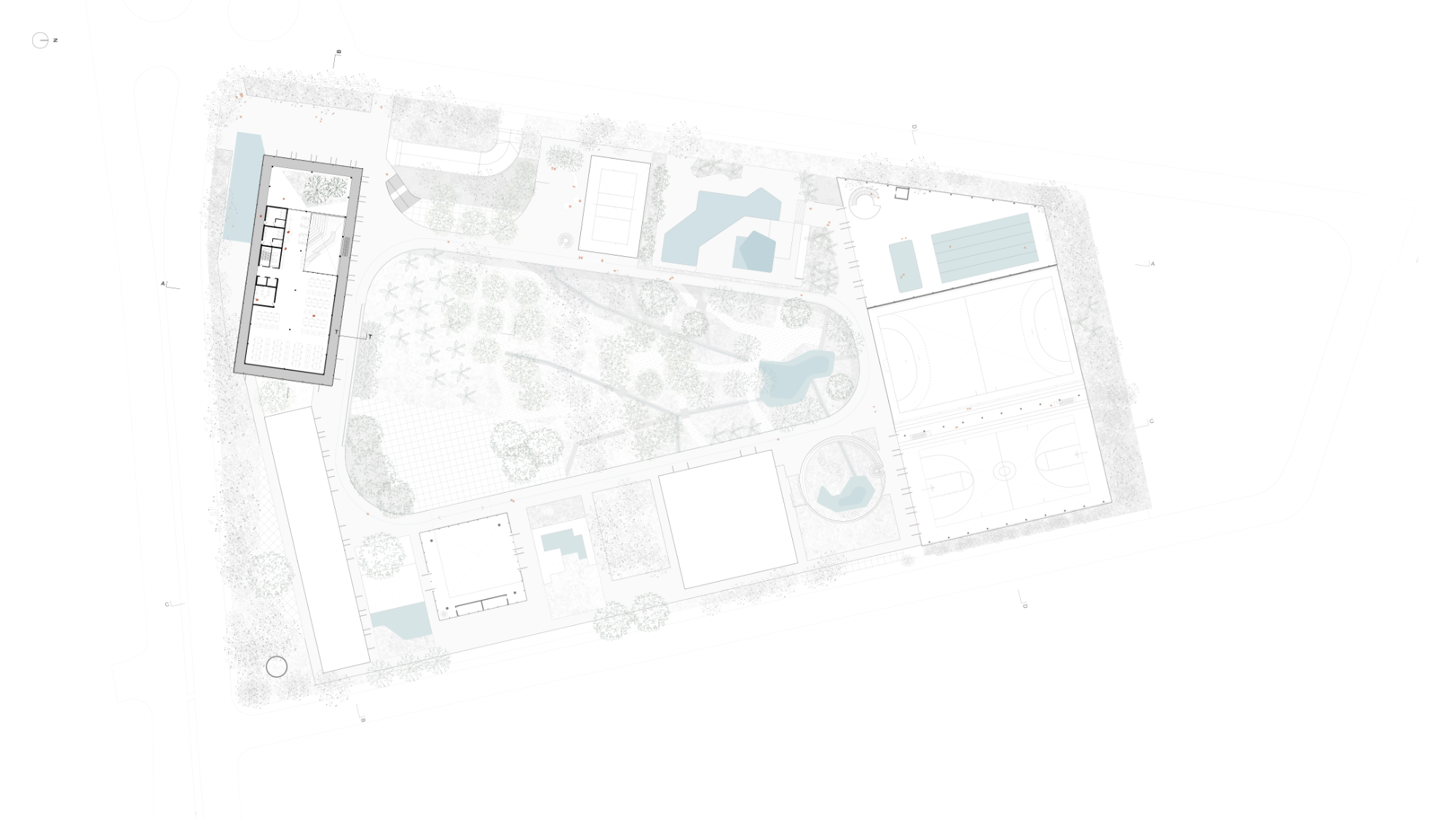
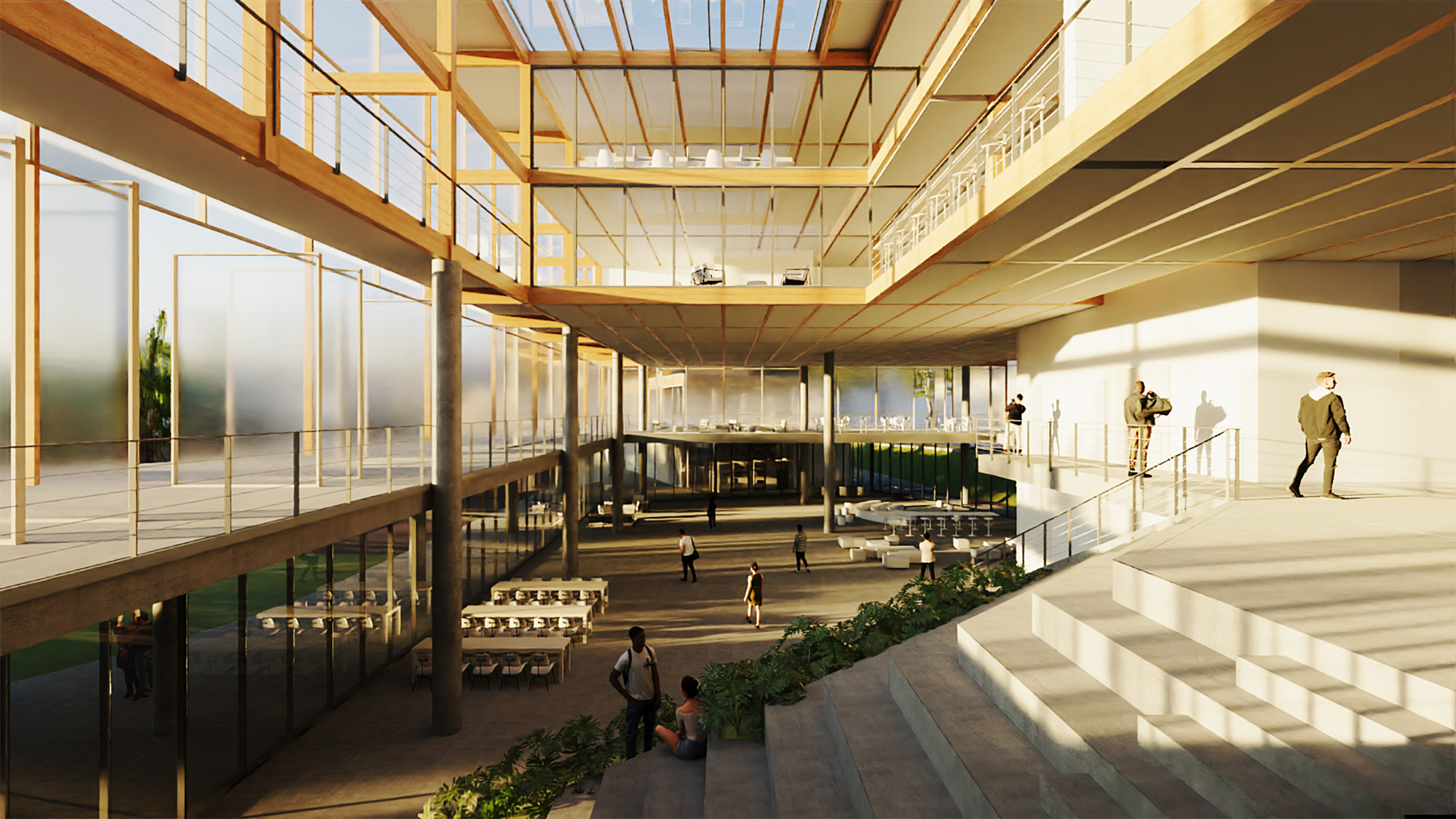
The relationships established between SESC's components—the theater, library, cafeteria, café, store, sports courts, swimming pool, among others—were embodied in living spaces of varying scales, also interspersed with green, shaded, and open areas, on a smaller scale than the large central forest. Through research into the architecture of other SESC units, the project sought to create a circuit, embodied by the large canopy, connecting all the main programs at the same level as the square, naturally guiding users to various recreational and everyday experiences. Flows can occur radially or circularly, thus allowing for nearly complete permeability of each building, which connects with the forest and with the adjacent streets for public access and service support.
In our proposal for the new Sesc Mogi das Cruzes, we considered the project's structure and future use based on natural green areas, shaping it as a true park. Surrounded by natural landscapes and São Paulo's Green Belt, the new Sesc Mogi establishes itself as a model of sustainable practices and environmental preservation, becoming a benchmark for future projects.
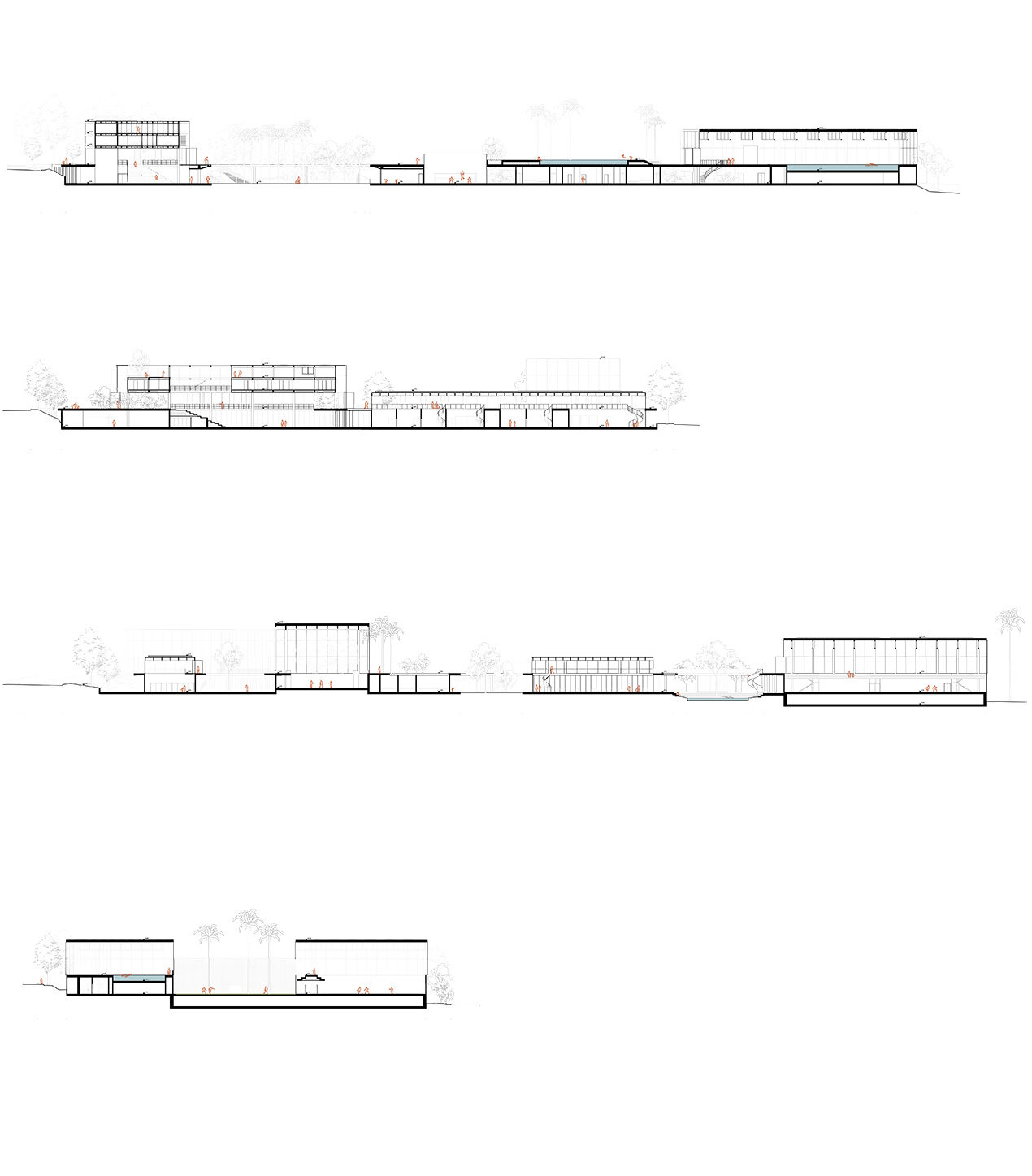
ADAPTATION AND RESILIENCE.
In the face of the new climate paradigm and recent extreme weather events, architecture must provide updated responses with new parameters. Precipitation conditions, torrential rains, and periods of extreme heat demand new architectural responses to ensure a livable urban landscape that respects differences in body shape, gender, and social class. In this sense, the project follows the proposal of creating resilience through the manipulation of nature-based solutions, but also by constructing a geomorphology that guarantees active mobility with minimal unevenness and elevation.
Treating nature as part of the urban infrastructure, the project aims to propose green infrastructure networks consisting of shallows, thalwegs marked by filtering water channels, rain gardens, and floodplains within the forest, as well as in the gardens between programs. The goal was to ensure user mobility and accessibility without compromising the terrain's permeability, within a context in which each new construction is committed to adapting to the climate scenario.