
SESC Thermas Contest
Authors 23 South, Wierman.studio
Team: Ana Carolina Ferrigatti Memede; Ana Luiza Broetto Baptista; Eleanna Grammatopoulou; Gabriel Manzi Fryze Pereira; Gustavo Wierman; Tiago Carvalho Oakley.
Location: Presidente Prudente, SP – Brazil
Year: 2025
Built Area: 25,000m2
Phases: Contest
Authors 23 South, Wierman.studio
Team: Ana Carolina Ferrigatti Memede; Ana Luiza Broetto Baptista; Eleanna Grammatopoulou; Gabriel Manzi Fryze Pereira; Gustavo Wierman; Tiago Carvalho Oakley.
Location: Presidente Prudente, SP – Brazil
Year: 2025
Built Area: 25,000m2
Phases: Contest
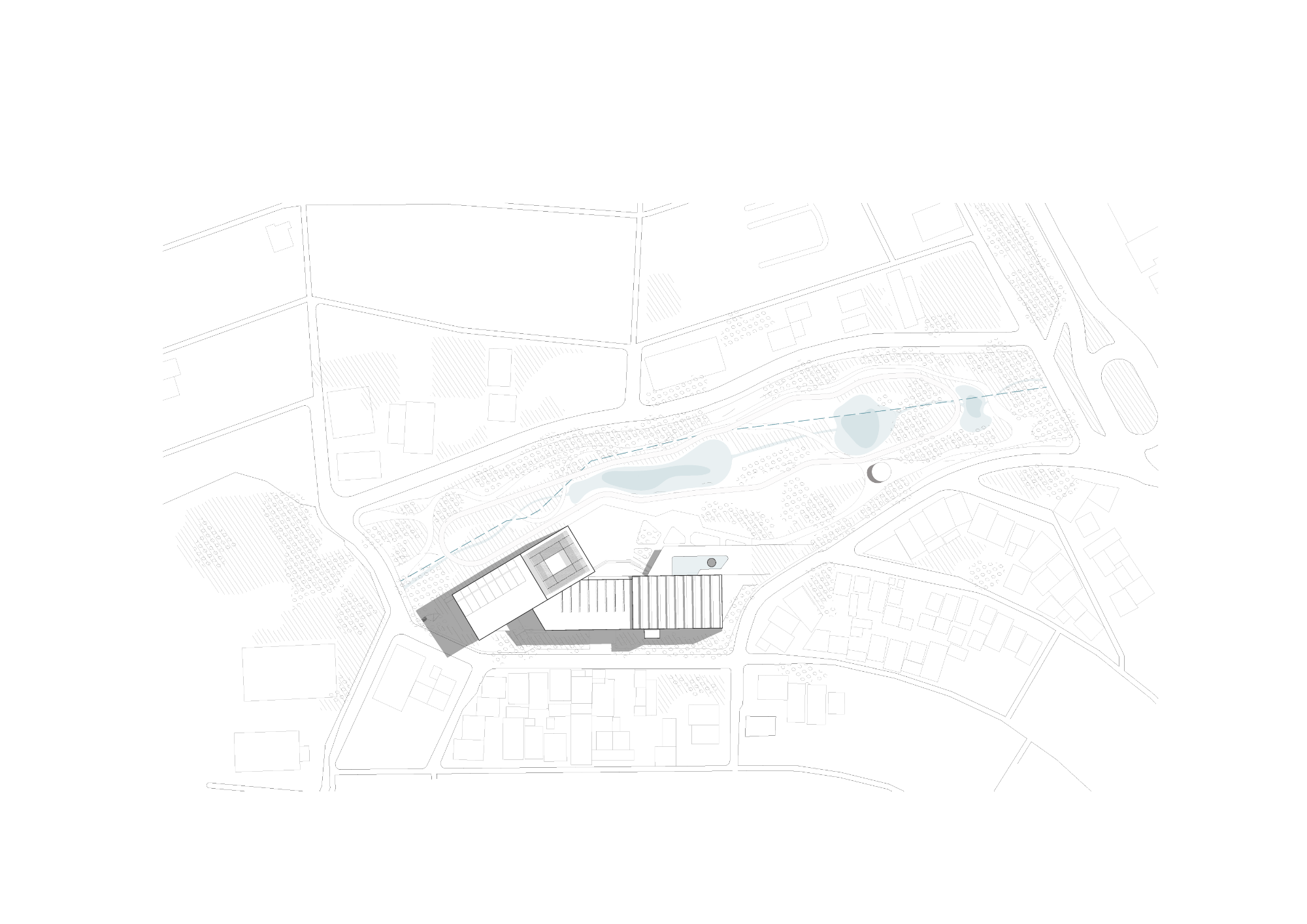
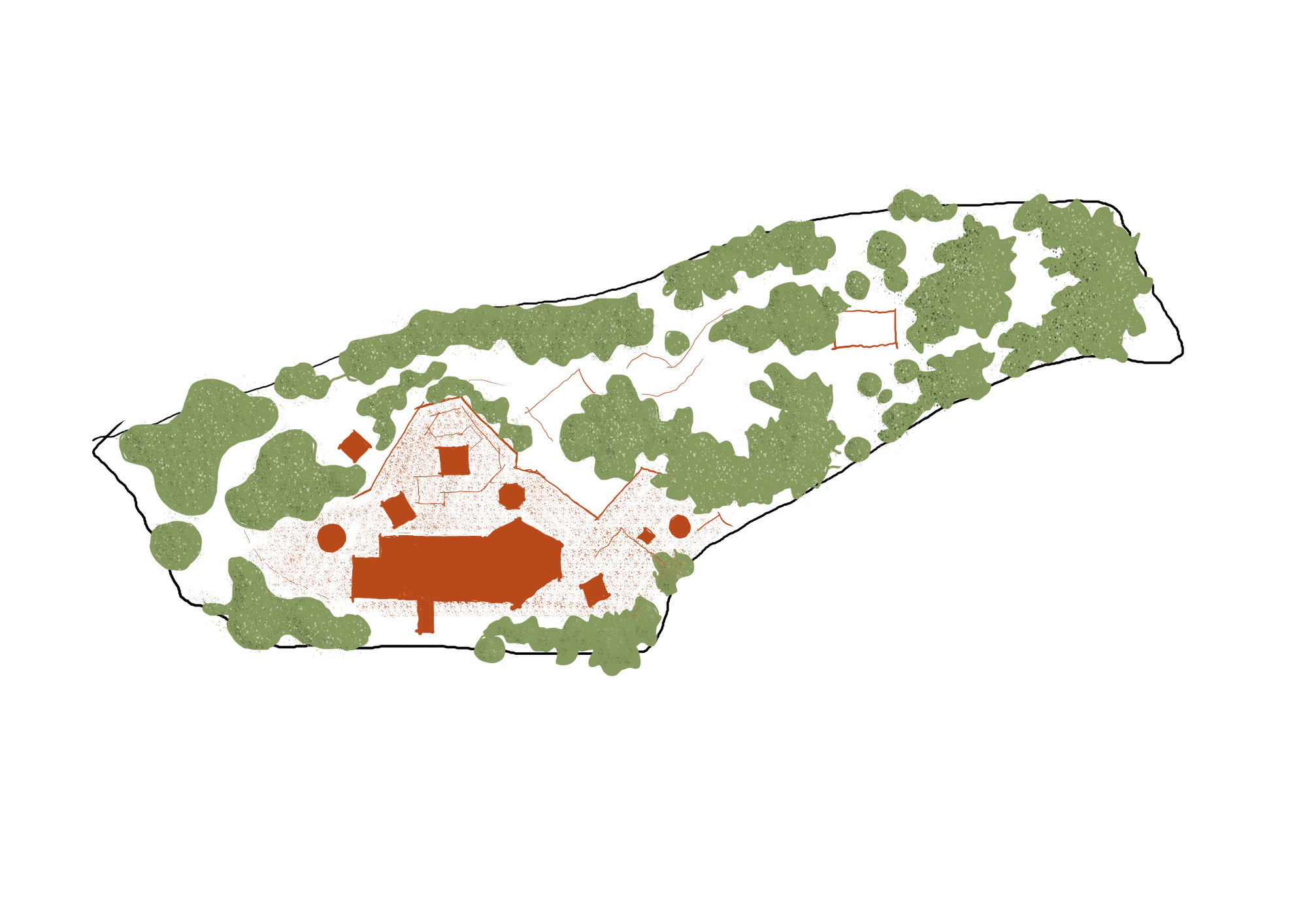
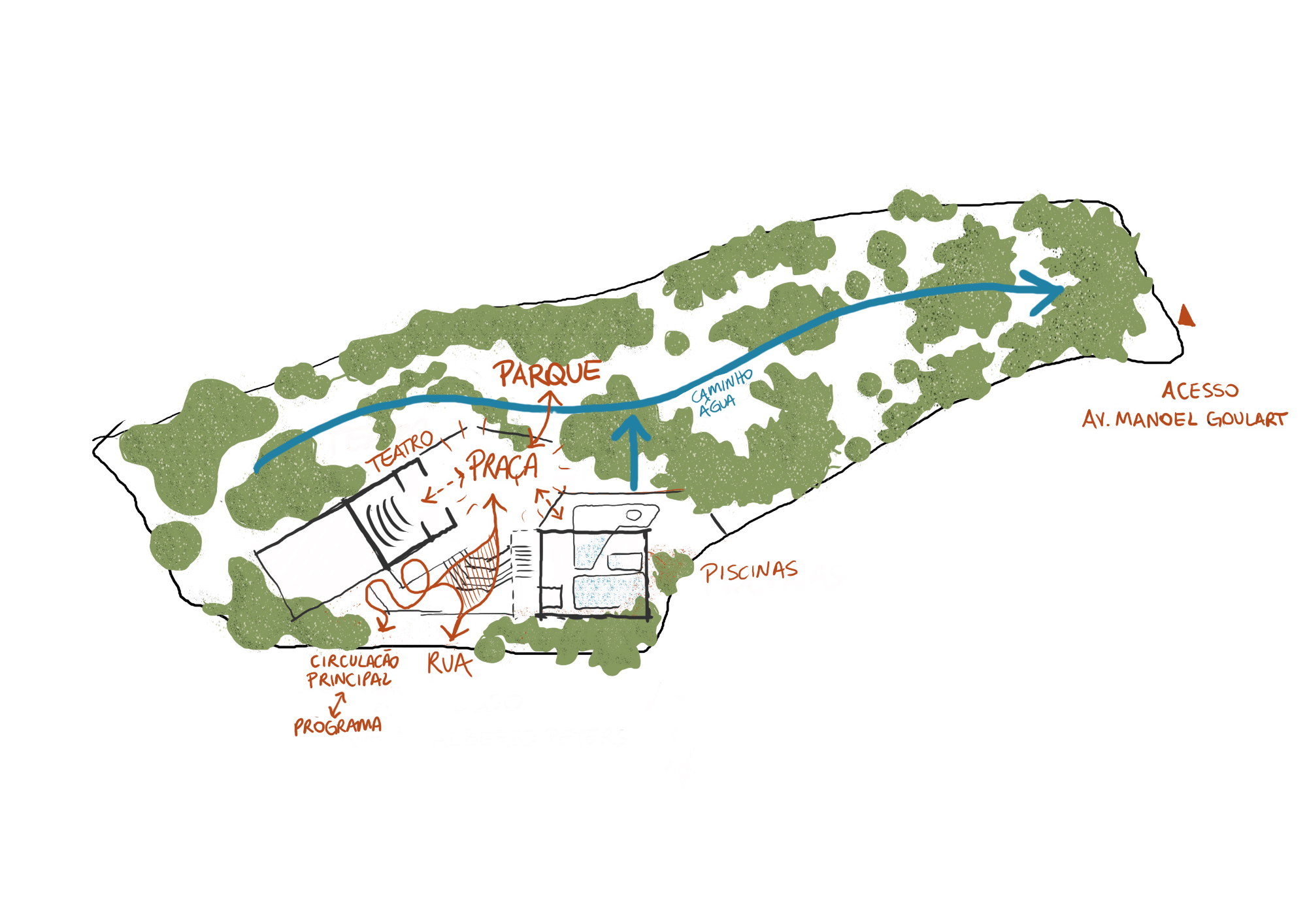
The Sesc Thermas de Presidente Prudente site is a rare and precious green space within the urban area, with over 36,000 square meters of vegetation and a living stream that symbolically connects it to the Córrego do Veado Forest Reserve and Unesp. Preserving this natural link is the soul of the project, which recognizes the landscape as the protagonist and is committed to protecting and enhancing the existing territory—its waters, trees, and soil.
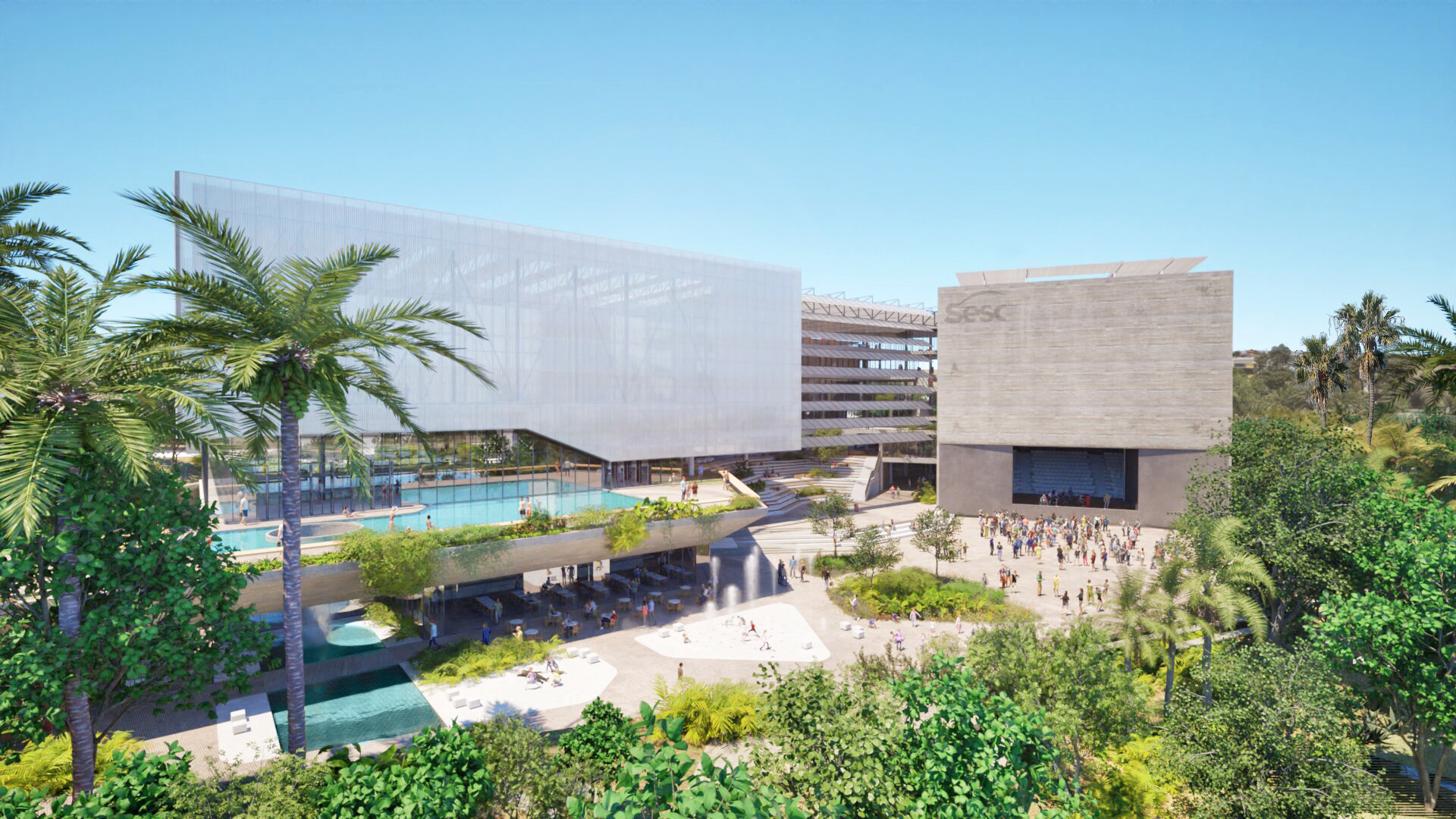
The building is concentrated on the clearing already occupied by structures to be removed. This avoids the suppression of vegetation, respecting the setbacks from the watercourse and the flood level. This conscious placement preserves the park and enhances its public use. The building is organized in levels that follow the natural terrain, reducing excavations and complex foundations. The verticality, in this case, is balanced with the intention of maintaining direct contact with the ground and the natural environment.
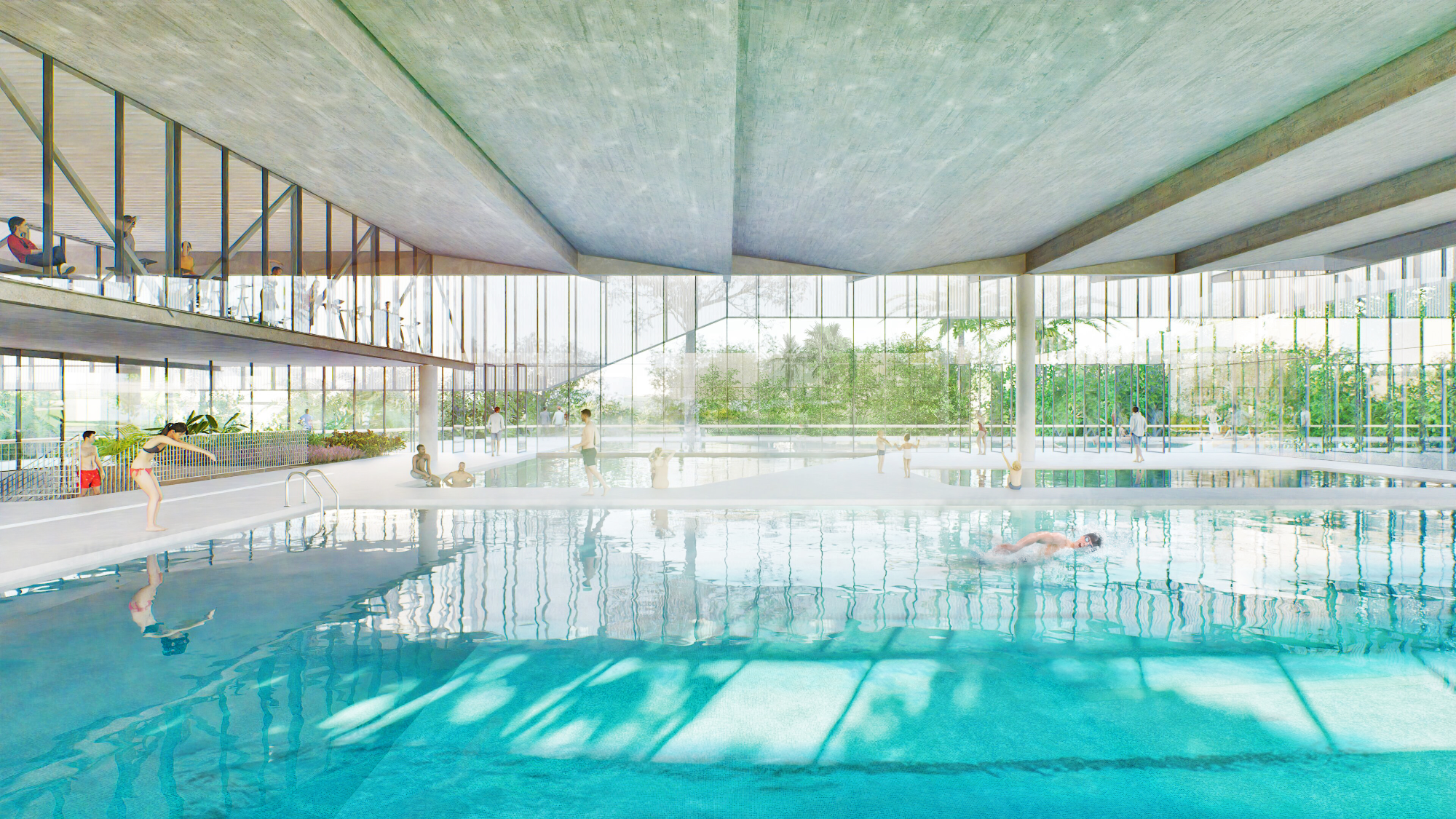
Water guides the logic of the design. The thermal pools are positioned along the valley of the Veado Stream tributary, revealing its landscape and engaging in dialogue with the water plaza. The presence of water is more than a physical resource: it structures a fluid architecture that adapts to the terrain, interacts with rain gardens, and reveals sections of the stream, integrating it into the daily life of the unit.
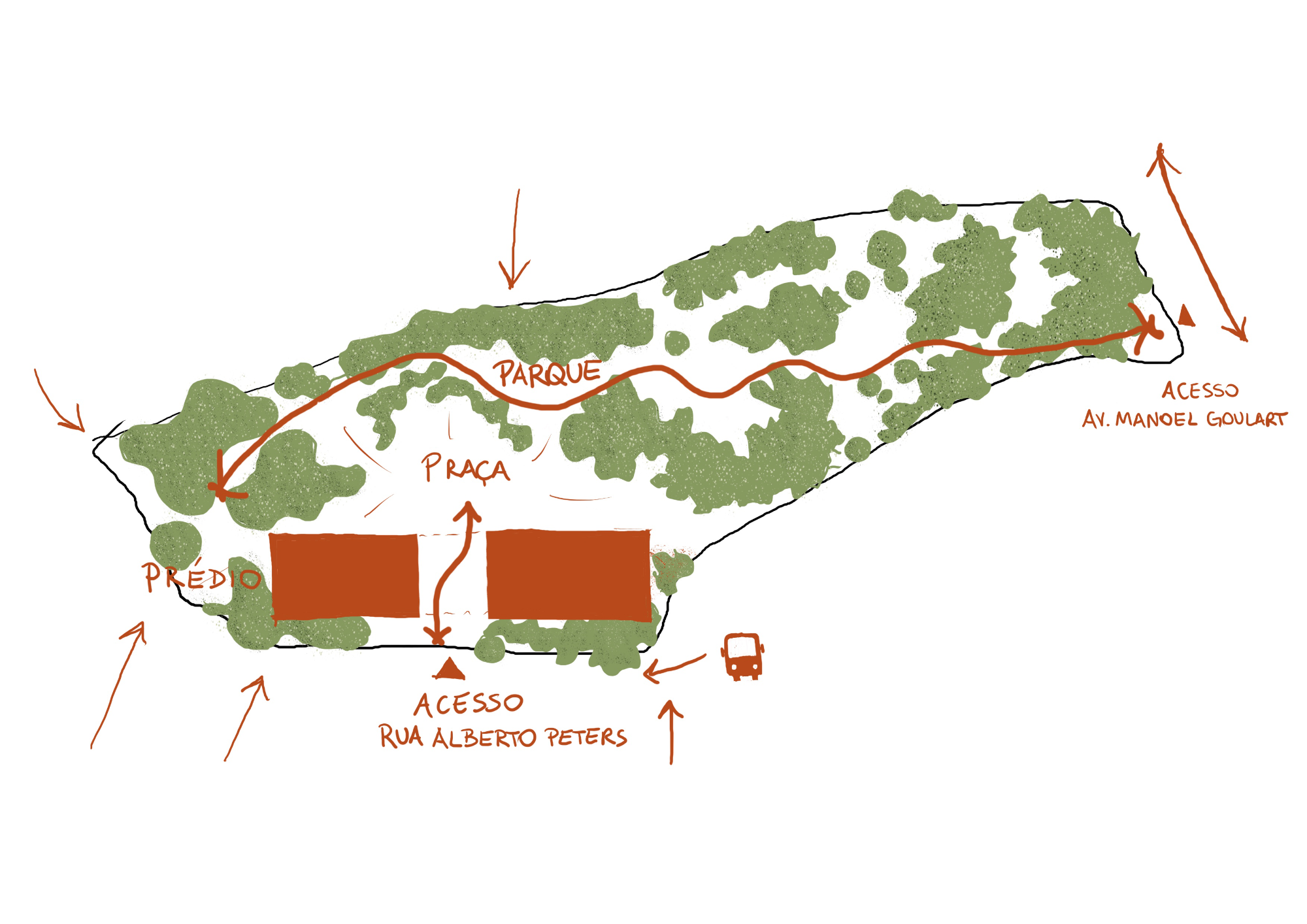
A continuous pedestrian circuit crosses the levels of the site, connecting the entrances on Rua Alberto Peters and Avenida Luiz Peretti. This promenade transforms the building into a constructed topography, organizing the flows and structuring the program: technical areas, social spaces, cafeteria, environmental center, theater, sports facilities, children's area, and administration.
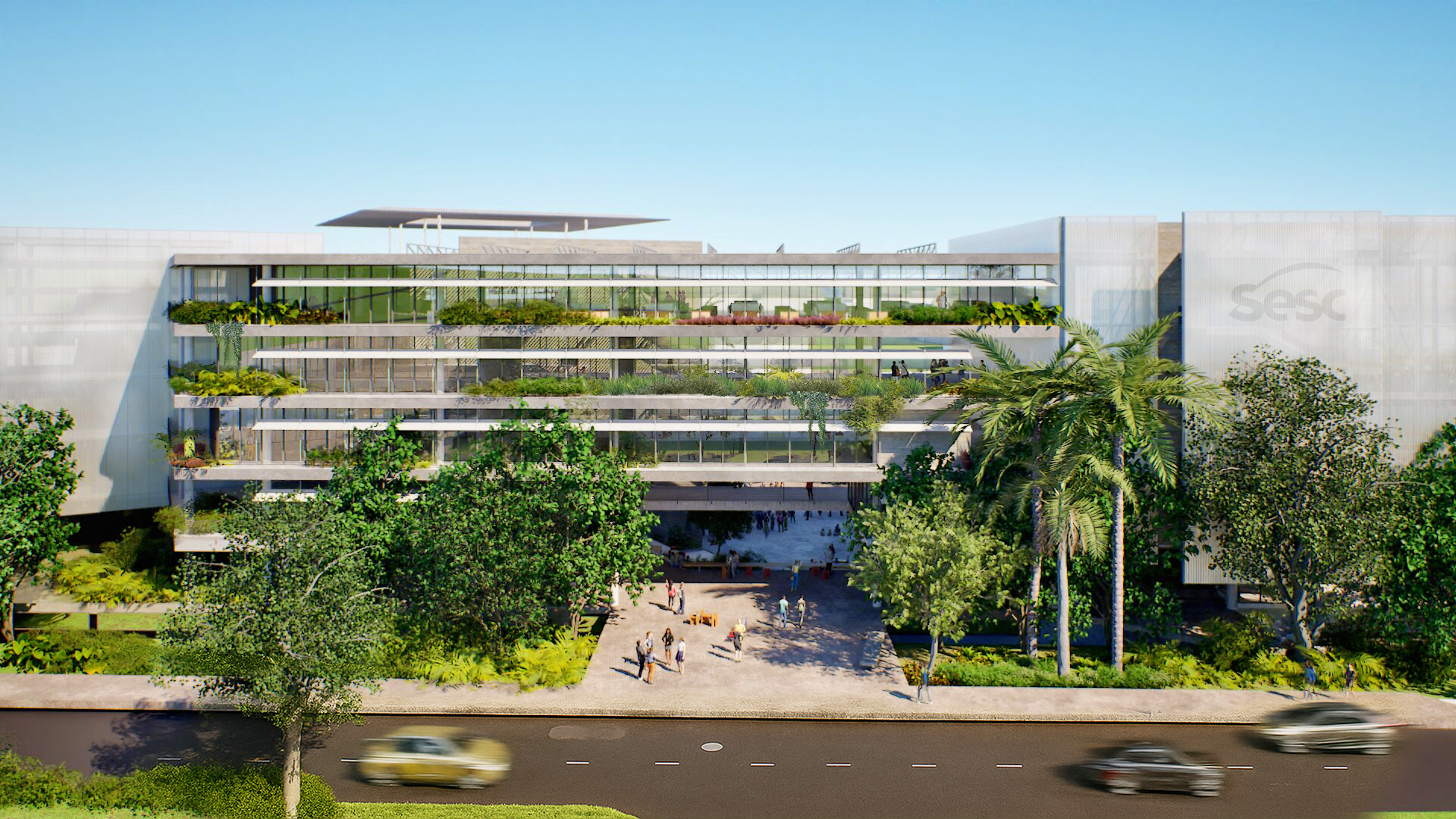
The architecture does not impose itself on the landscape: it engages in dialogue with it. The building forms a symbolic landmark, without losing the scale appropriate to the neighborhood and the park. Its height is restrained, its language light and permeable. The entrances are inviting, the facades open to the greenery, and the boundaries between construction and nature dissolve like the steam from the hot springs that define Sesc Thermas.
Sustainability here is a chain of decisions: recyclable, industrialized, durable, and easy-to-maintain materials. More than just meeting regulations, the proposal offers an inspiring model of environmental, social, and cultural development—a living, adaptable, generous architecture rooted in its place.
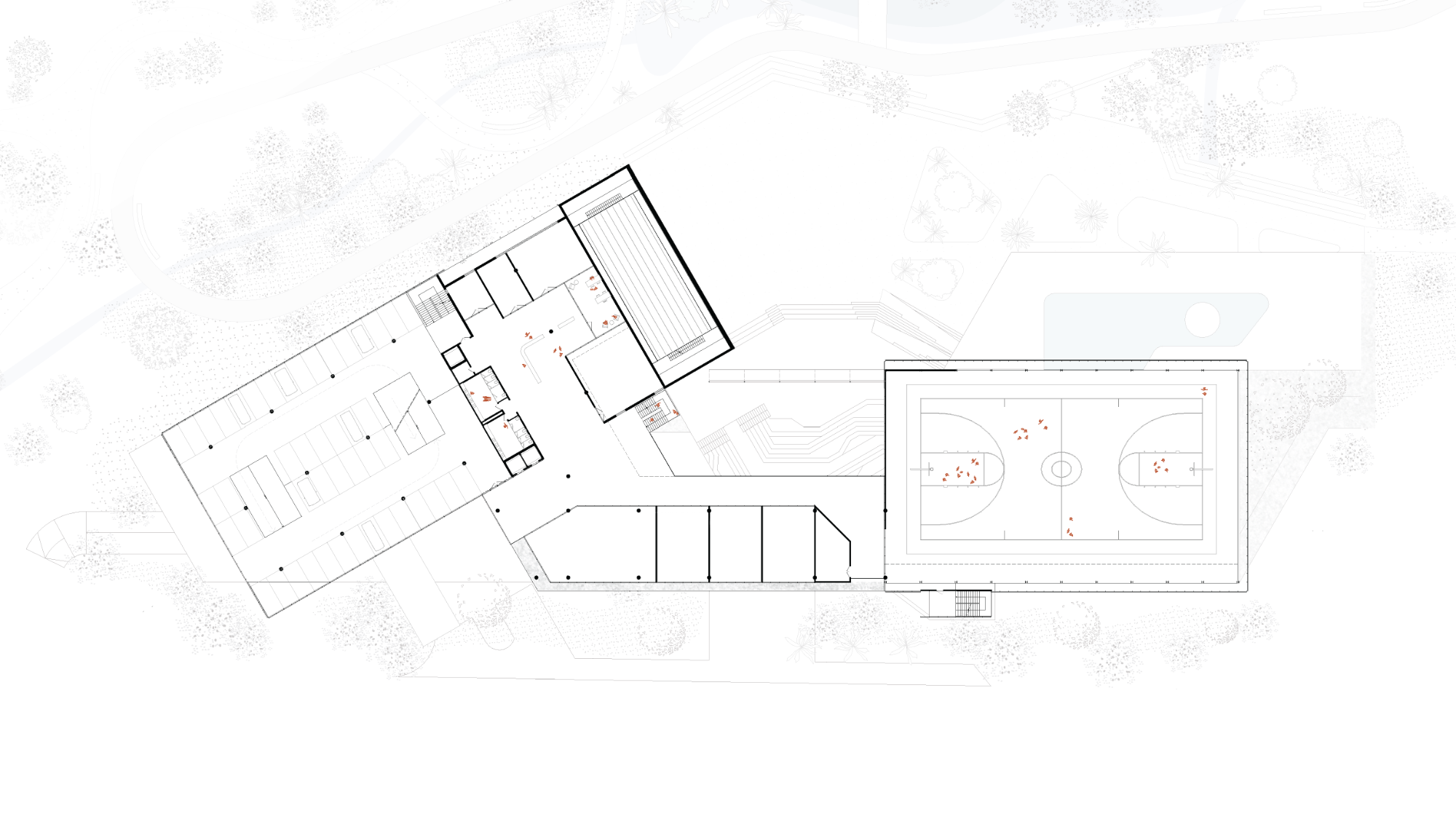
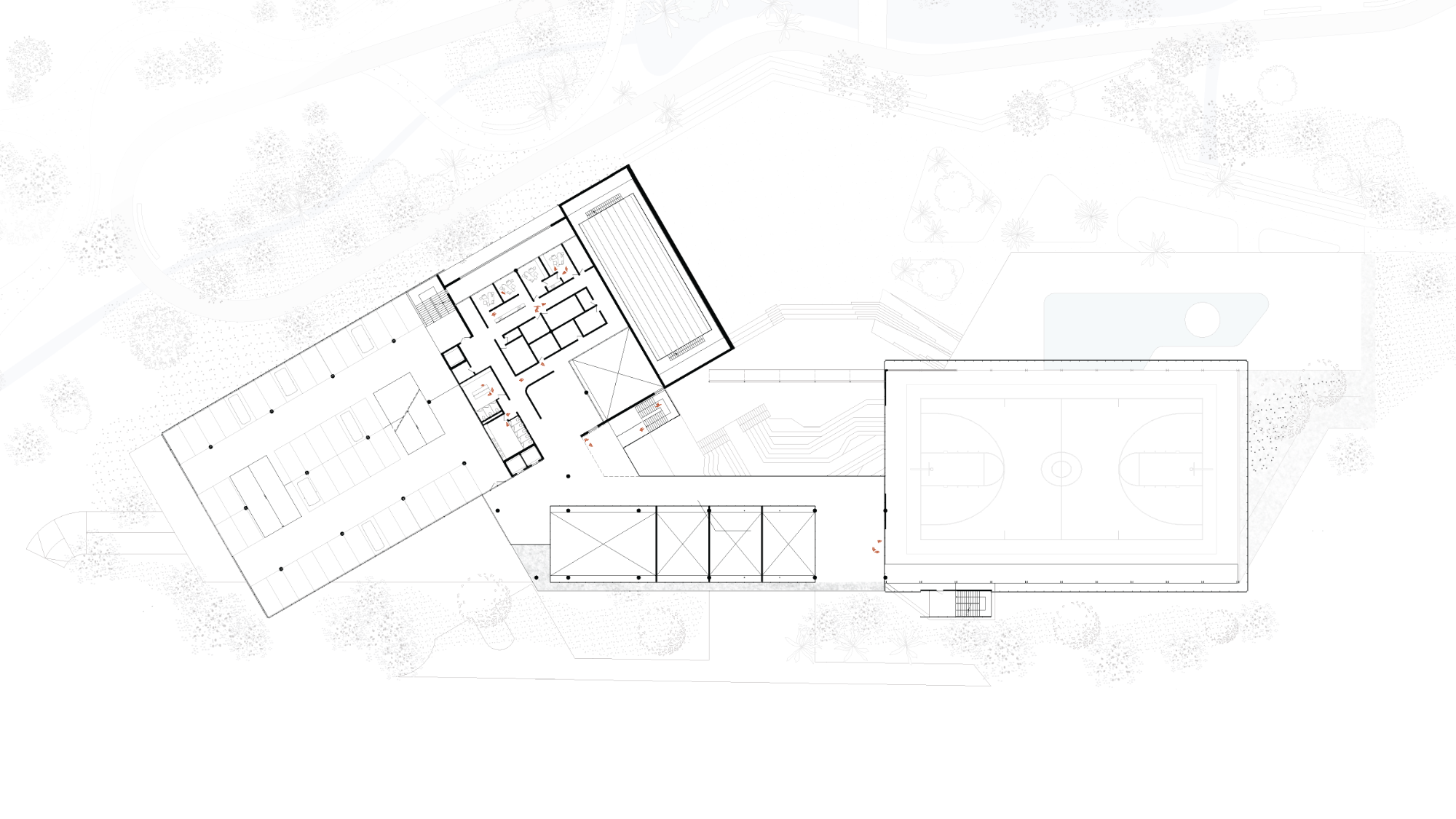
NATURAL AND BUILT LANDSCAPE
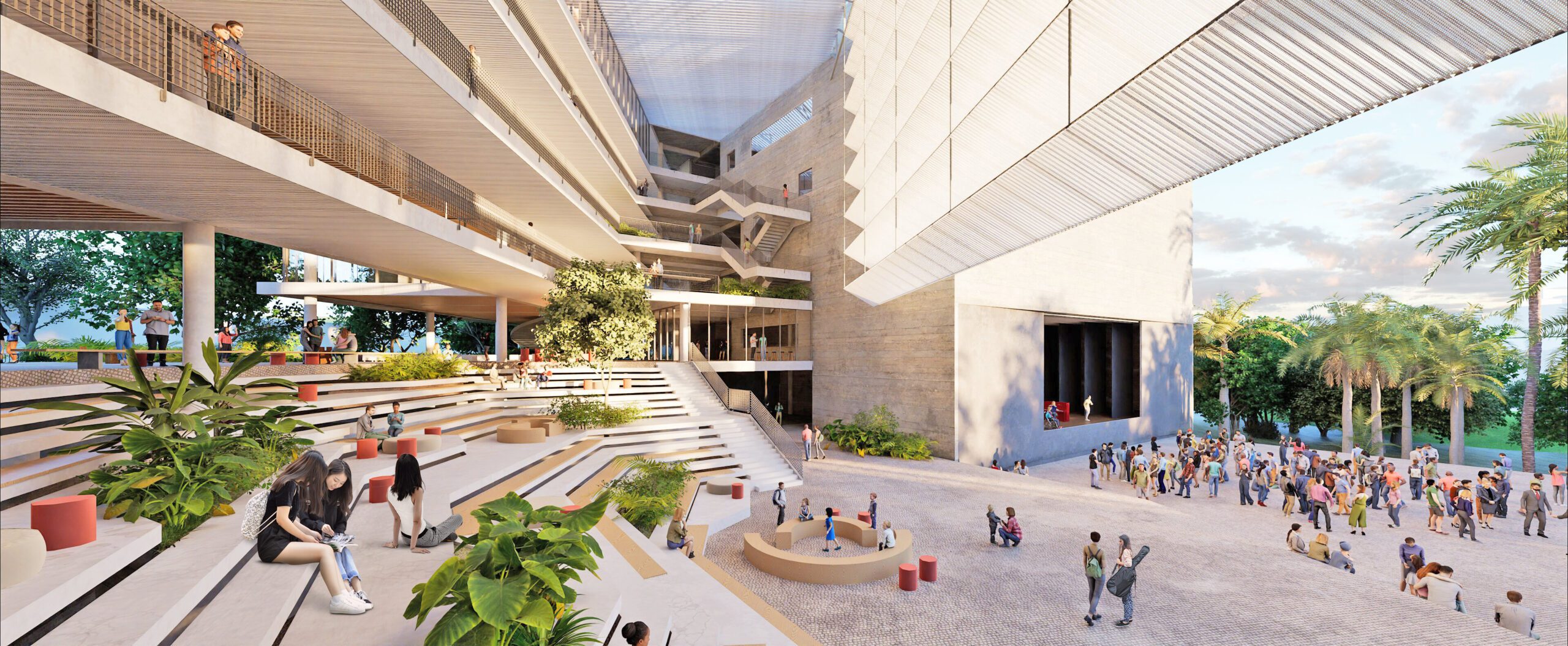
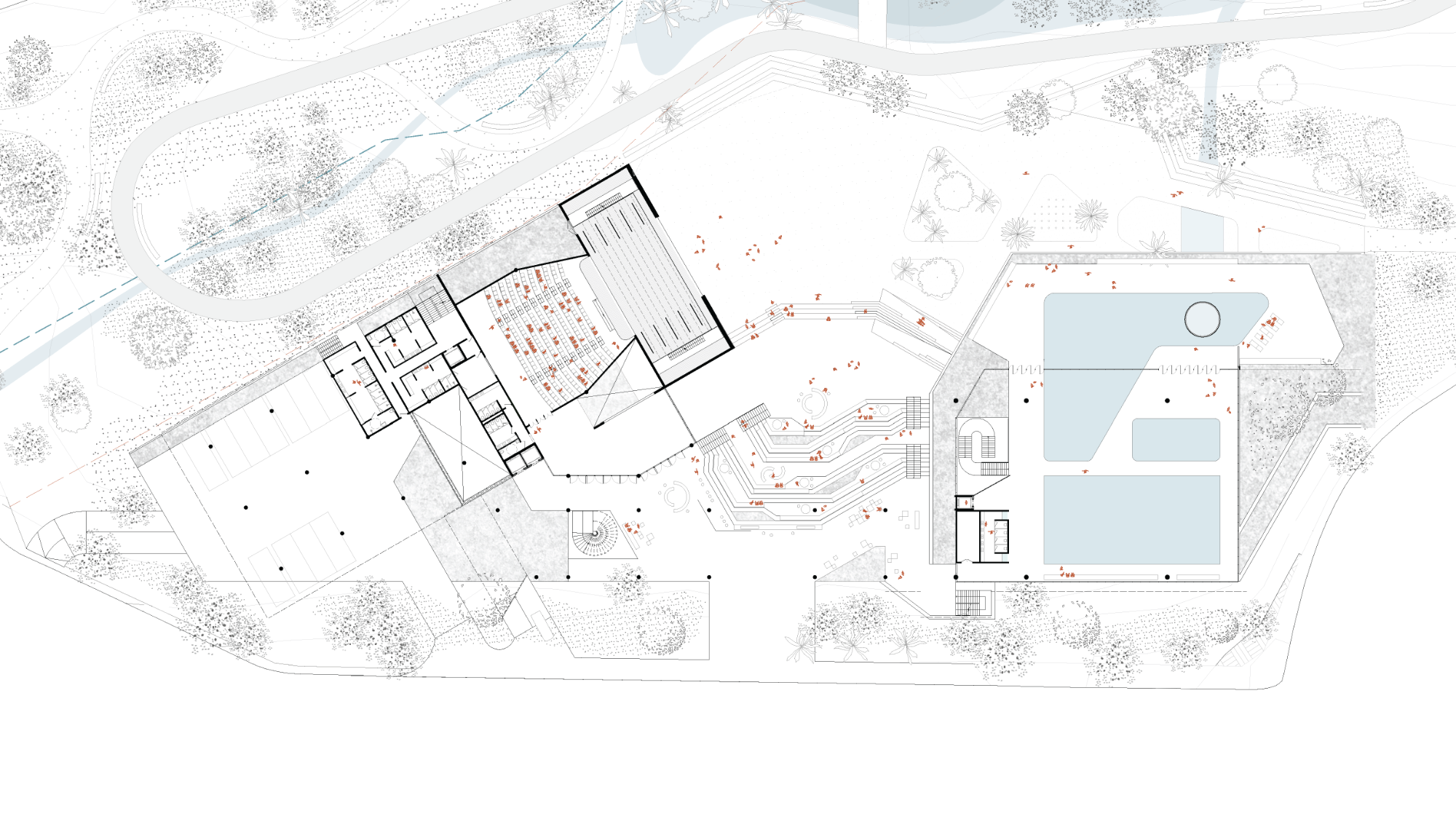
The Sesc Thermas building is simultaneously a presence and a passageway. It is situated as if descending a mountain towards the riverbed, establishing an architectural landscape made of planes, staircases, and balconies that open onto the park. The main access, via Rua Alberto Peters, is at the highest point of the site and marks the beginning of a generous descent through spaces for socializing and open views. The main staircase—articulated in landings—is configured as a habitable valley, a meeting point between nature and architecture, where being and walking intertwine.
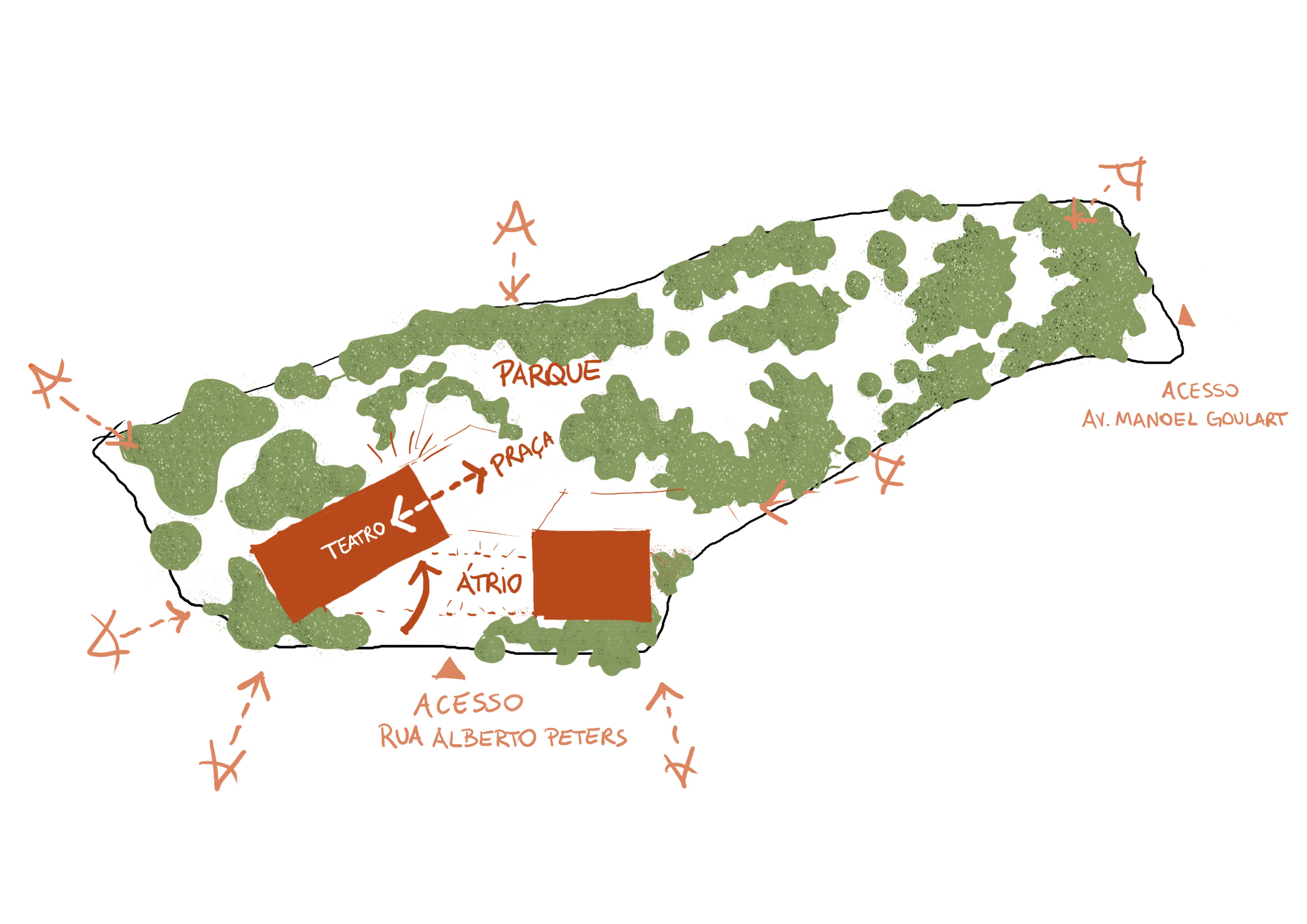
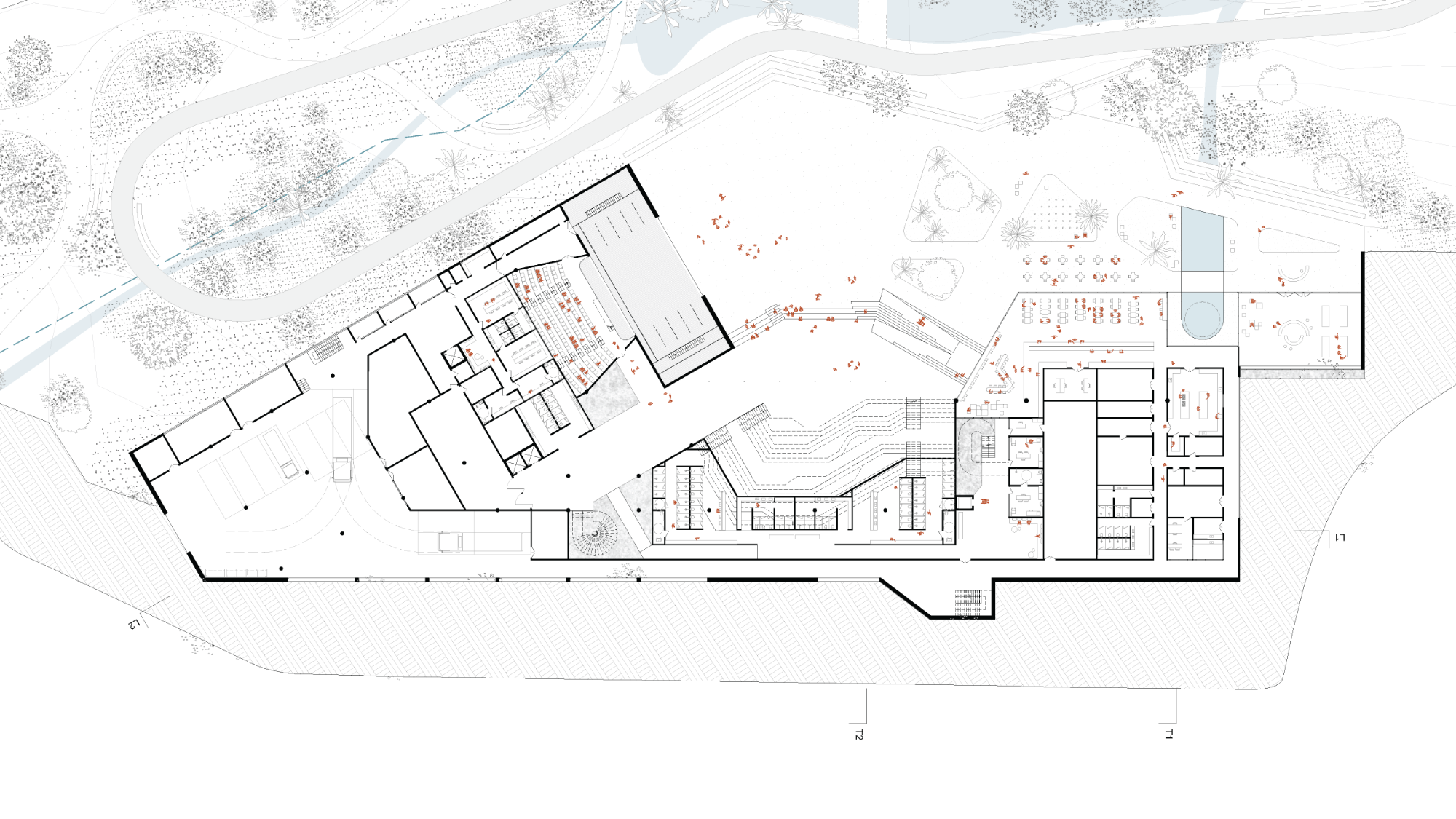
On the lower level is the Sesc Thermas Plaza, a structuring space for the complex. It hosts large events, opens onto the theater's reversible stage, and includes the water feature. The cafeteria and café are also located there, occupying a turning point in the route, facing the park and its shade. Pedestrians accessing Sesc from Avenida Luiz Peretti reach this same level, gently entering the complex through embankments, gardens, and the sound of flowing water.
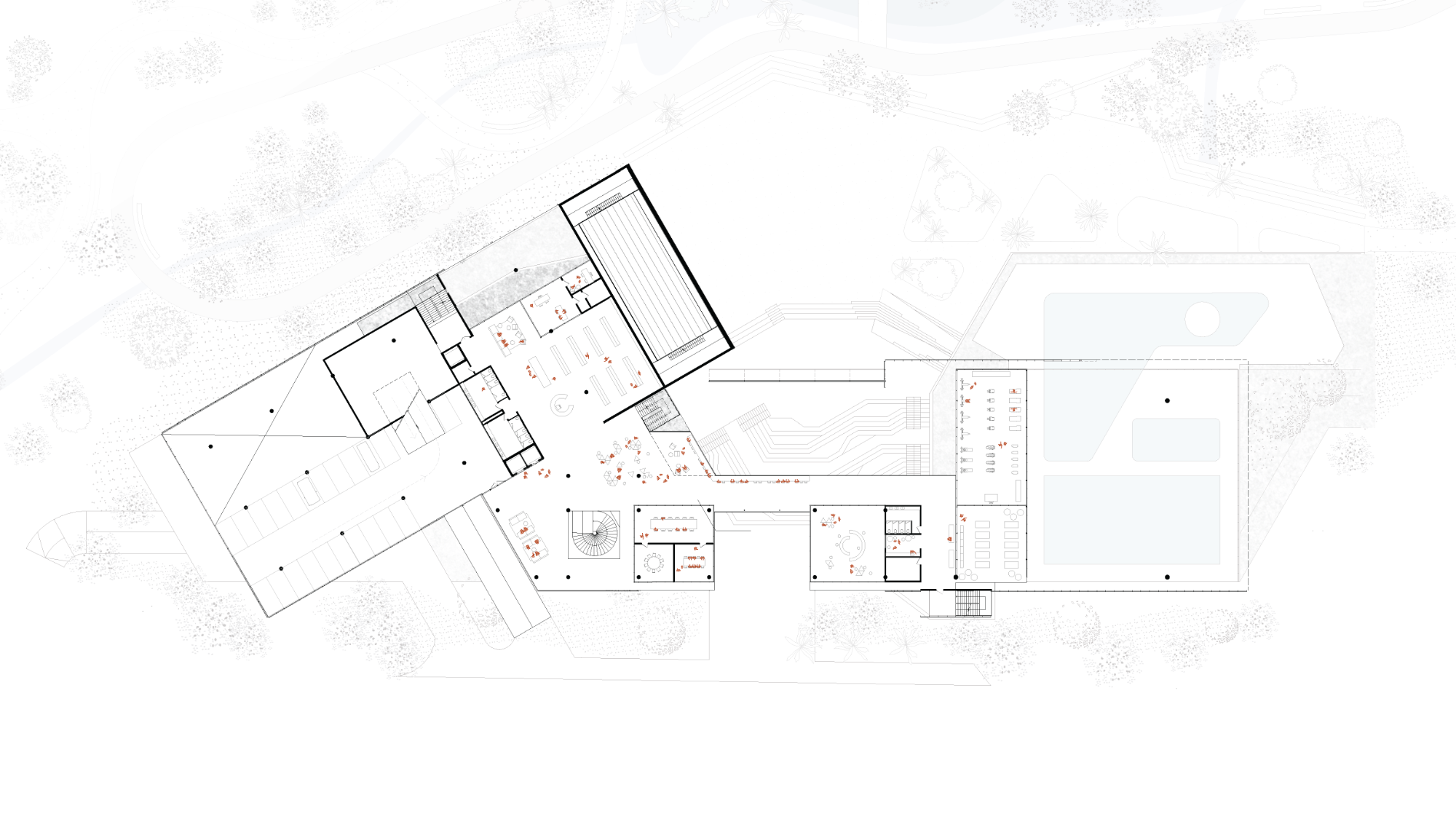
On the north side, a rise houses the sports complex: swimming pools, gymnasiums, and a sports hall. To the south, another hill houses the theater, administrative offices, and parking. Between these two masses, the building opens up into balconies and open staircases that seamlessly connect the floors with lightness and transparency. These elements reveal the park as you walk through it and offer spaces for relaxation, socializing, and contemplation.
The central space is traversed by elevators, ensuring universal accessibility. On the first floor, there is a play area and the main reception. On the following levels, there are multipurpose rooms, technical and administrative areas, and at the top, a panoramic café opens up overlooking the city, crowning the ascending journey.
The park is the living body that sustains the architecture. Its trails lead to vegetable gardens, agroforestry systems, and experimental areas. The existing vegetation is respected and expanded, creating a sensory forest in the heart of the city. The watercourse is partially revealed, enriching the landscape design with rain gardens, permeable areas, and vegetation adapted to humid soils. Bridges and shaded paths create playful and educational circuits that integrate with the Environmental Education Center.
The result is a holistic experience, where the building's levels, the landscape planes, and the flows of people and water compose a single narrative of care, integration, and presence.



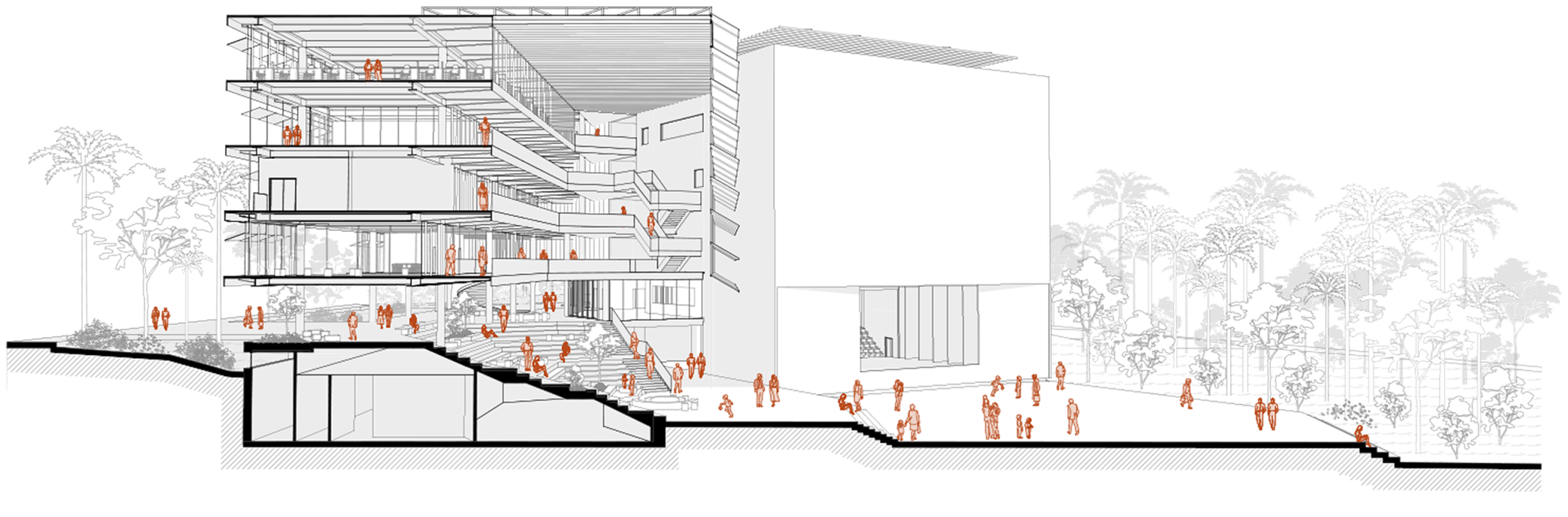
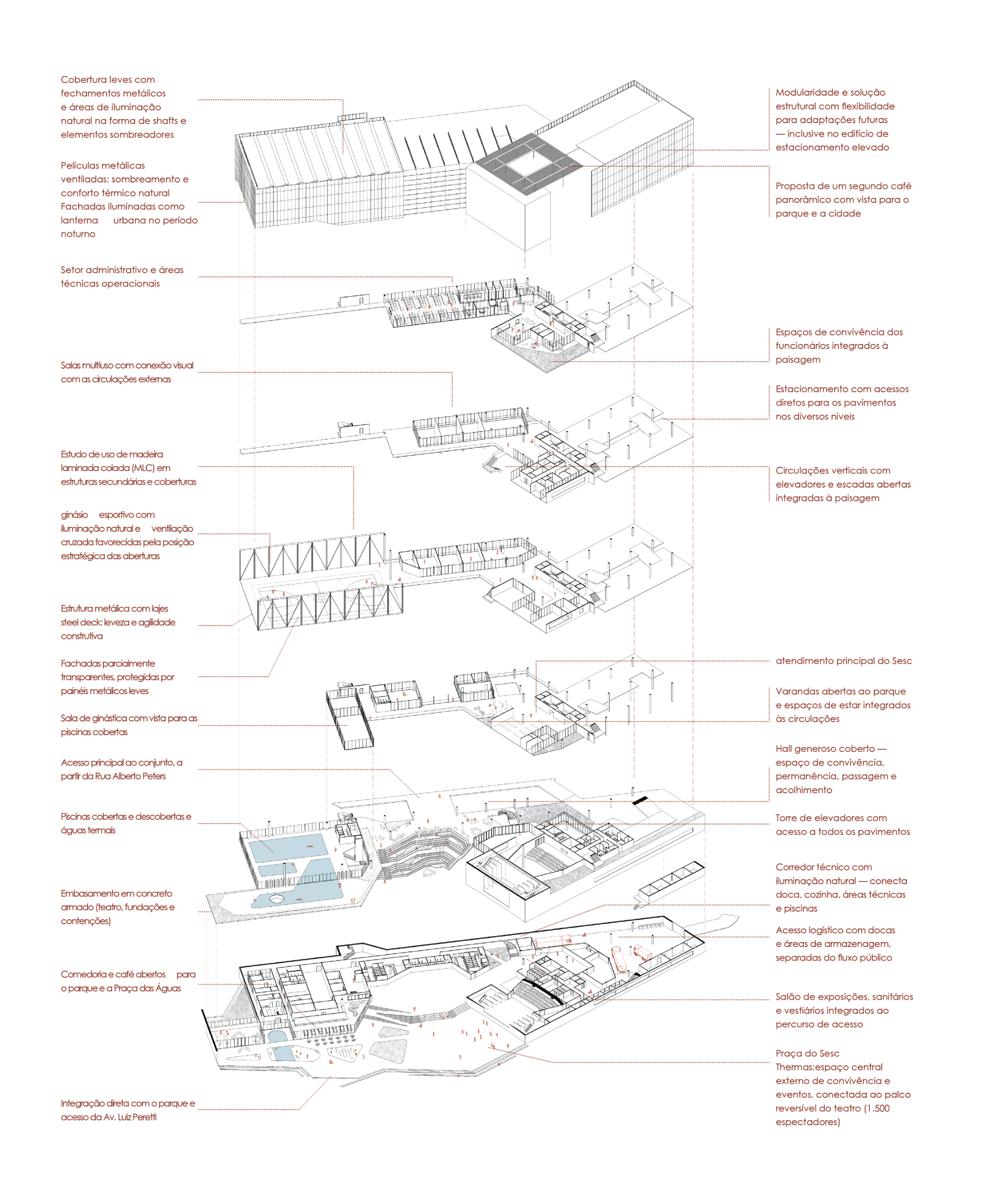
STRUCTURES, ADAPTATION AND RESILIENCE
The building emerges from the terrain and rests upon it with delicacy and firmness. The foundations and structural elements of the base were conceived in reinforced concrete, compatible with the requirements of the soil and the flood level. The stage box of the theater, with its monolithic presence, emerges like a rock. Above this base, the architecture rises with lightness: metal structures and steel deck slabs compose the upper floors, prioritizing construction speed, rationality, and sustainability.
The choice of industrialized systems aims for precision, waste reduction, safety on the construction site, and responsibility regarding the life cycles of materials. Materials such as sandwich metal roofing sheets, alveolar polycarbonate panels, and recyclable metal elements make up the building's design language. The use of glued laminated timber (GLT) in secondary structural elements and roofing is also being studied, providing thermal comfort, aesthetics, and actively contributing to the reduction of embodied carbon.
Climate resilience strategies were adopted from the outset of the project. The upper facades are protected by ventilated metal skins that filter sunlight, allowing cross-ventilation and reducing thermal loads. The central vertical circulation—with open staircases and balconies—promotes the chimney effect and passive cooling. The main spaces feature openings for natural ventilation and diffused lighting. Additionally, optimized artificial climate control systems were planned, reducing energy consumption and improving comfort.
The project incorporates rainwater harvesting and reuse solutions for irrigation, cleaning, and garden maintenance. Outdoor washbasins, surface drainage, infiltration gardens, and species adapted to moist soils are integrated into the park's water system. Cooking areas, cold storage, technical areas, and storage facilities are concentrated on the lower level, directly accessible via the logistics docks, facilitating operation and reducing interference with public flow.
The technical infrastructure was designed with logic and predictability in mind. Vertical shafts efficiently distribute the networks, allowing for easy maintenance. Generous ceiling heights in specific areas ensure future flexibility of use and good integration with complementary systems. Restrooms are fully accessible, and vertical flows are managed with gentle ramps, elevators, and tactile signage.
The proposal combines technical performance, construction feasibility, and spatial quality. The architecture anticipates the future, adapting to climate change, variable uses, and new lifestyles. It is a building that is generous to the present and prepared for tomorrow—resilient, sustainable, and essentially public.