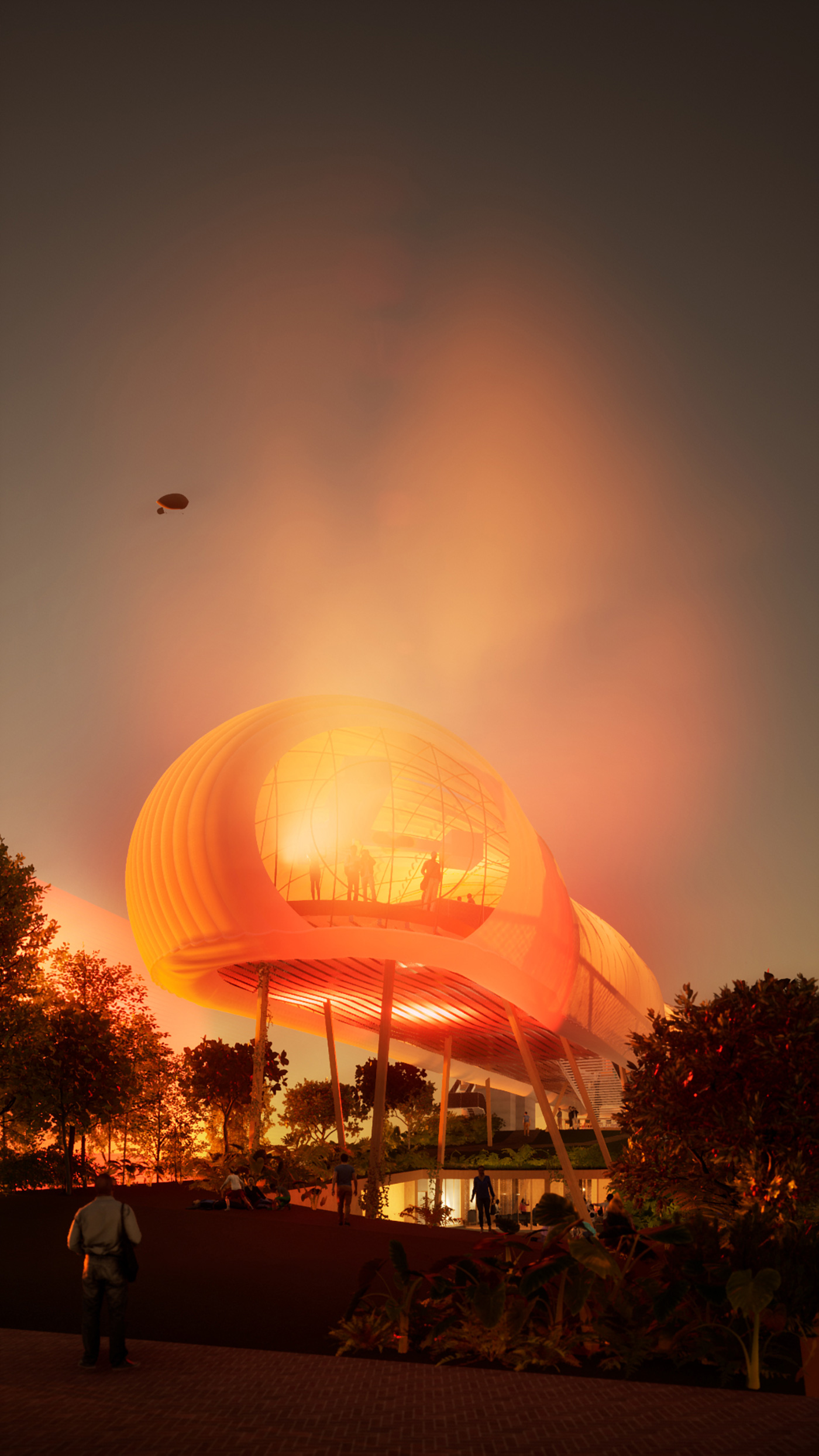

Brazil Expo Osaka Pavilion
Architecture: 23 South, Wierman.studio
Team: Ana Carolina Mamede, Felipe Giacomin Gripa, Gabriel Manzi Frayze Pereira, Gustavo Wierman, Isadora de Moura Tebaldi, Ivo Magaldi, João Victor Lovadino, Julia Camargo, Lilian Dazzi, Lucas Girard, Luis Pompeo Martins, Luiz Florence, Moreno Zaidan, Pedro Augusto, Sonja Draskovic, Tiago Oakley
Lighting Technician: Anna Turra
Landscaping: Gabriella Ornaghi and Bianca Vasone
Structural Engineering: MR2 Structures
Wooden Structures: STAMADE
Curatorship and exhibition design: Diego Matos
Local Partner: Yoshizawa Souzou Architecture Co
Location: Osaka, Japan
Year: 2022
Built Area: 3,000m2
Phases: Contest
Architecture: 23 South, Wierman.studio
Team: Ana Carolina Mamede, Felipe Giacomin Gripa, Gabriel Manzi Frayze Pereira, Gustavo Wierman, Isadora de Moura Tebaldi, Ivo Magaldi, João Victor Lovadino, Julia Camargo, Lilian Dazzi, Lucas Girard, Luis Pompeo Martins, Luiz Florence, Moreno Zaidan, Pedro Augusto, Sonja Draskovic, Tiago Oakley
Lighting Technician: Anna Turra
Landscaping: Gabriella Ornaghi and Bianca Vasone
Structural Engineering: MR2 Structures
Wooden Structures: STAMADE
Curatorship and exhibition design: Diego Matos
Local Partner: Yoshizawa Souzou Architecture Co
Location: Osaka, Japan
Year: 2022
Built Area: 3,000m2
Phases: Contest
From forest to cloud, from ancient to contemporary.
As our global society plunges deeper into the Anthropocene, architecture is faced with an ethical dilemma: why build more? And, if we can't avoid building, how should we build? These must be the starting point for any new design.
The design of this exhibition addresses this dilemma through an investigation of the ways in which humanity, in non-Western societies, has produced environments with positive impact. For centuries, the indigenous peoples of the Amazon rainforest have organized the forest to provide abundant sources of food, building materials, medicines, and artistic supplements. These strategies are intertwined with a larger worldview in which so-called "natural elements" such as rivers, mountains, plants, and animals are considered living entities with identity, personality, and agency. As Yanomami leader Davi Kopenawa states in his masterpiece *The Fall of the Sky*, "the white man is destroying the beauty of our forests." Amazonian civilization is guided by aesthetic experience, as beauty (the plurality of sounds, smells, colors, shapes, tastes, and textures) is a sign of a living and predictable environment—where humans are merely one of the agents producing objects and events.
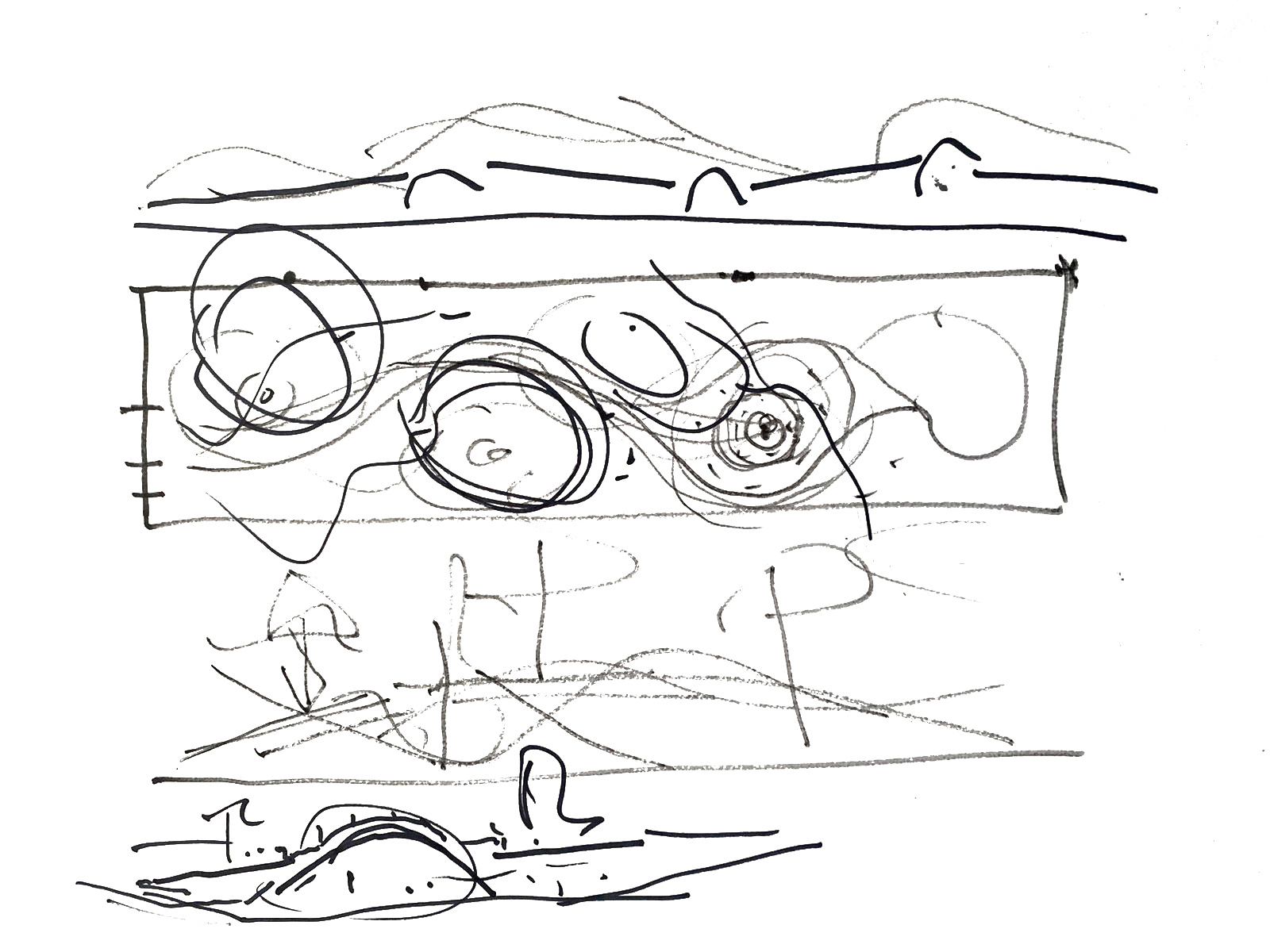
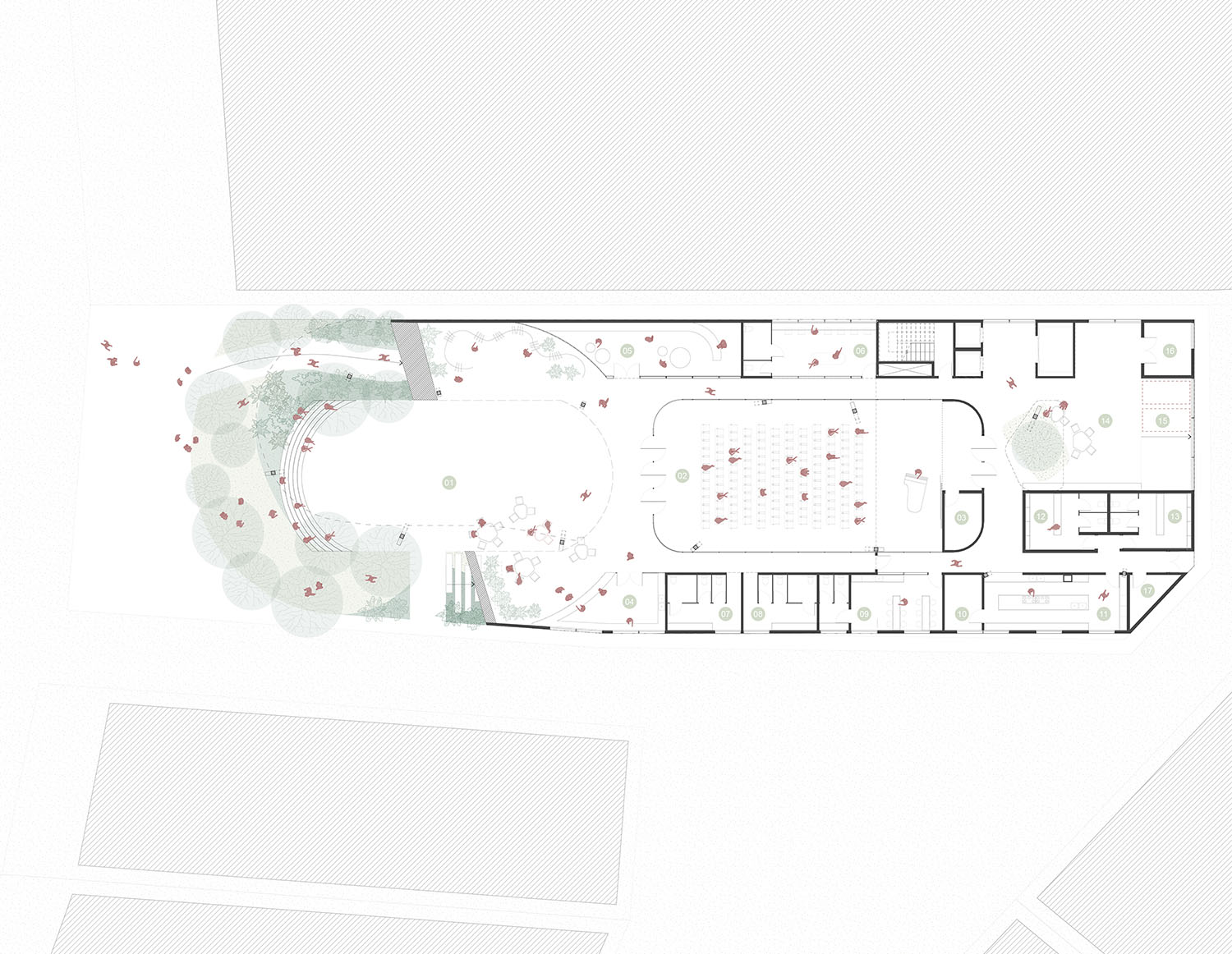
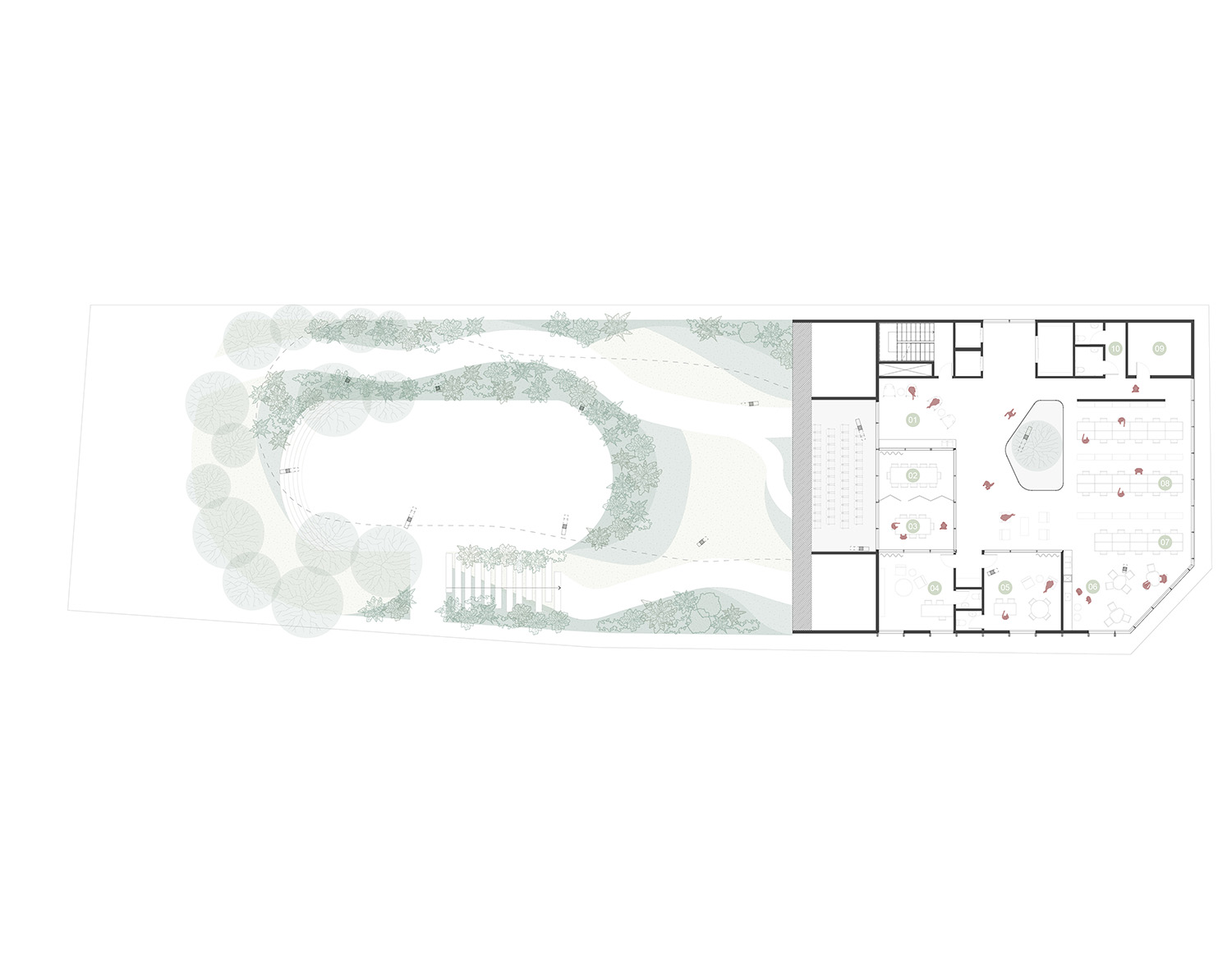
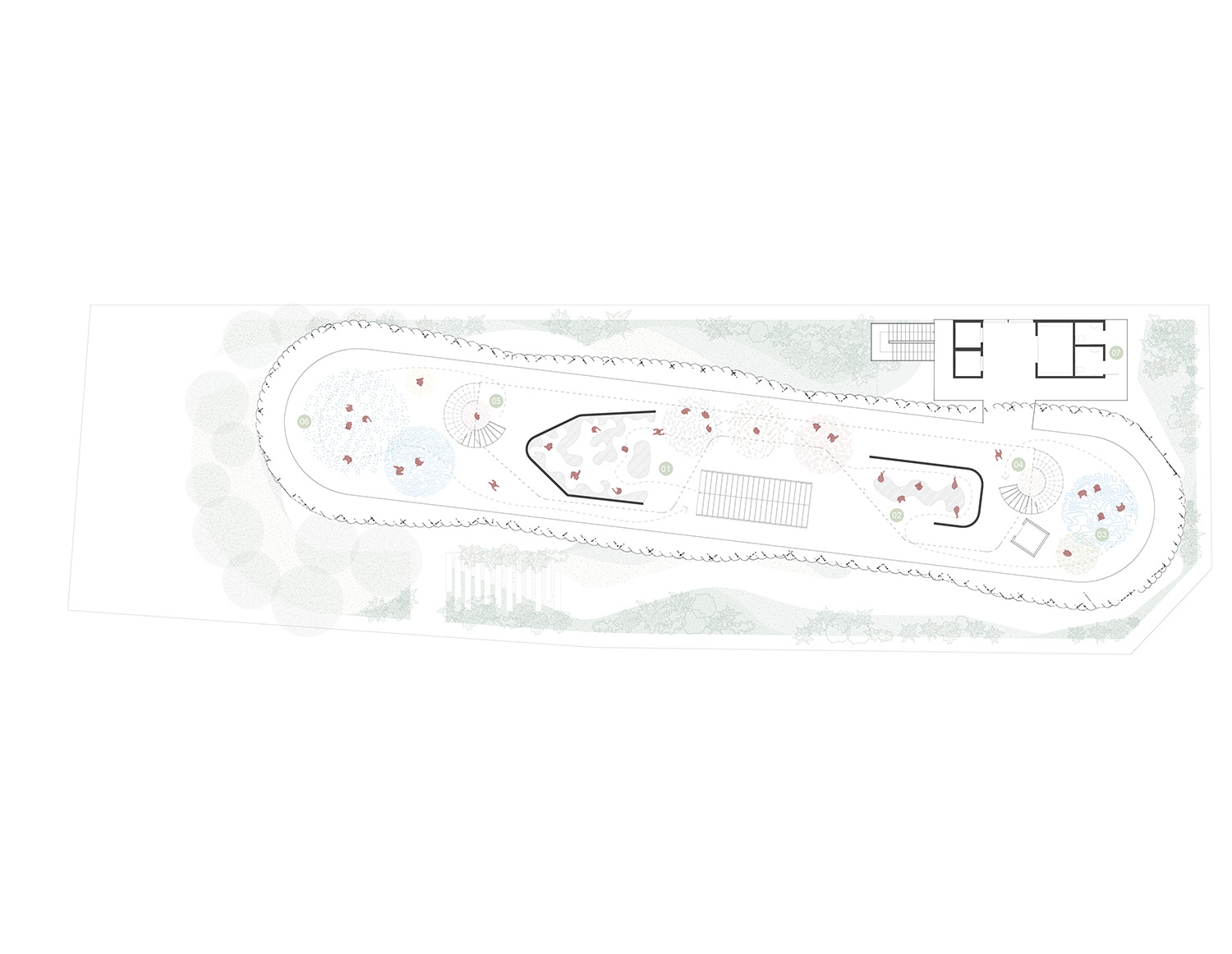

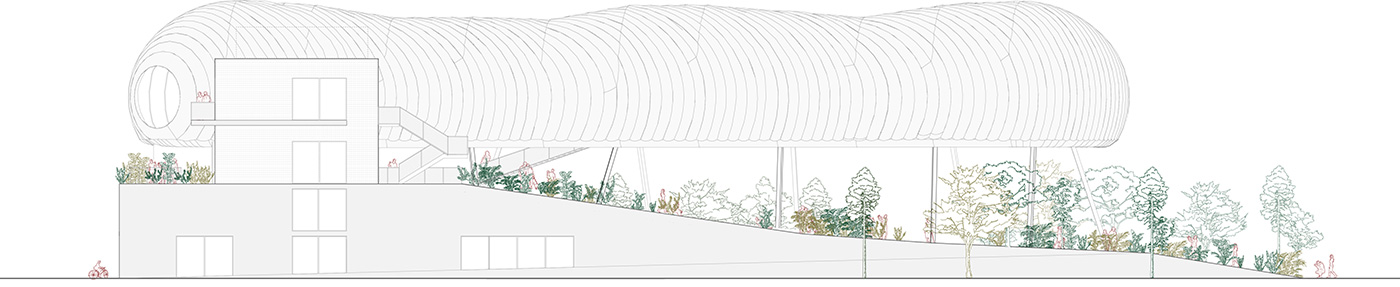
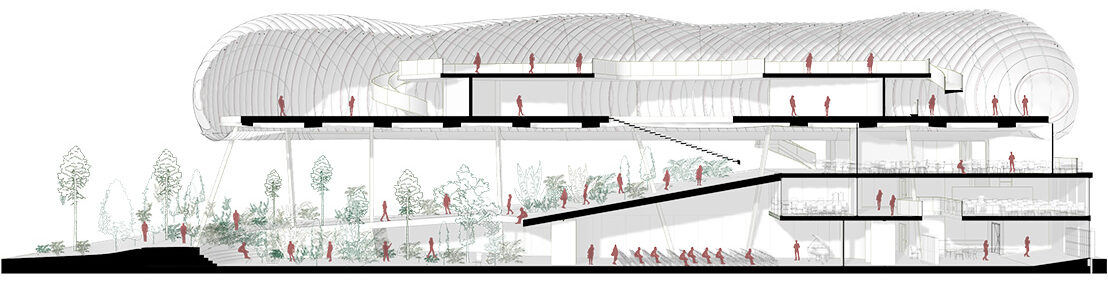
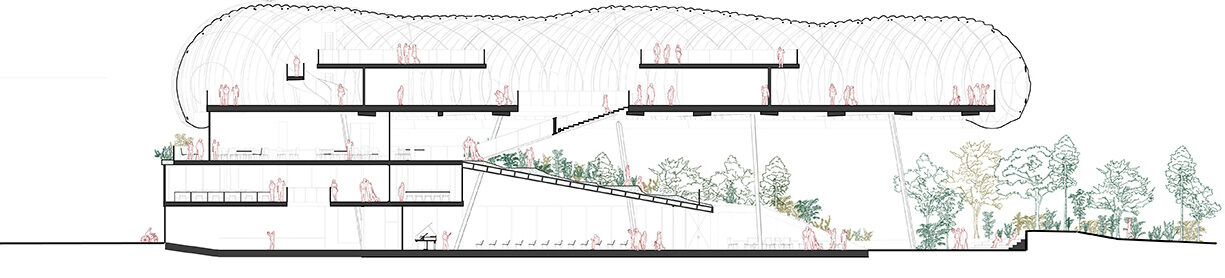
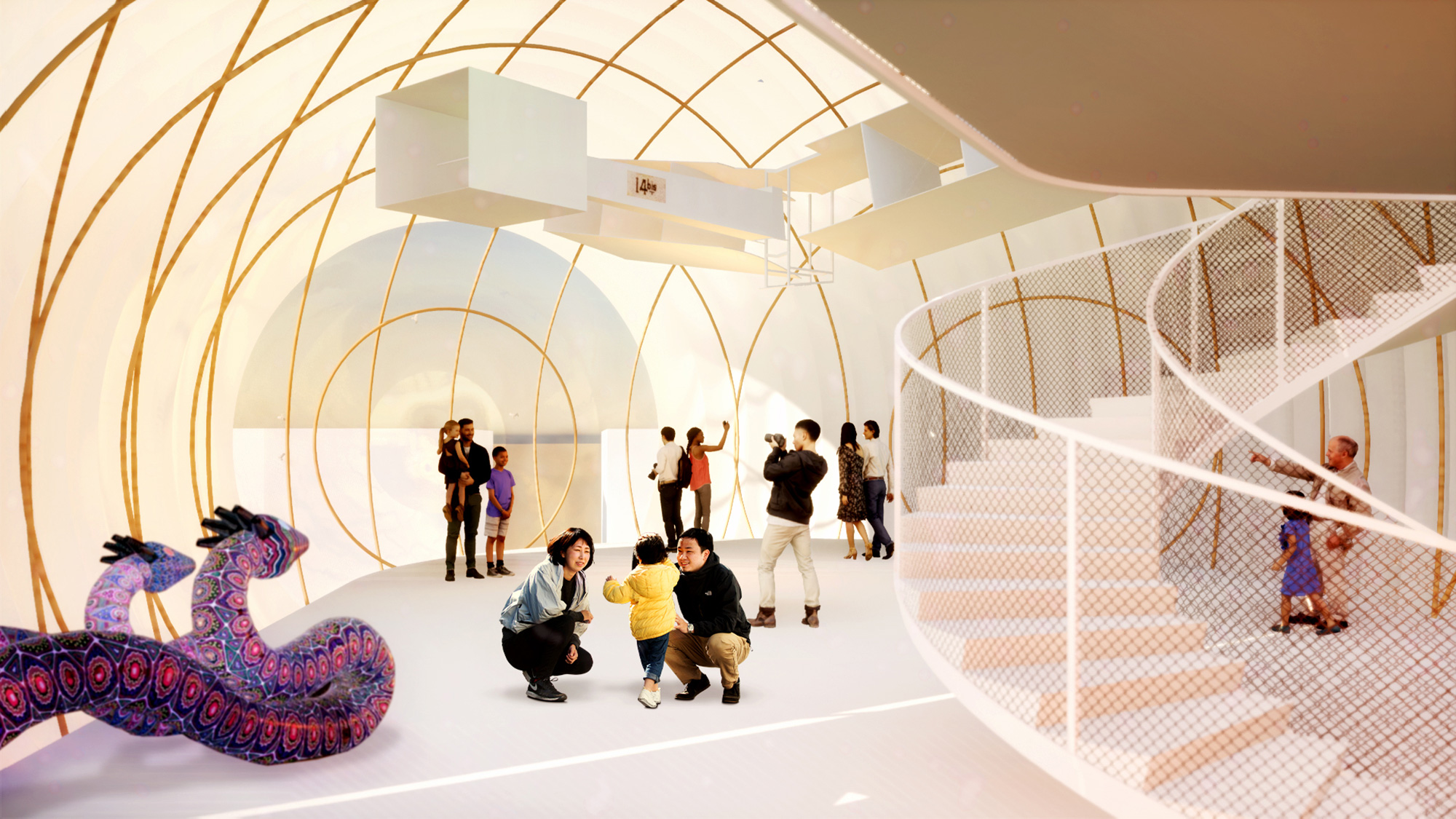
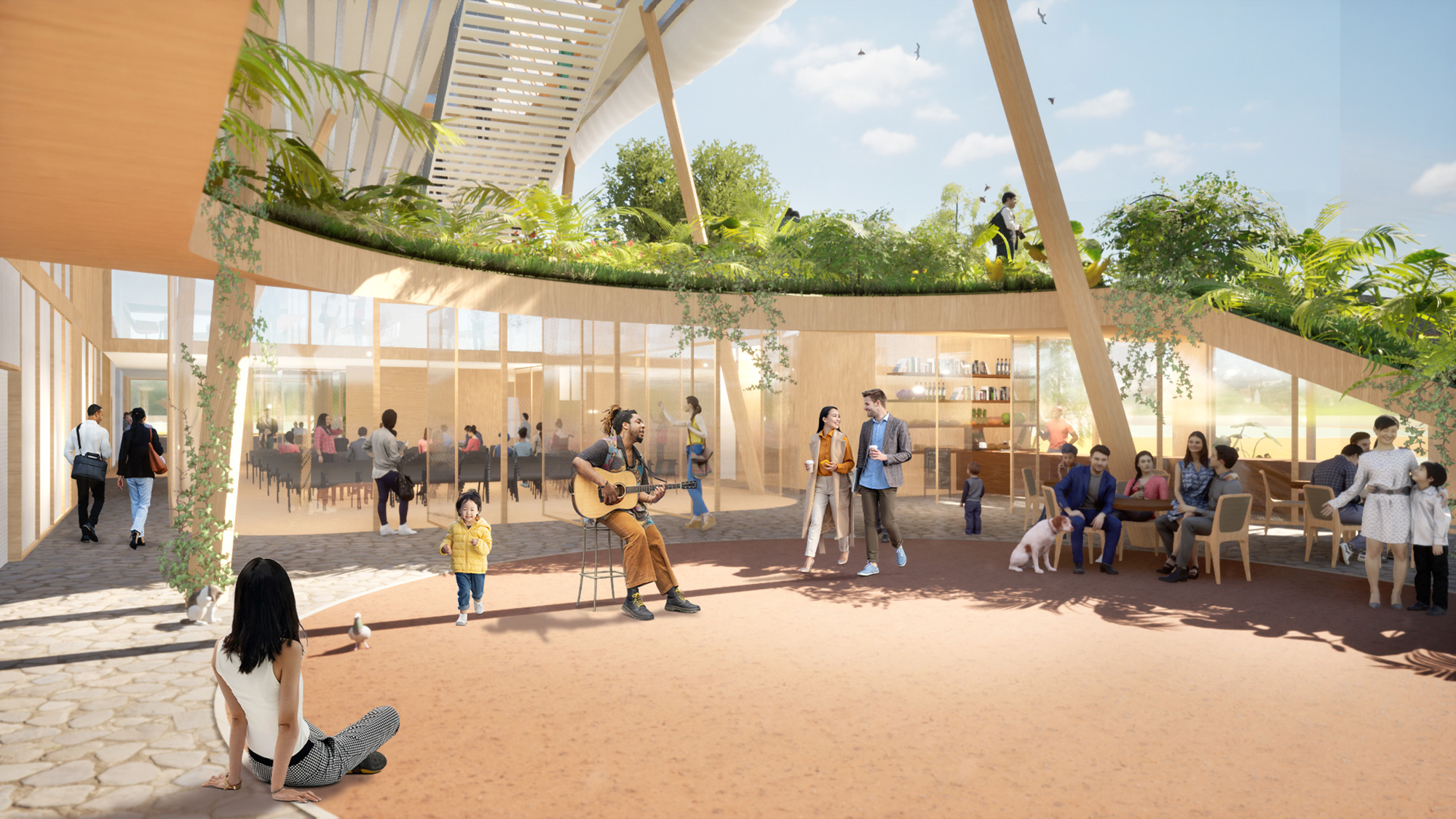
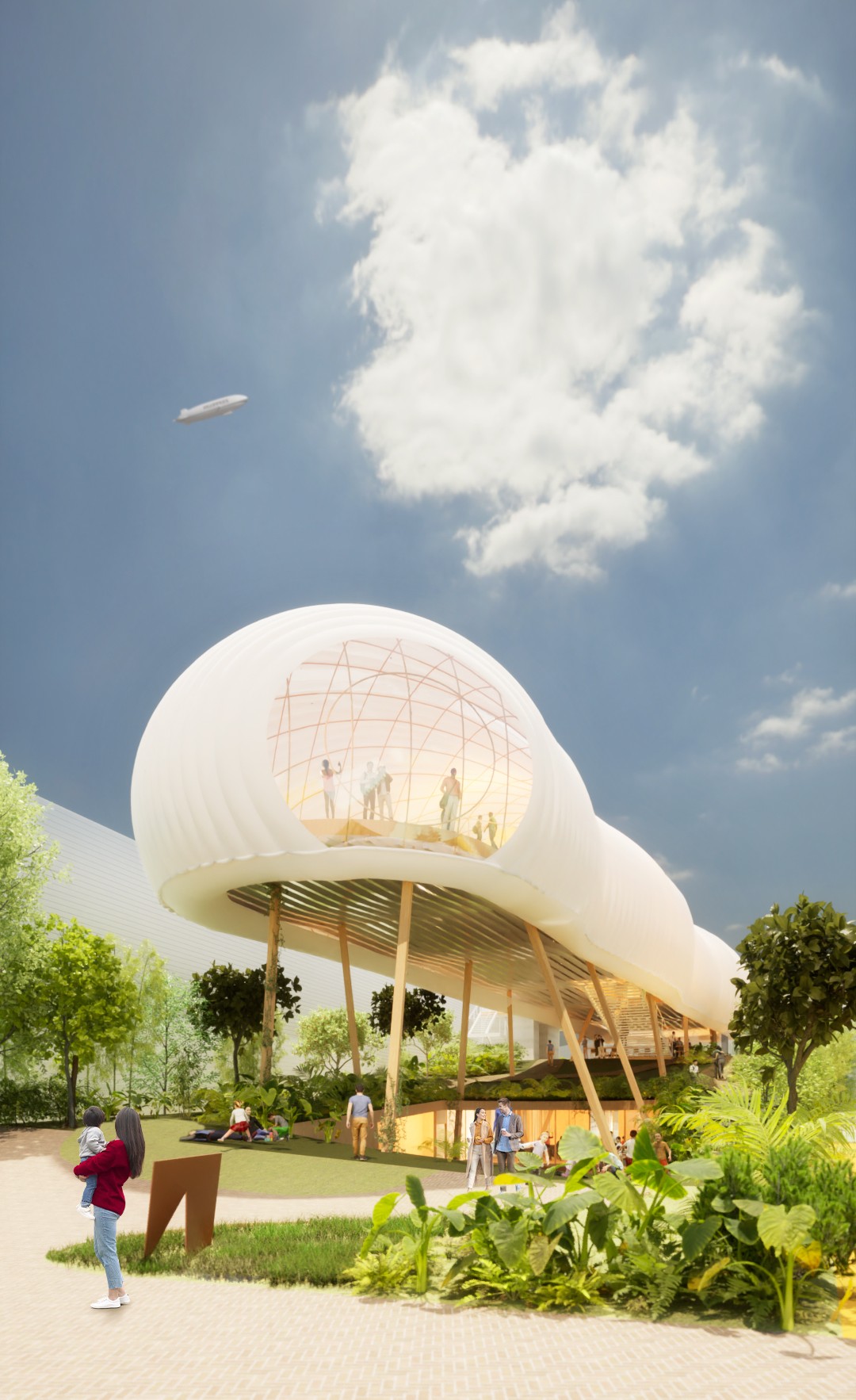
Our pavilion is an interpretation of this hopeful approach to life, with a design that celebrates the joy of human encounter, highlights the importance of sensory experience, and nurtures the experience of spatial freedom. Empowering people means allowing them to connect with their surroundings, fostering a sense of freedom for their bodies.
As we are aware of the environmental impacts of even the most delicate construction, our concept for the pavilion was based on a few propositions:
We must use renewable materials, such as CLT that comes from forest management;
We must use ultra-lightweight and quick-to-assemble materials that resemble indigenous constructions and engage with contemporary Japanese architecture.
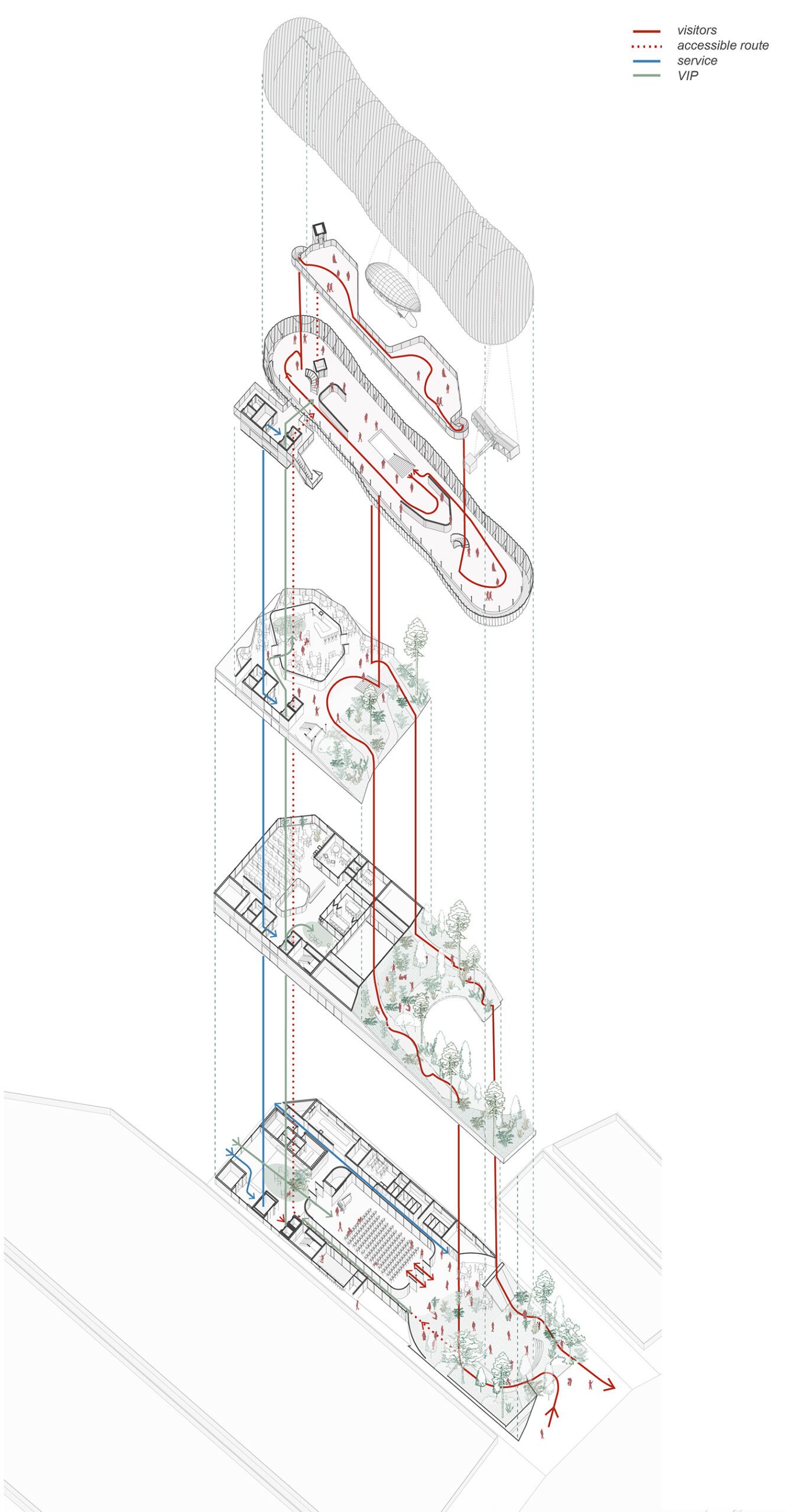
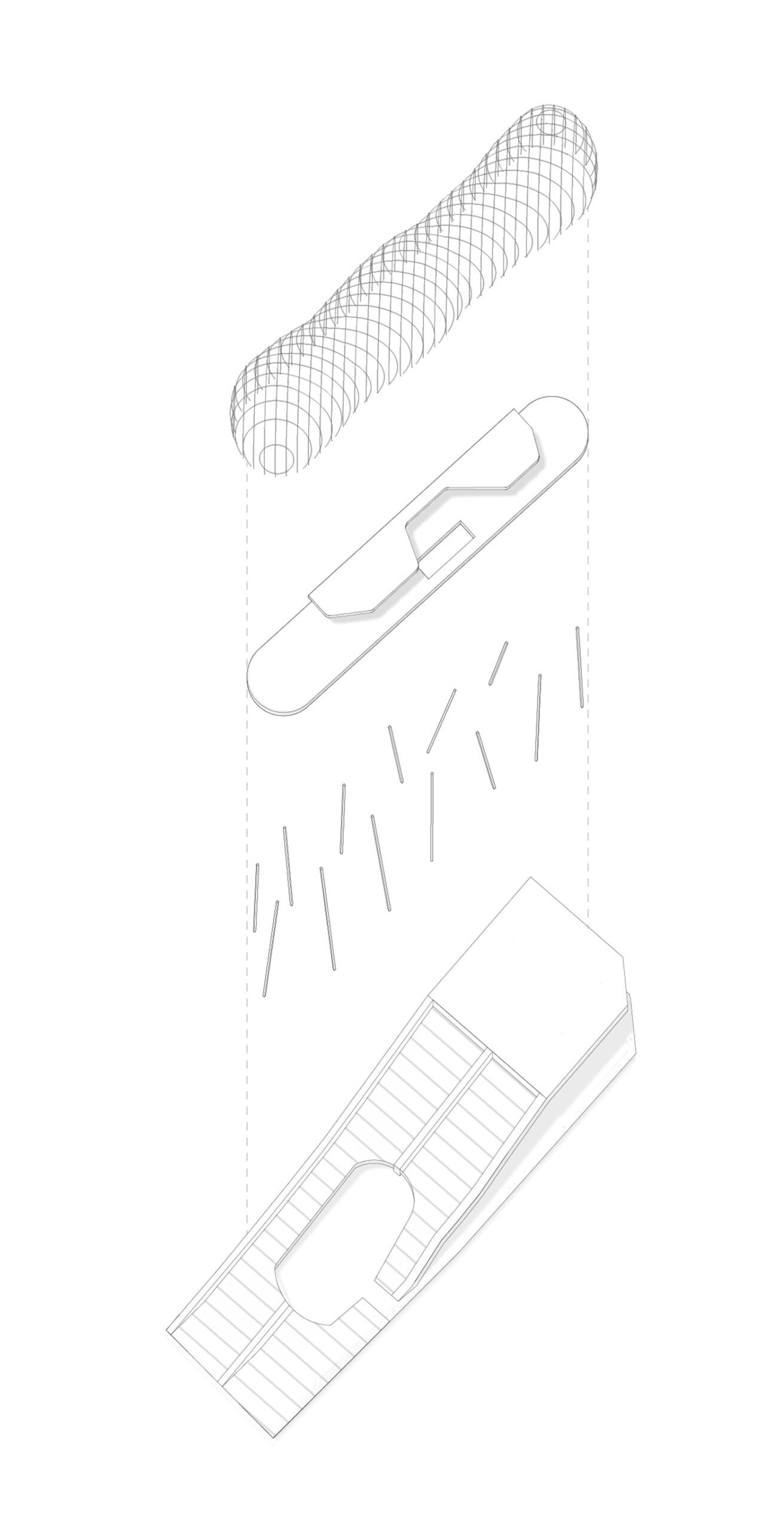
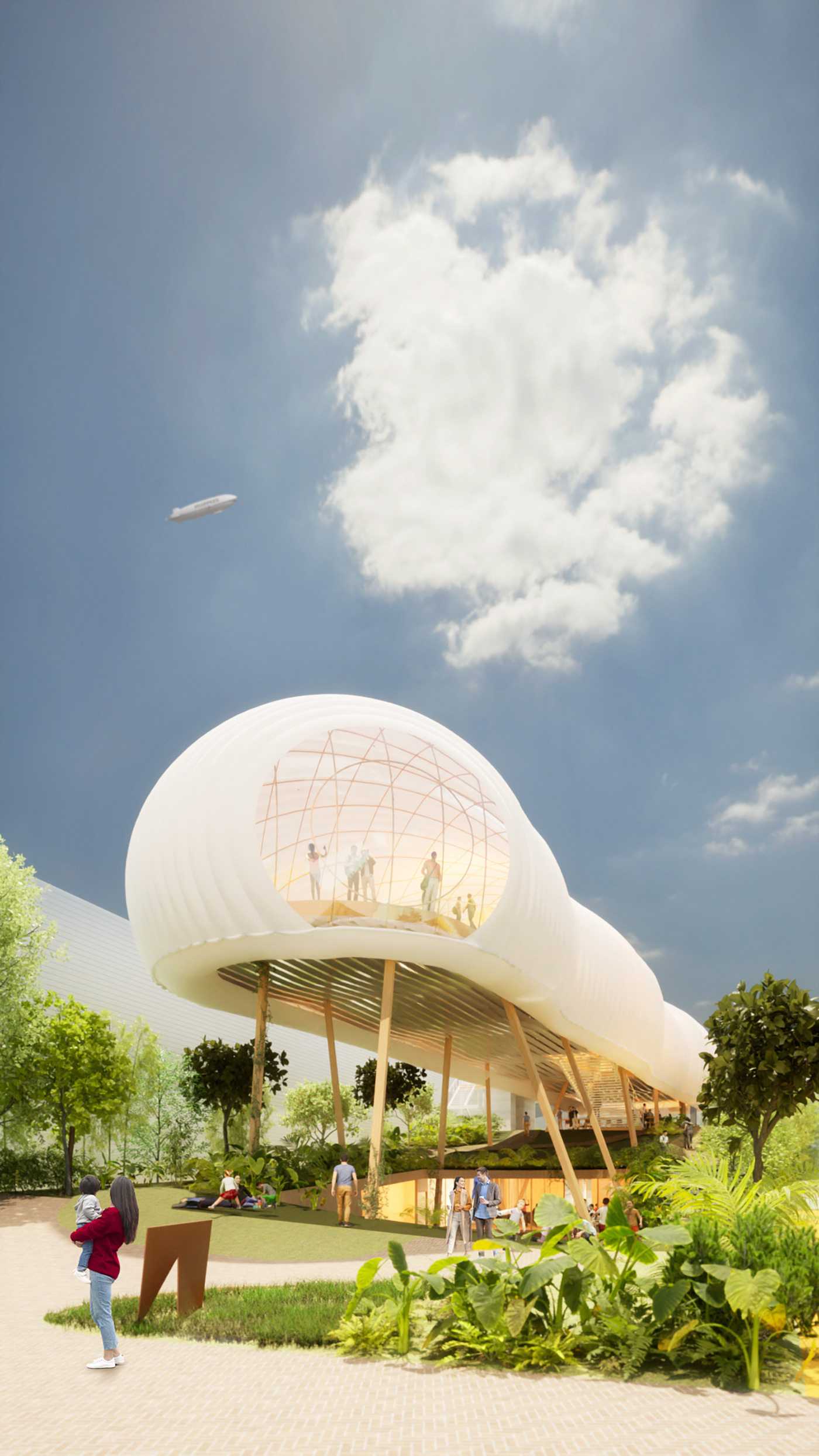
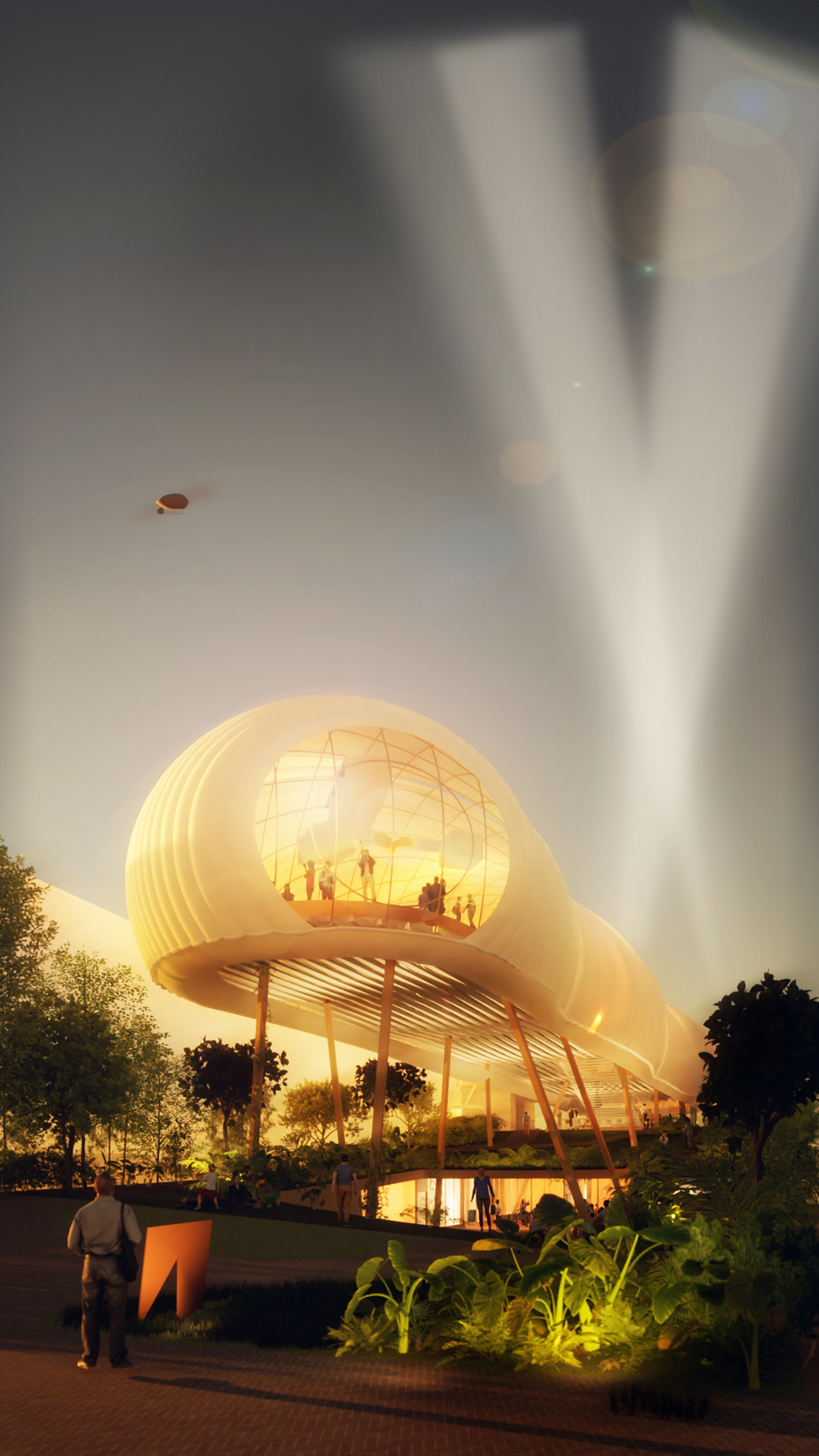
We propose a walkable landscape where the public informally arrives at a suspended cloud balloon. The cloud is today an icon of technology and also a sign of climate change. The cloud is also a quote from Lygia Pape's work "Manto Tupinambá," a red cloud over Guanabara Bay—a commentary on an indigenous tradition of land protection. The balloon has traditionally been a sign of the future—and also a commentary on Brazil's pioneering role in flight technologies. Our project is a dreamlike montage where the ancestral knowledge of forest peoples and our urban futuristic fears can meet in a playful and welcoming environmental event.